


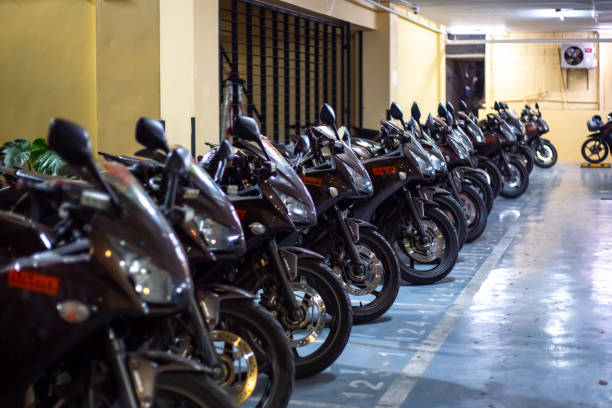
Motorbike asset management services refer to structured solutions that oversee the acquisition, deployment, operation, maintenance, and financial performance of motorcycles used as income-generating logistics assets. The focus is not just on running delivery operations, but on maximizing the value, lifespan, and profitability of each motorbike over its entire lifecycle.
These services are widely used in courier logistics, e-commerce delivery, food delivery, pharmacy distribution, and investor-backed fleet ownership models.
What motorbike asset management services mean
Motorbike asset management services combine operational logistics with financial and asset optimization.
A typical service provider manages:
- Motorbike acquisition and onboarding
- Rider and dispatch operations
- Delivery and logistics execution
- Preventive maintenance and repairs
- Fuel and cost optimization
- Real-time tracking and monitoring
- Asset utilization and lifecycle management
- Financial reporting and ROI tracking
In simple terms, they ensure motorbikes are always working efficiently while preserving their long-term value.
Why motorbike asset management is important
Motorbikes are high-frequency assets that require constant oversight to remain profitable.
Without structured management, owners may face:
- High maintenance and repair costs
- Poor rider discipline and misuse
- Low vehicle utilization
- Frequent breakdowns
- Inefficient fuel usage
- Weak return on investment (ROI)
Asset management services help prevent these losses by introducing structure, accountability, and data-driven control.
Core components of motorbike asset management services
1. Asset acquisition and deployment
Proper selection and deployment determine long-term profitability.
This includes:
- Selecting fuel-efficient and durable bikes
- Evaluating total cost of ownership
- Registering and insuring vehicles
- Assigning bikes to delivery operations
- Tracking initial performance and usage
2. Fleet utilization optimization
Maximizing usage improves revenue generation.
This includes:
- Reducing idle time between deliveries
- Increasing daily trip frequency
- Assigning bikes to high-demand zones
- Balancing workload across riders
- Expanding usage during peak demand periods
3. Rider and operational management
Riders directly impact asset performance.
This includes:
- Recruitment and onboarding
- Training for efficiency and safety
- Shift scheduling and supervision
- Performance monitoring and evaluation
- Incentive and accountability systems
4. Preventive and predictive maintenance
Maintenance protects both performance and asset value.
This includes:
- Scheduled servicing based on mileage or time
- Engine diagnostics and inspections
- Tire, brake, and oil monitoring
- Early fault detection systems
- Breakdown prevention strategies
5. Fuel and cost optimization
Fuel is one of the highest recurring costs.
This includes:
- Monitoring fuel consumption per bike
- Detecting inefficiencies or misuse
- Driver behavior optimization
- Cost-per-kilometer analysis
- Operational budgeting and control
6. Route and delivery optimization
Efficient routing increases productivity.
This includes:
- Shortest-path route planning
- Traffic-aware navigation
- Multi-stop delivery sequencing
- Real-time rerouting adjustments
- Reducing unnecessary mileage
7. Real-time tracking and asset visibility
Visibility improves control and accountability.
This includes:
- GPS tracking of all motorbikes
- Live delivery monitoring
- Geofencing and zone control
- Rider movement tracking
- Performance visibility dashboards
8. Financial reporting and ROI tracking
Asset performance must be measurable.
This includes:
- Revenue per bike tracking
- Cost per delivery analysis
- Maintenance cost breakdown
- Net profit per vehicle
- ROI and payback period calculations
Key performance indicators (KPIs)
Motorbike asset performance is measured using:
- Vehicle utilization rate
- Cost per delivery
- Fuel efficiency
- Maintenance cost ratio
- Delivery success rate
- Rider productivity rate
- Asset lifespan performance
- Return on investment (ROI)
Benefits of motorbike asset management services
Higher profitability
Better utilization increases revenue per bike.
Lower operational costs
Fuel and maintenance inefficiencies are reduced.
Longer asset lifespan
Preventive maintenance extends bike durability.
Better delivery performance
Faster and more reliable logistics operations.
Scalable fleet growth
Easier expansion with structured systems.
Challenges in motorbike asset management
Despite benefits, challenges include:
- Rising fuel and spare part costs
- Traffic congestion in urban areas
- Rider inconsistency and misuse
- High maintenance frequency due to usage intensity
- Demand fluctuations in logistics operations
Risks of unmanaged motorbike fleets
Without structured systems, operators may face:
- Low vehicle utilization
- High maintenance costs
- Frequent breakdowns
- Poor delivery performance
- Weak ROI
- Reduced asset lifespan
Technology used in motorbike asset management
Modern systems rely on:
- GPS tracking and telematics
- Fleet management software
- Mobile rider applications
- Fuel monitoring systems
- Route optimization tools
- Predictive maintenance systems
- Analytics and ROI dashboards
These tools improve efficiency and transparency.
Where logistics coordination fits into motorbike asset management
Motorbike fleets operate within broader logistics ecosystems such as:
- E-commerce fulfillment networks
- Courier and express delivery services
- Food and pharmacy delivery systems
- Urban distribution hubs
- Supply chain logistics operations
Efficient coordination ensures assets are fully utilized and productive.
How Travo.ng supports logistics coordination
While motorbike asset management services focus on optimizing asset performance and profitability, logistics coordination ensures smooth movement of goods across transport systems.
Travo.ng supports logistics operations through:
- Cargo consolidation and freight coordination
- Intercity and interstate delivery services
- Port-to-destination logistics support
- Supply chain coordination across Nigeria
- End-to-end logistics execution for cargo movement
This helps improve fleet utilization and overall operational efficiency.
Final thoughts
Motorbike asset management services transform motorcycles from simple delivery tools into structured, high-performing financial assets. By combining operational control, maintenance planning, rider management, and financial tracking, these services ensure consistent profitability and long-term value creation.
In modern logistics, success depends not just on owning motorbikes, but on how effectively they are managed across their entire lifecycle.
