


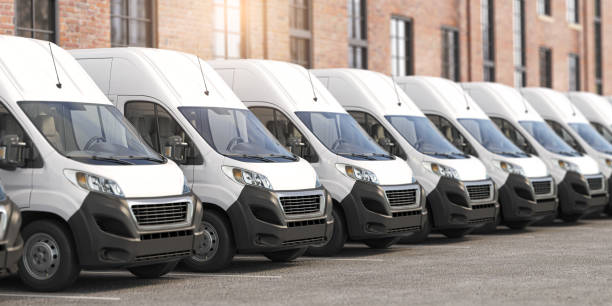
Hands-free van ownership solutions refer to a fully managed investment model where individuals or investors own vans, but a professional fleet management company handles all operational, logistical, and financial responsibilities. The goal is to allow owners to earn income from their vehicles without participating in daily operations.
This model is commonly used in logistics, e-commerce delivery, courier services, and transport investment structures where scalability and passive income are priorities.
What hands-free van ownership solutions mean
Hands-free van ownership means the investor has no active role in running the fleet.
A management company typically handles:
- Vehicle deployment into logistics operations
- Driver recruitment and supervision
- Route planning and delivery execution
- Maintenance and repair coordination
- Fuel and cost management
- Compliance and insurance handling
- Revenue collection and distribution
- Financial reporting and ROI tracking
In simple terms, the owner supplies the asset (van), while the operator runs the entire business.
Why hands-free van ownership is becoming popular
This model is growing due to:
- Rising demand for last-mile delivery services
- Expansion of e-commerce and retail logistics
- Growth of outsourced fleet operations
- Increased interest in passive income investments
- Complexity of managing logistics operations independently
It allows investors to participate in logistics without operational stress.
Core components of hands-free van ownership solutions
1. Full fleet management outsourcing
The entire operation is handled by professionals.
This includes:
- Daily dispatch and scheduling
- Driver management and supervision
- Delivery execution and coordination
- Vehicle utilization optimization
- Operational decision-making
2. Revenue generation systems
Vans are deployed into income-producing activities such as:
- E-commerce deliveries
- Courier and parcel services
- Retail distribution logistics
- Intercity transport contracts
- Dedicated client logistics agreements
3. Maintenance and asset protection
Ensures vans remain in optimal condition.
This includes:
- Preventive maintenance scheduling
- Repairs and servicing coordination
- Engine and system diagnostics
- Tire and brake management
- Breakdown response services
4. Fuel and operational cost control
Cost efficiency directly impacts profitability.
This includes:
- Fuel tracking per vehicle
- Detection of inefficiencies or misuse
- Driver behavior optimization
- Cost-per-kilometer analysis
- Budget management systems
5. Driver and workforce management
Drivers are fully managed by the operator.
This includes:
- Recruitment and onboarding
- Training for efficiency and safety
- Shift scheduling and supervision
- Performance tracking
- Incentive systems
6. Logistics and delivery coordination
Ensures smooth movement of goods.
This includes:
- Warehouse dispatch coordination
- Parcel assignment and routing
- Real-time delivery tracking
- Proof of delivery systems
- Customer communication and updates
7. Financial reporting and ROI tracking
Transparency is essential in passive investment models.
This includes:
- Revenue per van tracking
- Cost breakdown analysis
- Net profit reporting
- Maintenance expenses
- Return on investment (ROI)
- Payback period calculations
Types of hands-free van ownership models
1. Fixed income model
Investor receives a stable monthly return regardless of performance.
2. Revenue-sharing model
Profits are shared between owner and operator.
3. Hybrid model
Combines fixed income with performance-based bonuses.
4. Full-service investment model
Operator manages everything from operations to client acquisition.
Key performance indicators (KPIs)
Performance is measured using:
- Vehicle utilization rate
- Net profit per van
- Cost per kilometer
- Revenue per delivery
- Maintenance downtime
- Fuel efficiency
- ROI percentage
- Payback period
Benefits of hands-free van ownership solutions
Passive income generation
Owners earn without managing operations.
Reduced operational stress
No need to handle logistics, drivers, or maintenance.
Higher fleet efficiency
Professional management improves utilization.
Scalable investment model
Easier to expand fleet size over time.
Predictable reporting
Clear financial transparency and performance tracking.
Challenges in hands-free van ownership
Despite advantages, challenges include:
- Dependence on management company performance
- Transparency and reporting accuracy concerns
- Market fluctuations in logistics demand
- Vehicle depreciation over time
- Contract and revenue-sharing disputes
Risks of unmanaged or poorly managed systems
Without strong oversight, investors may face:
- Low fleet utilization
- Reduced profitability
- Vehicle mismanagement or abuse
- Delayed financial reporting
- Weak return on investment
Technology used in hands-free van ownership systems
Modern solutions rely on:
- GPS tracking and telematics
- Fleet management dashboards
- Automated reporting systems
- Fuel monitoring tools
- Route optimization software
- Digital payment and contract systems
These tools ensure transparency and performance control.
Where logistics coordination fits into hands-free ownership
Hands-free van ownership depends heavily on logistics ecosystems such as:
- E-commerce fulfillment networks
- Courier and express delivery systems
- Retail distribution chains
- Supply chain logistics operations
- Regional transport networks
Efficient coordination ensures vans remain continuously productive.
How Travo.ng supports logistics coordination
While hands-free van ownership solutions focus on passive income and asset management, logistics coordination ensures smooth execution of transport operations.
Travo.ng supports logistics operations through:
- Cargo consolidation and freight coordination
- Intercity and interstate delivery services
- Port-to-destination logistics support
- Supply chain coordination across Nigeria
- End-to-end logistics execution for cargo movement
This helps improve fleet utilization and strengthens overall investment performance.
Final thoughts
Hands-free van ownership solutions offer a modern way to earn from commercial vehicles without dealing with operational complexity. By combining professional fleet management, logistics integration, and performance tracking, this model transforms vans into truly passive income-generating assets.
In today’s logistics economy, success comes not just from ownership, but from structured, fully managed operations that maximize efficiency and return on investment.
