


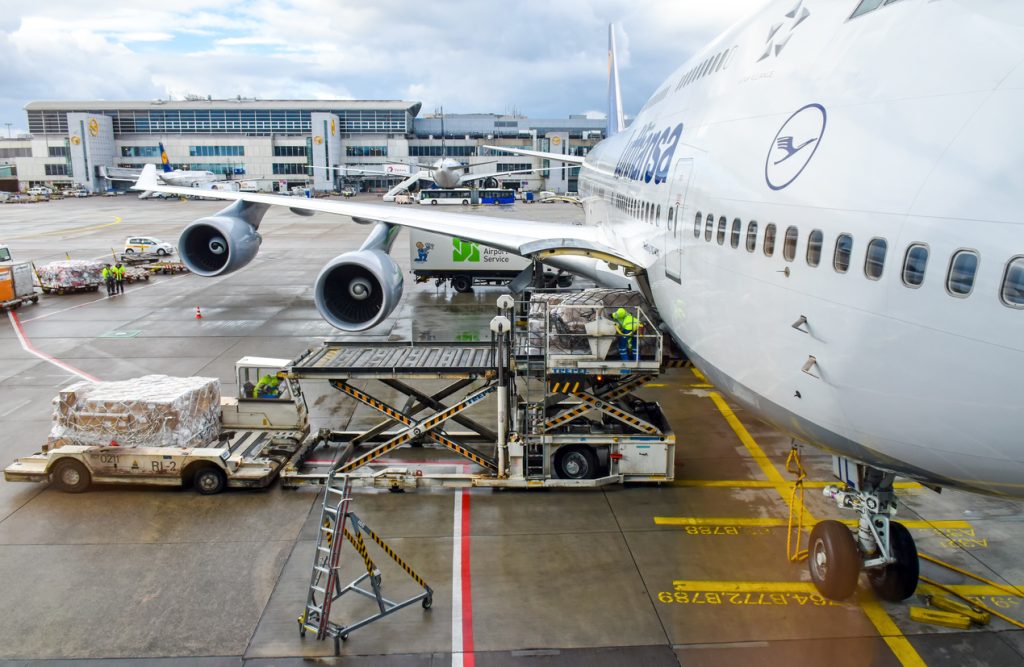
Ground support equipment rental in Africa provides airlines, airports, ground handlers, cargo operators and aviation businesses with access to essential aircraft servicing equipment without requiring them to purchase an entire fleet.
Ground support equipment, commonly known as GSE, includes the vehicles and machines used to support aircraft while they are on the ground. Depending on the operation, this can include baggage tractors, belt loaders, passenger stairs, ground power units, pushback tractors, cargo loaders and other specialised equipment.
IATA describes GSE as essential to safe and efficient airport operations, noting that its design and functionality can directly affect operational efficiency, safety and working conditions for ground personnel. (IATA)
Why Rent Ground Support Equipment in Africa?
Purchasing GSE can require substantial capital, particularly when an airport operation needs several equipment types.
Rental can provide an alternative when an operator needs equipment for a limited period or wants to avoid immediately committing capital to a large fleet.
GSE rental can be useful for:
- New airport operations
- Temporary contracts
- Seasonal increases in traffic
- Equipment replacement periods
- Maintenance downtime
- Charter operations
- Special aviation projects
- Expansion into new airports
- Backup equipment requirements
Instead of purchasing equipment that may not be used at full capacity throughout the year, an operator can rent specific units according to operational requirements.
What Types of GSE Can Be Rented?
The equipment available depends on the rental company, airport and local market.
Common categories include:
- Belt loaders
- Baggage tractors
- Passenger stairs
- Ground power units
- Pushback tractors
- Cargo loaders
- Aircraft tugs
- Water service vehicles
- Lavatory service vehicles
- Catering trucks
- Forklifts
- Ground support vehicles
Not every rental provider will have every equipment type. Operators should therefore identify the exact equipment required before requesting a quotation.
For example, a ground handler supporting narrow-body passenger aircraft may have different requirements from a cargo operator handling wide-body freighters.
Short-Term Rental or Longer Lease?
The appropriate rental arrangement depends on how the equipment will be used.
Short-Term GSE Rental
Short-term rental can be useful for temporary projects, aircraft charters, seasonal demand or situations where existing equipment is undergoing maintenance.
The arrangement may last from several days to several months, depending on the provider and operational requirements.
Long-Term GSE Leasing
Longer leases can make sense when an operator needs dedicated equipment at an airport for an extended period but does not want to purchase the equipment outright.
A longer arrangement may also allow the provider and operator to agree on maintenance, servicing, replacement and support requirements.
The important issue is to compare the complete cost of the arrangement rather than focusing only on the daily or monthly rental price.
GSE Availability Can Affect Aircraft Turnaround
Ground support equipment is closely connected to aircraft turnaround performance.
When an aircraft arrives, several ground activities may need to take place simultaneously. If the required baggage loader, passenger stairs, GPU, tug or other equipment is unavailable, one part of the turnaround may have to wait.
IATA identifies safe and on-time turnaround performance as a critical objective for ground-handling providers. (IATA)
This means GSE rental providers need to offer more than equipment. Availability, reliability, maintenance and replacement arrangements are all important considerations.
What to Check Before Renting GSE
Before signing a rental agreement, aviation operators should confirm several practical details.
Equipment Condition
Ask about the age, maintenance history and current condition of each unit.
Older equipment is not automatically unsuitable, but poor maintenance can create operational problems and unexpected downtime.
Aircraft Compatibility
Make sure the equipment is suitable for the aircraft types being handled.
For example, a piece of equipment appropriate for one aircraft configuration may not be suitable for another.
Maintenance Support
Clarify who is responsible for preventive maintenance, repairs, inspections and replacement equipment when a unit becomes unavailable.
Airport Approval
Equipment operating airside may need to meet airport-specific requirements. The operator should confirm that rented equipment can legally and operationally be used at the intended airport.
Delivery and Collection
For equipment being moved between locations, establish who handles transportation, mobilisation, demobilisation and associated costs.
Operator Training
Equipment should be operated by personnel who have the appropriate training and authorisation. Faster access to equipment is of little value if employees are not properly trained to use it.
Safety Should Not Be Compromised
GSE operates close to aircraft, passengers, vehicles and ground personnel, making equipment safety extremely important.
IATA says GSE operations are a major contributor to aircraft ground damage and has developed an Enhanced GSE Recognition Program promoting equipment fitted with anti-collision systems. (IATA)
Rental companies and operators should therefore pay attention to features such as:
- Braking systems
- Lighting
- Warning systems
- Visibility
- Anti-collision technology
- Maintenance records
- Operator controls
- Equipment inspection procedures
The rental agreement should also clearly establish responsibilities for inspections, damage reporting and maintenance.
Electric GSE Rental Is Becoming More Relevant
Electric GSE is increasingly being considered as airports and ground handlers look for quieter and lower-emission ground operations.
IATA reports that electric GSE can produce lower emissions and noise than conventional equipment, although switching to electric equipment also requires appropriate charging infrastructure and operational planning. (IATA)
For African operators, this means the decision should not simply be whether to rent electric equipment. They also need to consider electricity availability, charging facilities, operating schedules, battery management and maintenance capability.
GSE Rental Across African Airports
The availability of GSE rental services varies significantly between African countries and airports.
Major aviation markets such as Nigeria, South Africa, Kenya and Ethiopia have established ground-handling and aviation-support industries, while operators in smaller markets may have fewer local rental options.
IATA’s Enhanced GSE programme currently lists ground-handling providers with recognised or developing GSE fleets at airports in countries including South Africa, Nigeria, Uganda, Malawi, Zimbabwe, Madagascar and Rwanda. (IATA)
For an operator working across multiple countries, it may therefore be necessary to combine local suppliers with regional aviation equipment providers.
How Travo.ng Can Support GSE-Related Logistics
Travo.ng can support the transportation and logistics activities surrounding aviation operations, while specialist GSE rental companies remain responsible for supplying and maintaining the equipment itself.
For example, when an aviation team needs to move between an airport, hotel, warehouse, office or project location, Travo.ng can help coordinate airport transfers, vehicle hire and related travel requirements.
Where aviation equipment or other items need transportation between locations, logistics and delivery coordination can also form part of the wider support required around an airport project.
Travo.ng should not be treated as a replacement for a specialist GSE rental company, aircraft ground handler or airport operator. Its role is to help coordinate the people and transportation logistics surrounding aviation activities.
Calculating the Real Cost of GSE Rental
A low rental rate does not necessarily mean a lower overall operating cost.
Operators should consider:
- Base rental charges
- Delivery and collection
- Fuel or electricity
- Maintenance
- Operator requirements
- Insurance
- Damage liability
- Airport access requirements
- Replacement equipment
- Downtime
- Long-term contract obligations
IATA’s GSE guidance also emphasises the importance of considering equipment specifications, maintenance and total cost of ownership when managing GSE fleets. (IATA)
A proper comparison should therefore consider the complete operating cost rather than the advertised rental price alone.
Choosing a Ground Support Equipment Rental Provider
Before selecting a provider, aviation businesses should ask practical questions about the equipment and service.
Confirm:
- What equipment is available?
- Which airports can the provider serve?
- Are the units properly maintained?
- Who handles repairs?
- Is replacement equipment available?
- Are operators responsible for fuel or charging?
- Does the provider support mobilisation between airports?
- What insurance and liability requirements apply?
- Does the equipment meet the airport’s requirements?
- What happens when equipment becomes unavailable?
For operators with demanding turnaround schedules, equipment reliability can be just as important as rental price.
The Future of GSE Rental in Africa
Ground support equipment rental is likely to remain relevant as airlines, ground handlers and aviation service companies look for more flexible ways to manage equipment fleets.
The wider ground-handling industry is also moving toward modern equipment, stronger standardisation and greater digitalisation. IATA highlighted these areas as important to making ground handling safer, more efficient and more resilient in 2026. (IATA)
For African aviation businesses, rental can provide flexibility when purchasing equipment is impractical, but the arrangement needs to be supported by reliable maintenance, trained operators, appropriate airport approvals and dependable replacement options.
The best GSE rental arrangement is therefore not simply the one with the cheapest rate. It is one that provides the right equipment, at the right airport, for the required period, with sufficient support to keep aircraft ground operations running safely and reliably.
