


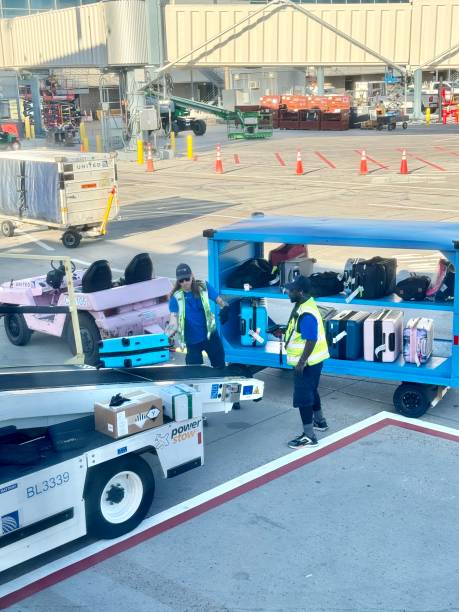
Airport operational challenges in Africa can affect almost every part of the aviation journey, from aircraft arrival and ground handling to passenger processing, baggage movement, cargo operations and onward transportation.
African airports do not all face the same problems. Major international hubs such as Lagos, Nairobi, Johannesburg, Addis Ababa and Accra operate at very different scales and have different infrastructure and regulatory environments. However, common pressures include infrastructure gaps, limited equipment, workforce shortages, fragmented processes, high operating costs and difficulties coordinating multiple airport stakeholders.
IATA identified infrastructure gaps, regulatory fragmentation, safety concerns and limited intra-African connectivity among the major challenges affecting the continent’s aviation sector in 2026. (IATA)
Limited Airport Infrastructure
Airport infrastructure needs to keep pace with aircraft movements, passenger numbers and cargo volumes.
Problems can arise when an airport has insufficient aircraft stands, limited terminal capacity, inadequate cargo facilities, congested aprons or outdated baggage systems. Road access around an airport can also become a bottleneck when traffic increases faster than supporting infrastructure.
Infrastructure investment therefore needs to consider the complete airport operation rather than focusing only on terminals or runways.
Ground Handling and Aircraft Turnaround Delays
Aircraft turnaround involves several activities happening within a limited period.
Passengers have to disembark and board, baggage and cargo need to be loaded or unloaded, the aircraft may require cleaning and servicing, and ground equipment has to be positioned correctly.
A delay in one activity can affect the entire turnaround. IATA describes ground handling as a critical part of airline operations and identifies safe, on-time performance and labour shortages as ongoing challenges. (IATA)
Better coordination between airlines, ground handlers, airport operators and other service providers is therefore essential.
Ground Support Equipment Shortages
Ground support equipment includes belt loaders, baggage tractors, pushback tractors, passenger stairs, ground power units and other equipment used around aircraft.
When equipment is unavailable, poorly maintained or unsuitable for the aircraft being serviced, ground operations can slow down.
Modernising GSE is also becoming increasingly important. IATA reported more than 29,000 aircraft ground damage events globally in 2025 and has called for stronger standards, modern GSE and greater digitalisation to improve ground-handling resilience. (IATA)
Shortages of Skilled Airport Personnel
Airports depend heavily on trained people.
Ground handlers, baggage teams, passenger service staff, equipment operators, maintenance workers, load controllers and other specialists all have specific responsibilities.
A shortage of experienced personnel can place pressure on existing teams and make it harder to maintain consistent operational standards. IATA has also highlighted shortages of skilled ground staff and experienced supervisors as an ongoing concern. (IATA)
Training and workforce development therefore need to grow alongside airport traffic.
Baggage Handling Problems
Baggage needs to move through several stages between check-in and the aircraft.
If sorting systems, conveyors, loading teams or operational communication fail, bags can be delayed or sent to the wrong destination.
At the arrival stage, congestion can also develop when baggage delivery is slower than passenger processing.
Digital baggage tracking, properly maintained handling systems and coordination between airlines and handlers can help reduce these problems.
Cargo and Warehouse Constraints
Air cargo requires more than aircraft capacity.
Airports need suitable cargo terminals, warehouses, loading areas, inspection facilities, customs processes and road connections to move freight efficiently.
This becomes particularly important for time-sensitive shipments such as pharmaceuticals, perishables and express cargo.
Where cargo infrastructure is insufficient, shipments may spend unnecessary time waiting for processing or transportation, increasing costs for businesses.
High Aviation Operating Costs
African aviation operators face significant cost pressures.
IATA’s 2026 Africa outlook points to high fuel costs, fragmented markets, older fleets and other structural factors contributing to high operating costs for African carriers. (IATA)
These costs can affect airline scheduling, fleet decisions, ticket prices and investment in airport-related services.
Reducing unnecessary operational inefficiencies can therefore be important not only for airport performance but also for the wider economics of air travel.
Regulatory and Coordination Challenges
An airport involves many stakeholders, including airport authorities, airlines, ground handlers, customs agencies, immigration authorities, security organisations, cargo companies and transport providers.
When these organisations operate with different procedures or disconnected systems, information may not move quickly enough between them.
IATA has highlighted regulatory fragmentation as one of the broader challenges facing African aviation. (IATA)
Greater standardisation and information sharing can make it easier for different organisations to coordinate around the same aircraft and passenger flow.
Airport Digitalisation Gaps
Modern airport operations increasingly depend on accurate and timely information.
Disconnected systems can make it difficult to know whether baggage has been loaded, whether equipment is available, whether an aircraft is ready for boarding or whether a particular turnaround task has been completed.
IATA says fragmented data, manual processes and delayed information remain barriers to safer and more efficient ground handling. (IATA)
Digital systems that allow operational partners to share information can improve visibility and help teams respond faster to disruptions.
Road Traffic and Landside Congestion
Airport operations can be affected by what happens outside the terminal.
Heavy traffic can delay passengers arriving for flights, airport pickups, staff transportation, cargo collections and deliveries. In cities such as Lagos, the road journey to or from an airport can become a significant part of the overall travel time.
Airport support planning therefore needs to include reliable ground transportation, suitable pickup arrangements and realistic journey times.
Fuel and Supply Chain Pressures
Fuel availability and pricing can affect airline and airport operations.
African carriers can face higher fuel-related costs because of supply conditions and logistics challenges. IATA has identified fuel supply and price pressures as important vulnerabilities for the region’s aviation industry. (IATA)
Supply chain issues can also affect aircraft parts, maintenance materials, GSE components and other operational supplies.
When critical equipment or parts are delayed, aircraft or ground operations may be affected even when airport infrastructure itself is available.
Weather and Operational Disruptions
Weather conditions can create additional pressure on airport operations.
Heavy rainfall, storms, poor visibility and other conditions can affect aircraft movements, ground handling and road transportation around airports.
Airports also have to prepare for unexpected disruptions such as airspace restrictions, diversions, equipment failures and changes to operating schedules. IATA has noted that geopolitical instability and airspace disruptions are creating additional operational pressure for airlines. (IATA)
Effective contingency planning helps airports and service providers respond without allowing one disruption to spread across the wider network.
How Travo.ng Can Support Airport Travel and Logistics
Travo.ng does not replace airport authorities, ground handlers, aircraft maintenance companies or other specialist aviation operators. Its role is to support the wider travel and logistics activities that surround airport operations.
For businesses and aviation personnel, Travo.ng can assist with travel bookings, airport transfers, hotel reservations, vehicle hire, delivery and cargo logistics, and transportation coordination where applicable.
For example, an aviation company sending engineers to Lagos for a project may need flights, airport pickup, accommodation and local transportation arranged around the team’s schedule. A company receiving personnel in Abuja or another African city may require similar support.
By coordinating these services, Travo.ng can help businesses manage the movement of people and goods before and after their airport activities.
Improving Airport Operations Across Africa
Addressing airport operational challenges requires coordination rather than a single solution.
Airports need appropriate infrastructure, reliable GSE, trained personnel, efficient baggage and cargo systems, digital information sharing and effective procedures. Airlines, regulators, ground handlers and other service providers also need to work from compatible operational standards.
IATA’s current recommendations for more resilient ground handling include stronger implementation of global standards, modern GSE and greater digitalisation. (IATA)
For African airports, the practical goal is to remove avoidable bottlenecks across the entire airport journey. Better coordination can help aircraft turn around efficiently, passengers move through terminals more smoothly, cargo reach its destination faster and supporting road transportation connect reliably with airport operations.
