


Airport service disruptions in Africa can affect almost every part of a passenger’s journey, from check-in and security screening to boarding, baggage handling, aircraft turnaround and ground transportation. A disruption does not always mean that an airport has completely stopped operating. In many cases, a relatively small problem in one part of the airport can create delays across several connected services.
Congestion, infrastructure limitations, adverse weather, equipment failures, fuel supply problems, construction activity and operational issues can all contribute to airport disruptions. Recent reporting from Nigeria, for example, has linked flight delays and cancellations to congestion, infrastructure limitations, weather and operational constraints. (Independent Newspaper Nigeria)
For passengers and businesses travelling across Africa, understanding how these disruptions happen makes it easier to plan alternative arrangements.
What Causes Airport Service Disruptions in Africa?
Airport disruptions usually result from several factors rather than one isolated problem.
Common causes include:
- Aircraft delays and late arrivals
- Limited aircraft parking stands
- Ground handling equipment shortages
- Baggage handling problems
- Airport construction and maintenance
- Security or immigration delays
- Poor weather and reduced visibility
- Fuel supply interruptions
- Power or system failures
- Runway or taxiway restrictions
- Airspace restrictions
- Road congestion around airports
- Staff or operational capacity limitations
The impact varies considerably between airports. A disruption at a major international hub can affect connecting passengers, cargo movements and onward flights, while problems at a smaller regional airport may result in cancellations, diversions or limited travel options.
How One Airport Problem Can Create Wider Delays
Airport operations are interconnected. An aircraft cannot depart simply because the passengers are ready.
Before departure, the aircraft may need baggage loading, catering, fuelling, cleaning, technical checks, boarding and pushback. If one of these activities is delayed, the entire turnaround can be affected.
The same aircraft may then operate another flight later that day. A 30-minute delay on the first sector can therefore become a longer disruption across subsequent flights.
Limited apron and parking capacity can make this worse. When an aircraft cannot access an available stand or another aircraft blocks its movement, the resulting delay can affect several flights rather than just one.
Passenger Services During Airport Disruptions
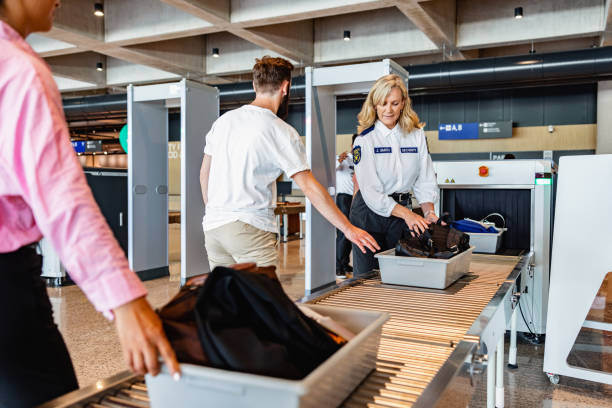
Passengers usually notice disruptions first through longer queues, delayed boarding announcements, baggage delays or changes to flight schedules.
Terminal congestion can occur at several points:
- Check-in counters
- Security screening
- Immigration
- Boarding gates
- Baggage reclaim
- Airport exits
- Shuttle or transfer points
Construction can introduce additional problems. At Lagos airport, for example, airport construction has recently been associated with concerns around signage, lifts, shuttle buses and passenger movement. (Techeconomy)
Passengers travelling during periods of disruption should therefore allow additional time and avoid planning tightly connected activities immediately after their expected arrival.
Ground Handling and Baggage Disruptions
Ground handling is one of the areas where relatively small operational problems can quickly affect flight schedules.
Baggage tractors, belt loaders, passenger stairs, pushback equipment and other ground support equipment have to be available at the right time. If equipment is unavailable or a handling team is delayed, an aircraft may remain on the ground longer than planned.
Baggage problems can continue even after a flight departs. A passenger may arrive at the destination while their checked baggage is delayed, misrouted or still being processed at the departure airport.
For passengers with business equipment, documents or time-sensitive items, this can create additional complications.
Weather-Related Airport Disruptions
Weather is another major source of operational uncertainty.
Heavy rain, thunderstorms, strong winds, fog and poor visibility can affect aircraft movements and airport capacity. Depending on the conditions, flights may be delayed, diverted or cancelled.
Weather disruption can also affect ground operations. Heavy rainfall may slow passenger transfers, baggage movement, vehicle operations and access roads around the airport.
The effects can continue after weather conditions improve because aircraft, crews and airport equipment may no longer be in their original positions.
Fuel and Infrastructure Problems
Airport service disruptions can also arise from infrastructure and fuel-related constraints.
Fuel availability is particularly important because shortages or supply problems can lead airlines to adjust schedules, routes or operating plans. In 2026, fuel supply and price pressures have been reported as contributing to operational disruptions for Nigerian airlines. (Reuters)
Infrastructure limitations can create another layer of pressure. Airport capacity, parking stands, navigation systems, terminal facilities and ground handling infrastructure all influence how efficiently an airport can handle traffic.
AFRAA has also highlighted the need for coordinated infrastructure development and improved airport operational efficiency across Africa. (Afraa)
What Businesses Should Do When Airport Services Are Disrupted
Airport disruptions can be particularly difficult for businesses with employees, clients or equipment travelling on fixed schedules.
A practical response is to build flexibility into the travel plan.
Businesses can:
- Monitor flight schedules before departure.
- Allow additional time for airport transfers.
- Avoid scheduling important meetings immediately after arrival.
- Keep alternative transport arrangements available.
- Confirm hotel bookings when arrival times change.
- Maintain communication with travelling employees.
- Have contingency plans for delayed or cancelled flights.
- Separate urgent deliveries from normal passenger travel arrangements.
For international or multi-city trips, this becomes even more important because a delay at one airport can affect connecting flights and hotel check-in times.
How Travo.ng Can Help During Airport Service Disruptions
Travo.ng can support the travel and logistics arrangements around an airport disruption without presenting itself as the airport operator, airline or ground handling company responsible for resolving the underlying operational problem.
For example, if a flight delay changes a traveller’s arrival time, Travo.ng can help coordinate airport pickup arrangements, vehicle hire and accommodation requirements. A business team whose flight schedule changes can also reorganise transportation between the airport, hotel and meeting location.
For travellers arriving in cities such as Lagos or Abuja, having transportation already coordinated can reduce the stress of dealing with airport disruption after landing.
Travo.ng can also support wider travel bookings, hotel reservations and relevant delivery or logistics arrangements when an airport disruption affects a business itinerary. The key benefit is having the surrounding travel plan adjusted to changing circumstances rather than treating the original itinerary as fixed.
Planning for More Reliable Airport Travel in Africa
Airport disruptions cannot always be prevented, but their impact can often be reduced through better planning and communication.
Airports need reliable infrastructure, sufficient equipment, trained personnel, effective operational coordination and contingency procedures. Airlines and ground service providers also need to communicate clearly when conditions change.
For passengers and businesses, the practical approach is different: build reasonable time into the journey, monitor changes, keep alternative arrangements available and avoid making critical plans dependent on a single flight arriving exactly on schedule.
In a continent where airport infrastructure and operating conditions vary significantly between locations, flexible travel and logistics planning can make a major difference when normal airport services are interrupted.
