


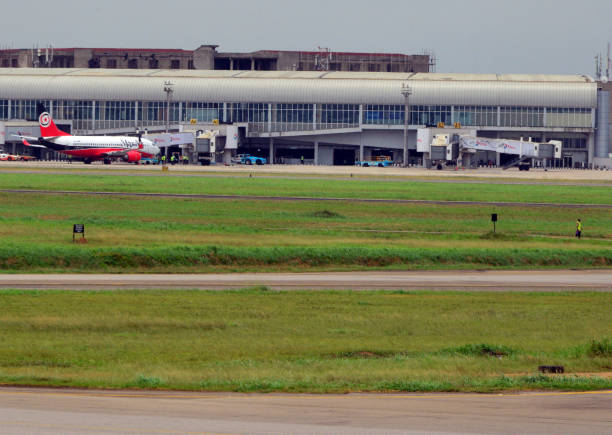
Airside logistics in Africa covers the movement of aircraft, passengers, baggage, cargo, equipment, fuel, catering supplies and other resources within the restricted operational areas of an airport.
Unlike normal airport transportation, airside logistics takes place around aircraft and requires strict coordination. Ground handling teams, airlines, airport operators, cargo companies, fuel providers and other service providers may all need access to the same apron and aircraft stands.
Ground support equipment is central to this activity. IATA describes GSE as essential to safe and efficient aircraft servicing, with equipment design and operation directly affecting airport efficiency and ground safety. (IATA)
What Airside Logistics Covers
Airside logistics begins when an aircraft reaches its parking position and continues until it leaves the stand.
Depending on the airport and flight, activities can include:
- Aircraft towing and pushback
- Passenger boarding and disembarkation
- Baggage loading and unloading
- Cargo movement
- Aircraft fuelling
- Catering delivery
- Cabin cleaning
- Ground power supply
- Water and lavatory servicing
- Crew transportation
- Aircraft marshalling
- Load control and dispatch support
- Movement of ground support equipment
Kenya-based Africa Flight Services, for example, lists baggage handling, marshalling, dispatch, towing, pushback, water and lavatory service, ground power, ULD control and crew transport among its ramp operations. (Çelebi Aviation Holding)
Why Airside Coordination Matters
Several teams may be working around one aircraft at the same time. A fuel truck may be approaching while baggage teams are unloading luggage, catering staff are servicing the cabin and engineers are performing checks.
Without coordination, these activities can interfere with one another.
A delay in one service can also affect the aircraft’s departure time. If baggage loading is incomplete, for example, passengers may have already boarded but the aircraft may still be unable to depart.
This makes airside logistics a coordination exercise rather than simply a transportation function.
Ground Support Equipment Keeps Operations Moving
GSE provides many of the physical services required to prepare an aircraft for its next flight.
Common equipment includes:
- Baggage tractors
- Belt loaders
- Passenger stairs
- Pushback tractors
- Ground power units
- Catering trucks
- Water service trucks
- Lavatory service vehicles
- Cargo loaders
- Dollies
- Aircraft tugs
- Passenger buses
Availability is particularly important during busy periods. If equipment is unavailable or breaks down, another unit may need to be brought from elsewhere on the airport.
IATA notes that GSE operations are also a significant source of aircraft ground-damage risk, making equipment condition, operator training and safe procedures important parts of airside logistics. (IATA)
Moving Baggage and Cargo Across the Apron
Baggage and cargo must move between aircraft, terminals and other airport facilities without disrupting other airside activities.
Baggage tractors and carts transport passenger luggage between aircraft and baggage facilities, while cargo equipment moves containers, pallets and other freight between aircraft and cargo terminals.
The movement needs to be carefully timed. If baggage arrives too late at the aircraft, loading can delay departure. Similarly, cargo requiring special handling may need to be delivered within a specific window.
At Nigerian airports, ground-handling companies such as SAHCO provide ramp and airside operations alongside passenger and cargo handling services. (SAHCO Plc.)
Airside Fuel and Catering Logistics
Aircraft need several essential services before departure, and many of these involve vehicles entering the aircraft stand.
Fuel trucks or hydrant systems provide aviation fuel, while catering vehicles deliver meals, beverages and galley supplies. Water and lavatory service vehicles may also need access to the aircraft.
The timing of these services matters because the apron can become crowded when several vehicles and teams are operating around the same aircraft.
A well-planned turnaround assigns clear responsibilities and sequences activities so that one operation does not unnecessarily delay another.
Airside Logistics at Busy African Airports
Major hubs such as Lagos, Nairobi, Johannesburg, Accra and Addis Ababa handle large numbers of aircraft movements and therefore require extensive airside coordination.
At larger airports, several aircraft may be parked at different stands simultaneously, with different ground teams servicing each flight.
This creates demand for effective allocation of GSE, trained personnel, communication systems and apron-management procedures.
African GSE specialists are also increasingly supporting airports through equipment deployment, maintenance and fleet planning across multiple countries. (Gsmsa)
Common Airside Logistics Challenges in Africa
Equipment Shortages
Limited GSE availability can force teams to wait for equipment to become free or move equipment from another part of the airport.
Equipment Breakdowns
A failed baggage loader, passenger bus or pushback tractor can affect the turnaround if a replacement is not immediately available.
Apron Congestion
Too many vehicles operating in the same area can make aircraft servicing slower and increase safety risks.
Poor Communication
Ground teams need timely information about aircraft arrival times, stand allocation and changes to turnaround requirements.
Limited Infrastructure
Some airports have restricted apron space, limited stands, ageing equipment or inadequate supporting facilities.
Long Supply Routes
At airports that depend on supplies arriving from outside the immediate area, road traffic and other transportation challenges can affect airside replenishment.
Improving Airside Logistics Efficiency
Airports and ground handlers can improve airside performance by matching resources to actual flight schedules.
GSE should be positioned where it is most likely to be required, while maintenance teams should monitor equipment condition before failures disrupt operations.
Digital tracking can also provide better visibility over vehicles and equipment. Managers can identify where a unit is located, whether it is being used and whether it is available for another aircraft.
Preventive maintenance is equally important. African GSE service providers are using scheduled maintenance, refurbishment and fleet advisory programmes to improve equipment availability and extend asset life. (Gsmsa)
Standardised procedures can further reduce confusion between airlines, ground handlers and airport operators.
Safety Must Remain Central
Airside logistics takes place in one of the most operationally sensitive areas of an airport.
Aircraft, vehicles, people and equipment are constantly moving within a confined environment. Poor coordination can therefore create both delays and safety risks.
Drivers and equipment operators need appropriate training and authorisation. Vehicles must follow designated routes and procedures, while ground crews need to maintain safe distances from aircraft and other equipment.
Safety should therefore be built into every stage of airside logistics rather than treated as a separate activity.
How Travo.ng Can Support Airside Logistics
Travo.ng does not operate aircraft ramps, provide GSE or perform specialist airside ground handling. Its role is to support the wider travel and transportation requirements surrounding aviation operations.
For example, an aviation company may send engineers, technicians or project personnel to an airport in Lagos, Abuja, Nairobi or another African city. Those personnel may need flights, airport pickups, hotels, vehicle hire and transportation between the airport and their work locations.
Travo.ng can coordinate these travel and mobility arrangements around the team’s operational schedule. Where relevant, it can also support delivery and transportation logistics connected to the wider project.
This allows specialist ground-handling teams to remain responsible for aircraft servicing and airside operations while Travo.ng manages the surrounding travel requirements for people and related logistics.
Building More Reliable Airside Operations
Efficient airside logistics depends on coordination between airlines, airports, ground handlers, cargo operators, fuel providers and other service companies.
The objective is not simply to move equipment faster. It is to ensure that the right people, vehicles, supplies and equipment are available at the right aircraft and at the right time.
For African airports handling growing passenger and cargo volumes, better GSE management, preventive maintenance, digital visibility, trained personnel and stronger communication can help reduce avoidable turnaround delays while maintaining safe airside operations.
