


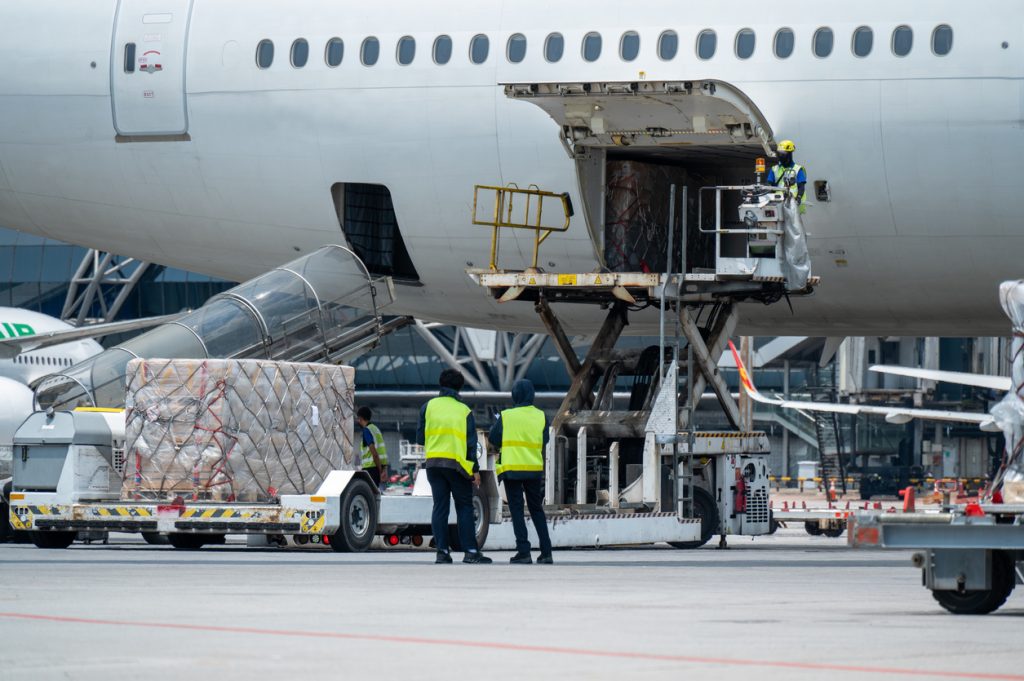
Air cargo handling challenges Africa can affect how quickly goods move from an aircraft to their final destination. For businesses shipping products, spare parts, documents, medical supplies, or other time-sensitive items, the flight itself is only one part of the journey.
A shipment can arrive in Lagos, Nairobi, Accra, Johannesburg, or another major aviation hub on schedule and still take much longer than expected to reach the customer. Handling, documentation, customs procedures, storage, and onward transportation can all influence the final delivery time.
What Happens After an Air Cargo Shipment Lands?
Once an aircraft lands, cargo may pass through several stages before it can leave the airport.
Depending on the shipment and destination, this can involve:
- Unloading from the aircraft
- Transfer to the cargo terminal
- Documentation and security checks
- Customs processing where applicable
- Sorting and temporary storage
- Collection or dispatch arrangements
- Road transportation to the final destination
A delay at any one of these stages can hold up the entire shipment.
This is why businesses should not calculate delivery time based only on flight duration. A two-hour flight does not necessarily mean the goods will be available for collection two hours after departure.
Customs Can Add Time to International Shipments
International cargo often requires customs clearance before it can continue to its destination.
Problems can arise when documentation is incomplete, shipment descriptions are unclear, declared information does not match the physical cargo, or the required paperwork is not immediately available.
For Nigerian importers, this can be particularly important when cargo arrives through an international gateway such as Murtala Muhammed International Airport in Lagos.
Businesses should prepare relevant shipping and commercial documents before the shipment arrives instead of waiting until the cargo is already at the airport.
Limited Handling Capacity Can Create Congestion
Cargo terminals need sufficient space, equipment, staff, and processes to deal with incoming and outgoing shipments.
During periods of heavy traffic, delays can occur when several shipments require processing at the same time. Perishable products and time-sensitive business shipments can be particularly affected because they may have limited tolerance for extended storage.
The situation becomes more complicated when cargo requires special handling or controlled storage conditions.
For businesses, choosing an appropriate shipping arrangement is therefore not only about finding the cheapest freight option. The handling requirements and expected delivery chain also matter.
Moving Cargo From the Airport to the Customer
One of the most overlooked parts of air freight is the final movement after the shipment has been released.
Imagine a company in Abuja receiving equipment that arrives through Lagos. The international flight may be completed, but the shipment still needs to be collected, transported, and delivered.
That could involve:
- Airport collection
- Cargo documentation checks
- Secure transportation
- Interstate movement
- Delivery scheduling
- Confirmation from the receiving business
Without proper coordination, the cargo can spend unnecessary time waiting even after it has cleared the airport.
Traffic Can Affect Airport Cargo Deliveries
In cities such as Lagos, road traffic can have a direct impact on cargo operations.
A vehicle collecting cargo from the airport needs to consider terminal access, loading time, traffic conditions, and the distance to the receiving address. A shipment that is released in the morning may not necessarily reach a customer across the city quickly if the road journey coincides with heavy traffic.
For urgent deliveries, transport planning should therefore begin before the cargo becomes available for collection.
Common Mistakes Businesses Make With Air Cargo
Some cargo delays are caused by planning problems rather than the airport itself.
Businesses can reduce avoidable issues by:
- Providing accurate consignee information
- Preparing documentation early
- Confirming the receiving address
- Checking handling requirements before shipment
- Allowing realistic clearance time
- Arranging onward transportation in advance
- Keeping the receiver informed about expected arrival
Another common mistake is assuming that every airport handles cargo in exactly the same way. Procedures, facilities, operating conditions, and available transport options can differ between locations.
Why Cargo Visibility Matters
Businesses need to know where their shipment is and what stage it has reached.
A tracking update showing that cargo has arrived at an airport does not necessarily mean it is ready for delivery. It may still be awaiting handling, documentation, customs clearance, or release.
Clear communication between the shipper, logistics provider, airport handling team, and receiver can make it easier to identify where a delay is occurring and what needs to happen next.
How Travo.ng Can Help With the Onward Movement
Travo.ng provides courier, delivery, cargo logistics, and transport coordination services that can support the movement of goods after they enter the logistics chain.
For example, a business receiving cargo in Lagos can arrange transportation from the airport to its office, warehouse, customer, or another location. Where interstate movement is required, the delivery plan can be organised around the shipment’s release and destination.
Travo.ng can also support related business transportation needs where appropriate, helping companies coordinate travel and logistics instead of handling every movement separately.
Planning Around African Air Cargo Realities
Air cargo handling challenges Africa are not limited to what happens on the runway or inside the aircraft. The complete delivery chain includes terminal handling, documentation, customs, storage, airport access, road transportation, and final delivery.
Businesses that plan these stages together are better positioned to deal with unexpected delays.
For an urgent shipment, the most useful question is not simply, “When does the flight arrive?” It is, “What needs to happen from landing until the goods are in the hands of the receiver?”
That wider view is what turns an air freight booking into a properly planned logistics operation.
