


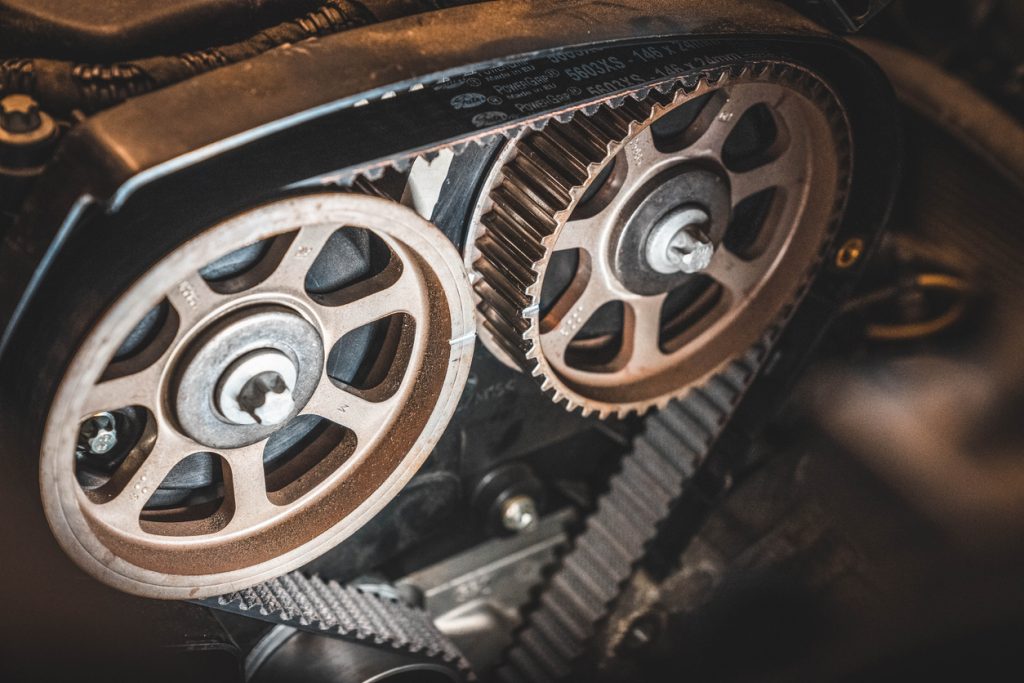
A timing chain is one of the most important components inside a car engine. It keeps the crankshaft and camshaft working in sync so the engine valves open and close at the correct time.
Unlike a timing belt, a timing chain is made from metal and is designed for long-term use. However, it can still stretch, wear out or develop problems with its tensioner and guide rails.
What Does a Timing Chain Do?
The timing chain connects the crankshaft to the camshaft or camshafts.
As the engine runs, the chain keeps these components synchronised. This allows the valves to operate at the correct point in the combustion cycle.
If the timing becomes incorrect, the engine may run poorly or, in severe cases, suffer major internal damage.
Timing Chain vs Timing Belt
Both systems perform essentially the same timing function, but they use different components.
A timing belt is made from reinforced rubber-based material, while a timing chain uses metal links.
A timing chain can last for a long time, but that does not mean it is maintenance-free. Chain guides, tensioners, sprockets and the chain itself can eventually wear.
Signs of a Worn Timing Chain
Timing chain problems can develop gradually. Some common warning signs include:
- Metallic rattling or slapping noise
- Rattle that is particularly noticeable during a cold start
- Rough or unstable idle
- Engine misfires
- Difficulty starting
- Reduced engine performance
- Check engine light
- Timing-related fault codes
- Unusual engine vibration
A rattling sound does not automatically mean the chain itself is faulty. The tensioner, guides, oil pressure or other timing components can also be responsible.
Why Does a Timing Chain Become Noisy?
The timing chain relies on guides and a tensioner to maintain the correct amount of tension.
As components wear, the chain can develop excessive slack. A weak or faulty tensioner can also fail to maintain the required tension, producing a rattling noise.
Poor lubrication and neglected engine-oil maintenance can contribute to timing-chain problems because the timing system depends on proper lubrication.
Can a Timing Chain Stretch?
Yes. Timing chains can develop wear and elongation over time.
The amount of wear that is acceptable depends on the specific engine, so there is no universal mileage figure that means every timing chain needs replacement.
This is why a mechanic may check the manufacturer’s specifications, timing data, fault codes and the condition of the complete timing system before recommending replacement.
What Happens If the Timing Chain Fails?
If the chain jumps or breaks, the crankshaft and camshaft can lose synchronisation.
The engine may stop running or fail to start. On some engines, incorrect timing can allow pistons and valves to collide, potentially causing serious internal engine damage.
A persistent timing-chain rattle should therefore not be ignored simply because the car is still running normally.
Does Every Timing Chain Need Scheduled Replacement?
Not necessarily.
Some manufacturers do not specify a fixed replacement interval for the timing chain and instead expect it to be inspected or replaced when wear or a related problem is identified.
Always check the maintenance information for your specific vehicle rather than applying a generic mileage figure.
What Is Included in a Timing Chain Replacement?
A proper timing-chain repair may involve more than replacing the chain.
Depending on the engine, the mechanic may inspect or replace:
- Timing chain
- Chain tensioner
- Guide rails
- Sprockets
- Seals
- Timing cover gasket or sealant
- Related fasteners
Replacing worn components together can prevent an old tensioner or guide from causing problems with a newly installed chain.
How Much Does Timing Chain Replacement Cost?
There is no universal price for timing-chain replacement.
The total cost depends on the vehicle, engine design, parts required and amount of labour involved. Some engines provide relatively accessible timing components, while others require substantial dismantling before the chain can be reached.
Ask for a vehicle-specific quotation that clearly states the parts and labour included.
Can You Drive With a Bad Timing Chain?
Driving with a suspected timing-chain problem can be risky.
A vehicle that has developed a persistent metallic rattle, timing-related fault code, misfire or significant loss of power should be inspected rather than driven unnecessarily.
If the chain fails while you are travelling, the resulting breakdown can be much more expensive than diagnosing and repairing the problem early.
Timing Chain Maintenance
Regular engine-oil maintenance is one of the most important things you can do for an engine fitted with a timing chain.
Use the oil specification recommended for your vehicle and follow the appropriate service intervals.
Also pay attention to unusual engine noises rather than waiting for a warning light. A small noise can sometimes be an early indication of a timing-system problem.
Timing Chain Problems on Nigerian Roads
Heavy traffic, frequent stop-start driving and high engine operating temperatures make regular maintenance important for Nigerian drivers.
If you frequently travel between cities or depend on your car for daily work, do not ignore unusual engine noises simply because the vehicle is still moving.
Before a long journey, check your maintenance records and have any persistent timing-related symptoms investigated.
Buying a Used Car With a Timing Chain
If you are buying a used vehicle, ask whether the timing chain or related components have previously been replaced.
Listen carefully to the engine during a cold start and look for warning lights, rough running or unusual noises.
A diagnostic scan and mechanical inspection can provide more useful information than relying on the seller’s statement that the engine is fine.
Timing Chain Replacement Is a Specialist Job
Timing-chain replacement requires accurate engine timing and, depending on the vehicle, specialist tools and service information.
Incorrect installation can cause serious engine problems. Unless you have the appropriate experience and tools for the specific engine, this is a job best handled by a qualified technician.
Prepare Your Car Before Travelling With Travo.ng
Before a long trip, check your engine oil, coolant, tyres, brakes, battery and warning lights. If your engine has developed a timing-chain rattle or other timing-related symptoms, have it inspected before travelling.
Travo.ng can help with relevant travel, vehicle hire, airport pickup and logistics arrangements while you focus on keeping your vehicle ready for the road.
