


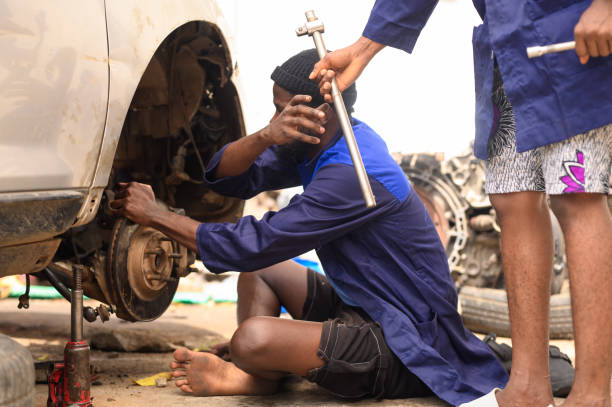
A spanner is one of the basic tools used for tightening and loosening nuts and bolts. If you have ever opened a car bonnet, changed a battery, worked on a tyre or carried out simple vehicle maintenance, you have probably used one.
Although a spanner looks simple, different sizes and designs are made for different jobs. Using the wrong size can damage the fastener or make the repair more difficult.
For drivers who handle basic maintenance themselves, understanding the common types of spanners can help when putting together a useful car tool kit.
What Is a Spanner?
A spanner is a hand tool designed to grip a nut or bolt so it can be turned.
In everyday use, the word “spanner” is commonly used for tools with an open or closed head. In some places, particularly North America, similar tools are often called wrenches.
The size of a spanner normally refers to the size of the nut or bolt head it is designed to fit.
Common Types of Spanners
There are several types of spanners, each suited to particular jobs.
Open-End Spanner
An open-end spanner has an open jaw at one or both ends.
It is useful when you need to access a nut from the side or when there is limited clearance around the fastener.
However, because it only grips some sides of the nut, excessive force or the wrong size can cause the tool to slip.
Ring Spanner
A ring spanner completely surrounds the nut or bolt head.
Because it grips more of the fastener, it can provide a stronger hold than an open-end spanner.
Ring spanners are useful when a nut is accessible from above and you need to apply more turning force.
Combination Spanner
A combination spanner has an open end on one side and a ring end on the other.
This makes it a practical option for a basic vehicle toolkit because one tool can provide two different types of access.
Adjustable Spanner
An adjustable spanner has a movable jaw that allows it to work with different fastener sizes.
It is convenient for general repairs, especially when you do not have the exact fixed-size spanner available.
However, the movable jaw needs to be adjusted correctly. A poorly fitted adjustable spanner can slip and damage the nut.
Socket Spanner
A socket spanner uses interchangeable sockets that fit over nuts and bolts.
A ratchet handle can make it much quicker to remove and install fasteners, particularly in areas where you have limited room to turn a conventional spanner.
Socket sets are particularly useful for vehicle maintenance.
Which Spanner Do You Need for a Car?
There is no single spanner that handles every car repair.
A basic toolkit can include several common metric sizes, although the exact sizes needed depend on the vehicle.
Before buying a complete set, check the fasteners used on your particular vehicle.
A socket set containing common metric sizes, a ratchet and extension bars can be especially useful for routine vehicle work.
Spanner for Car Battery Work
A spanner or socket may be needed to loosen battery terminal clamps or battery hold-down hardware.
Before working around a battery, make sure the ignition is off and understand the correct procedure for disconnecting and reconnecting the terminals.
Avoid allowing a metal tool to bridge the battery terminals or touch the wrong components.
If you are unsure about the electrical system, professional assistance is safer than experimenting.
Spanner for Tyre and Wheel Work
Wheel nuts require the correct tool and enough leverage to loosen them.
A wheel brace or suitable socket is commonly used for removing wheel nuts.
When reinstalling a wheel, the nuts should be tightened correctly and to the vehicle manufacturer’s specified torque.
A normal spanner should not be treated as a replacement for a torque wrench when accurate final tightening is required.
Why the Correct Spanner Size Matters
Using a spanner that is too large can allow movement between the tool and fastener.
This can round off the edges of the nut or bolt, making future removal much harder.
A spanner that fits properly should sit securely on the fastener.
If a nut is extremely tight, avoid immediately applying excessive force to a poorly fitting tool. The fastener may require penetrating fluid, a different tool or professional assistance.
Spanner vs Wrench
The terms can mean slightly different things depending on the country.
In British English, “spanner” is the common term for many tools used to turn nuts and bolts. In American English, “wrench” is more commonly used.
For someone searching online for vehicle tools, using both terms can help you find the same type of equipment from different suppliers.
What Is a Torque Wrench?
A torque wrench is different from a normal spanner.
It allows you to tighten a fastener to a specified torque value rather than simply tightening it by feel.
This is particularly important for certain vehicle components where over-tightening or under-tightening can cause problems.
Wheel nuts are one example where following the vehicle manufacturer’s specified torque is important.
Common Spanner Mistakes
Some simple mistakes can turn a minor repair into a bigger problem.
Avoid:
- Using the wrong size
- Using an adjustable spanner when a correctly sized fixed tool is available
- Applying excessive force to a loose-fitting tool
- Using damaged or cracked tools
- Using a pipe or extension without understanding the risk
- Striking a normal spanner unless it is designed for that purpose
- Leaving tools in the engine bay after completing work
Always make sure the vehicle is safely supported before working underneath it.
Building a Basic Car Tool Kit
If you want a small toolkit for basic vehicle maintenance, consider having:
- Combination spanners
- Socket and ratchet set
- Adjustable spanner
- Screwdrivers
- Pliers
- Wheel brace
- Torque wrench
- Jack and appropriate wheel equipment
- Work gloves
- Flashlight
The tools you need will depend on the vehicle and the type of maintenance you intend to perform.
When Not to Use a Spanner Yourself
Not every vehicle repair is suitable for DIY work.
Avoid working on components you do not understand, particularly steering, braking, suspension, fuel and high-voltage electrical systems.
If a fastener is seized, damaged or difficult to access, forcing it with the wrong tool can create additional damage.
Getting a mechanic to handle the job can be cheaper than replacing a damaged component.
Spanner and Long-Distance Travel
A basic toolkit can be useful when travelling between cities, but carrying tools does not replace proper vehicle preparation.
Before a long journey, check your tyres, brakes, engine fluids, battery, lights and spare wheel.
If the vehicle has an existing warning light, unusual noise or mechanical problem, have it checked before starting the trip.
Spanner and Travo.ng
Whether you are driving your own vehicle or arranging transportation, keeping the vehicle properly maintained is important for reliable movement.
Travo.ng supports travel and logistics needs, including transportation coordination, travel bookings, delivery and other mobility-related services.
For longer journeys, proper vehicle preparation can help reduce avoidable delays and breakdowns along the route.
Final Advice
A spanner is a simple but essential tool for many vehicle maintenance tasks. The most important thing is using the correct size and type for the job.
For regular car maintenance, a combination spanner and socket set can cover many basic tasks. For jobs requiring precise tightening, use a torque wrench and follow the vehicle manufacturer’s specifications.
If you are unsure about a repair, particularly when it involves safety-critical components, it is better to have the vehicle inspected by a qualified mechanic.
