


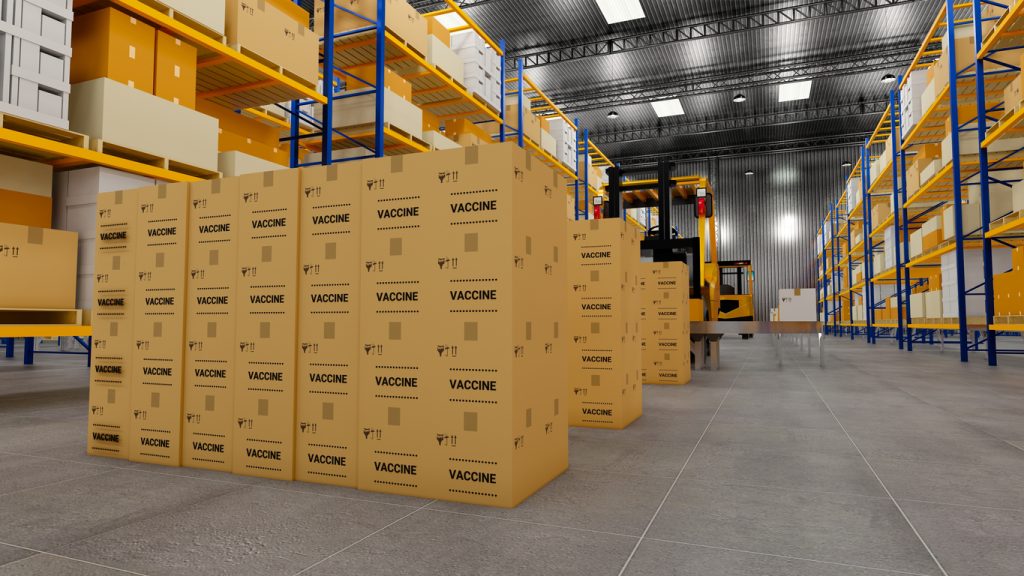
An FMCG distribution warehouse in Lagos needs to do more than store products. It should make it easy to receive large quantities of goods, organise inventory, pick orders quickly and dispatch products to retailers, wholesalers, supermarkets and other customers.
For FMCG businesses, warehouse location and operational layout can directly affect delivery times and distribution costs. Ikeja, Oshodi, Isolo, Amuwo-Odofin and other major logistics corridors are commonly considered because of their road connectivity and access to different parts of Lagos.
What an FMCG Distribution Warehouse Should Have
A suitable facility should provide enough space for both storage and daily movement.
Important features include:
- High-capacity storage areas
- Pallet racking where appropriate
- Loading and unloading bays
- Adequate truck access
- Forklift access
- Good floor condition
- Reliable power
- Fire protection
- Security
- Proper drainage
- Inventory management space
- Staff and dispatch areas
Some established FMCG distribution facilities in Lagos operate large warehouses with 24-hour CCTV monitoring and security arrangements, showing the importance of combining storage capacity with controlled distribution operations. (FMCG Distribution)
Warehouse Location Matters for FMCG Distribution
FMCG products usually move frequently rather than remaining in storage for long periods.
That makes access to major roads particularly important.
Ikeja and Ogba
The Ikeja industrial axis can work well for distributors serving mainland Lagos and businesses that need access to major arterial routes.
It is also an established distribution and industrial area, although warehouse rents can be relatively high. Current 2026 market estimates place Ikeja warehouse rents around ₦45,000–₦85,000 per sqm annually, depending on the property and specification. (Rent in Lagos)
Oshodi and Isolo
These areas can be useful for FMCG businesses that need access to several mainland distribution routes.
Isolo, in particular, has warehouse facilities designed around high-volume loading and distribution. One purpose-built facility in the area advertises the ability to mechanically load and unload 15 trucks of varying heights simultaneously. (ALMA Stores (FMCG Distribution))
Amuwo-Odofin and Mile 2
These locations can be practical for businesses distributing between mainland Lagos, the port corridors and western Lagos.
Apapa
Apapa becomes particularly relevant when FMCG inventory is imported through the seaports. However, the additional warehouse cost and truck movement challenges should be considered alongside the benefit of being closer to port operations.
Pallet Capacity and Storage Layout
Before renting a warehouse, calculate how many pallets you actually need.
Consider:
- Number of SKUs
- Average pallet quantity per SKU
- Fast-moving products
- Slow-moving products
- Carton dimensions
- Pallet height
- Racking configuration
- Picking aisles
- Dispatch staging space
Do not use the entire warehouse floor area for storage. Space is also needed for receiving, picking, packing, vehicle loading and staff movement.
Receiving and Dispatch Should Be Fast
An FMCG warehouse can receive and dispatch products several times a day.
A practical layout should minimise unnecessary movement between:
Receiving → Storage → Picking → Staging → Loading → Delivery
Where possible, fast-moving products should be positioned close to picking and dispatch areas.
This reduces forklift travel and makes it easier for warehouse workers to prepare large numbers of orders.
FIFO and Expiry Management
FMCG products often have expiry dates, so inventory management needs to go beyond simply counting cartons.
Businesses should consider FIFO or FEFO procedures depending on the product and operational requirements.
FEFO means First Expiry, First Out, which prioritises products with the earliest expiry dates.
Warehouse records should make it easy to identify:
- Product
- Batch
- Quantity
- Expiry date
- Storage location
- Date received
- Date dispatched
This reduces the risk of old stock remaining behind newer deliveries.
Truck Access and Loading Bays
FMCG distribution involves frequent truck movement.
Before signing a warehouse lease, inspect:
- Gate width
- Truck court
- Loading-bay capacity
- Trailer access
- Turning radius
- Internal road condition
- Driver waiting area
- Overnight parking
- Loading schedules
A warehouse with excellent storage space can still create operational problems if trucks struggle to enter, reverse or leave efficiently.
Power and Equipment
FMCG distribution may require power for lighting, office systems, CCTV, forklifts, warehouse management equipment and other operations.
Ask about:
- Transformer capacity
- Generator capacity
- Backup power
- Diesel arrangements
- Maintenance responsibilities
- Water supply
- Internet connectivity
If the warehouse uses mechanical loading systems or powered material-handling equipment, confirm that the available power infrastructure is sufficient.
Security and Product Protection
FMCG stock can move in large volumes and may contain high-value branded products.
Security should cover both the building and the distribution process.
Look for:
- Perimeter fencing
- CCTV
- Security personnel
- Controlled access
- Adequate lighting
- Visitor records
- Driver identification
- Secure loading areas
- Fire protection
Inventory should also be properly documented when received and dispatched.
Warehouse Costs in Lagos
Warehouse rent varies substantially depending on location, building quality and infrastructure.
Current 2026 estimates put typical annual rates around ₦45,000–₦85,000 per sqm in Ikeja, ₦40,000–₦75,000 in Oshodi and ₦35,000–₦70,000 in Amuwo-Odofin. These are market estimates rather than guaranteed rates for a particular property. (Rent in Lagos)
Modern facilities with high ceilings, loading bays, fire systems, backup power and CCTV can attract higher rents than basic warehouses. (Rent in Lagos)
Also budget for:
- Service charges
- Security
- Insurance
- Generator and diesel costs
- Maintenance
- Agency fees
- Legal fees
- Loading and handling
- Forklift operations
Plan for Peak-Season Stock
FMCG demand can increase significantly during promotional campaigns and major festive periods.
Instead of filling the main warehouse beyond its efficient capacity, businesses can use temporary overflow or seasonal storage.
This allows the main facility to continue operating efficiently while additional stock is held elsewhere until demand increases.
Tribal and Cultural Considerations in Lagos
FMCG warehouses often bring together drivers, loaders, sales representatives, warehouse staff and contractors from different parts of Nigeria.
Avoid assumptions about particular ethnic or cultural groups. Establish clear workplace rules around access, working hours, loading procedures, driver conduct and relationships with neighbouring businesses or the surrounding community.
Using Travo.ng for FMCG Distribution
Warehouse storage is only one part of FMCG distribution.
Travo.ng can support relevant logistics requirements such as cargo movement, transport coordination, deliveries and business logistics.
The objective is to connect suppliers, warehouse operations, distributors, retailers and final customers so that inventory keeps moving rather than becoming unnecessarily tied up in storage.
FMCG Warehouse Inspection Checklist
Before renting an FMCG distribution warehouse in Lagos, confirm:
- How many pallets can it realistically hold?
- Is racking already installed?
- How many loading bays are available?
- Can articulated trucks enter?
- Is there sufficient truck parking?
- What is the floor load capacity?
- Is there reliable backup power?
- Are CCTV and security operational?
- Is the warehouse suitable for food or other regulated FMCG products?
- How will expiry and batch information be managed?
- Is there enough picking and dispatch space?
- What additional charges apply?
- Can the facility accommodate peak-season inventory?
- How quickly can goods be received and dispatched?
For FMCG businesses, the ideal Lagos warehouse is not necessarily the one with the largest floor area. The important combination is storage capacity, fast picking, truck access, inventory control, security and a location that supports frequent distribution.
