


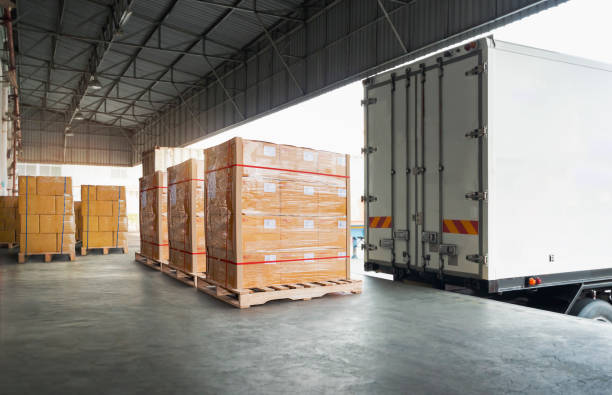
A 2,000 sqm high-bay warehouse with three loading bays in Ikeja can be suitable for businesses that need significant storage capacity, efficient truck operations and room for organised distribution.
For companies involved in e-commerce, FMCG distribution, manufacturing, wholesale, importation or third-party logistics, the combination of high ceilings and multiple loading bays can make a major difference to daily operations.
Current Ikeja warehouse listings show that pricing varies significantly by location and specification. For example, several large warehouses around Oregun and Oba Akran are currently advertised around ₦45,000 per sqm per year, while newer premium facilities around the airport corridor can be substantially more expensive. (Nigeria Property Centre)
What Does 2,000 Sqm Give You?
A 2,000 sqm warehouse provides approximately 21,500 square feet of internal floor area.
That gives a business enough room to separate different operational zones, such as:
- Main storage area
- Receiving section
- Dispatch area
- Packing and sorting area
- Office space
- Staff facilities
- Equipment area
- Returns section
- Loading and unloading space
The actual usable storage area will be lower than 2,000 sqm once offices, aisles, loading areas and other facilities are taken into account.
Why High-Bay Storage Matters
A high-bay warehouse allows a business to make better use of vertical space.
Instead of relying entirely on floor space, goods can be stored vertically using appropriate racking systems and material-handling equipment.
This can be useful for businesses holding large quantities of cartons, pallets, packaged goods and other inventory.
Before renting, however, confirm the actual clear internal height rather than relying only on the description “high-bay.”
Ask for the:
- Clear height
- Floor loading capacity
- Column spacing
- Racking compatibility
- Sprinkler or fire-protection arrangements
- Forklift access
- Lighting
- Ventilation
Three Loading Bays for Faster Operations
Three loading bays can help separate incoming and outgoing movements.
For example:
- One bay can handle receiving.
- One can handle outbound deliveries.
- One can be reserved for larger or scheduled truck operations.
The exact arrangement will depend on the warehouse design and the type of vehicles using the facility.
Do not only count the number of loading bays. Check whether trucks can comfortably approach, reverse, load and leave without blocking other vehicles.
Is Ikeja a Good Location for a Warehouse?
Ikeja has several established industrial and commercial corridors, including Oregun, Oba Akran and areas around the airport and major roads.
Current listings show substantial warehouse stock in the area, including facilities of 1,800 sqm, 1,882 sqm, 3,000 sqm and larger. (Nigeria Property Centre)
The location can be practical for businesses distributing goods around Lagos, particularly where proximity to major roads, customers, suppliers and airport-related logistics matters.
However, the specific street is important. A warehouse may look strategically located on paper but become difficult to operate if trucks face access restrictions or serious congestion.
What Could a 2,000 Sqm Warehouse Cost?
Using a current advertised rate of around ₦45,000 per sqm per year seen across several Ikeja warehouse listings, a 2,000 sqm warehouse would work out to approximately:
2,000 × ₦45,000 = ₦90 million per year
That is a base-rent calculation, not necessarily the complete amount required to take possession.
Some properties may be cheaper or considerably more expensive depending on their specification, location and facilities. For example, a current 2,600 sqm newly built warehouse near the international airport area is advertised at ₦120,000 per sqm per year. (Nigeria Property Centre)
This shows why comparing warehouses purely by size can be misleading.
What to Inspect Before Taking the Warehouse
Before committing to a 2,000 sqm facility, inspect the property physically.
Pay particular attention to:
- Clear internal height
- Roof condition
- Floor strength
- Drainage
- Flood risk
- Loading-bay dimensions
- Truck turning radius
- Parking
- Security
- Power supply
- Generator arrangements
- Fire-safety equipment
- Water supply
- Office facilities
- Toilets and staff facilities
- Road condition
- Access for articulated trucks
If your operation involves containers or heavy-duty trucks, arrange an inspection with someone who understands warehouse logistics rather than judging the property only by its appearance.
Check the Warehouse Title and Lease Documents
Before paying a substantial deposit, verify the landlord’s ownership and the legal status of the property.
Your property lawyer should review the relevant title documents and conduct the appropriate searches.
Also check:
- Certificate of Occupancy or applicable title
- Governor’s Consent where applicable
- Survey plan
- Deed of Assignment or other relevant documents
- Permitted use
- Existing encumbrances
- Outstanding property charges
- Lease terms
The physical warehouse may be perfect for your business, but the documentation still needs to be properly verified.
Consider Your Truck Operations
For a warehouse with three loading bays, truck movement should be part of the inspection.
Check whether the premises can accommodate the type of vehicles your business uses.
Consider:
- Delivery vans
- Medium-duty trucks
- Articulated trucks
- Container trucks
- Forklifts
- Staff vehicles
Measure the entrance and internal movement areas where necessary.
A warehouse with excellent storage capacity can become inefficient if vehicles cannot move smoothly around the property.
Tribal and Cultural Considerations
Ikeja’s business environment includes people from many ethnic and cultural backgrounds.
When negotiating a warehouse lease or dealing with landlords, agents, employees and local stakeholders, rely on documented ownership, contractual terms and professional communication rather than assumptions about anyone’s tribe or background.
Where there are community or local-area considerations, establish the actual requirements with the relevant parties and document important agreements.
Using the Warehouse for Logistics and Distribution
A 2,000 sqm warehouse can support a substantial distribution operation when the space is properly organised.
For example, an e-commerce company could divide the facility into receiving, storage, picking, packing, dispatch and returns sections.
A distributor could use dedicated areas for different product categories and schedule the three loading bays according to delivery routes.
A third-party logistics operator could also use the space for receiving goods from suppliers before redistributing them to customers across Lagos.
Warehouse Logistics With Travo.ng
Once the warehouse is operational, transportation becomes an important part of the overall setup.
Travo.ng can support related delivery, cargo movement, transport coordination and logistics requirements, helping businesses connect warehouse operations with the movement of goods.
For a warehouse of this size, the goal should not simply be to secure a large building. The facility should work efficiently as part of the company’s wider supply chain.
Questions to Ask Before Signing
Before taking a 2,000 sqm high-bay warehouse in Ikeja, ask:
- What is the exact clear height?
- What is the floor loading capacity?
- Are all three loading bays operational?
- What types of trucks can access the facility?
- Is there sufficient turning space?
- Is the warehouse self-compound?
- What power facilities are available?
- What fire-safety systems are installed?
- Is there adequate parking?
- What are the additional charges?
- What is the minimum lease period?
- What are the agency and legal fees?
- Is the property title properly documented?
- Are there restrictions on the intended business use?
A warehouse that answers these questions clearly is easier to assess than one where the advertised size and rent are the only information available.
