


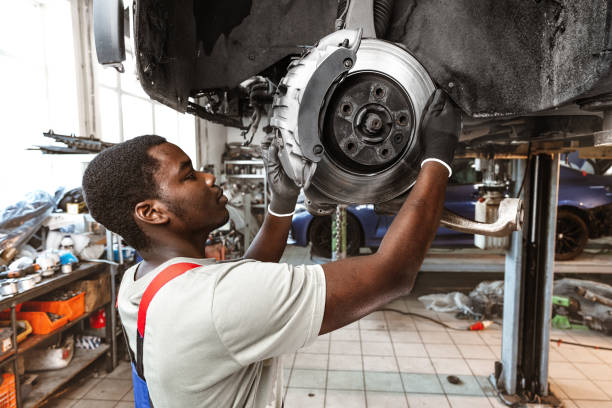
If you are searching for vocational mechanic jobs in Nigeria, there are several routes into the automotive industry without needing to complete a university degree.
Vocational training can prepare you for work in automobile workshops, dealerships, fleet operations, transport companies, logistics businesses, equipment companies and other organisations that depend on properly maintained vehicles.
The Federal Ministry of Education’s current TVET initiative specifically includes Automobile Mechanic, Automobile CNG Conversion & Maintenance, motorcycle and tricycle repair, and other practical trades. Its programmes are designed around employment and entrepreneurship, with hands-on training and recognised certification. (tvet.education.gov.ng)
What jobs can you get after vocational mechanic training?
A vocational mechanic qualification can lead to several different positions.
Common job titles include:
- Automobile Mechanic
- Automotive Technician
- Junior Mechanic
- Vehicle Maintenance Technician
- Fleet Maintenance Technician
- Auto Electrical Technician
- Diagnostic Technician
- Workshop Technician
- Diesel Mechanic
- Generator Mechanic
- Service Technician
- Equipment Maintenance Technician
Don’t search only for vacancies containing the word mechanic. Some employers use “automotive technician” or “maintenance technician” even when the job involves hands-on vehicle repair.
For example, current Lagos listings include automobile mechanic positions requiring technical training, apprenticeship or certification, together with practical experience and diagnostic skills. (Indeed)
What do you actually learn in vocational mechanic training?
A good programme should teach you how vehicle systems work and, more importantly, how to diagnose and repair them.
Core areas can include:
- Engine maintenance
- Petrol and diesel systems
- Braking systems
- Steering and suspension
- Transmission
- Cooling systems
- Lubrication systems
- Vehicle electrical systems
- Battery and charging systems
- Tyre and wheel maintenance
- Automotive diagnostics
- Workshop safety
- Preventive maintenance
Nigeria’s National Skills Qualification for Automobile Mechanic Works includes areas such as petrol and diesel engine maintenance, cooling and lubrication systems, brakes and suspension, tyres and wheels, basic automotive electrics and vehicle diagnosis. (Digital NBTE)
That gives you a useful idea of the skills employers expect from a properly trained mechanic.
Vocational training versus learning only through apprenticeship
Both routes can be useful.
An apprenticeship gives you direct exposure to customers, vehicles and real workshop problems. Vocational training provides a more structured approach to the technical knowledge behind those repairs.
For someone serious about building a career, combining both can be particularly valuable:
Vocational training → Apprenticeship/workshop experience → Entry-level job → Specialisation
This means you understand not only how to replace a component but also why it failed and how to prevent the same problem from happening again.
Where can vocationally trained mechanics work?
You are not restricted to small roadside workshops.
Automobile workshops
This is the most obvious starting point. You can work on routine servicing, mechanical repairs, diagnostics and preventive maintenance.
Dealerships and service centres
Dealership workshops often have more structured procedures and may expose technicians to specific vehicle brands, manufacturer diagnostic systems and formal service processes.
Fleet companies
Transport and logistics companies need mechanics to keep commercial vehicles available.
The work can include servicing, inspections, breakdown response, brake and suspension maintenance and vehicle diagnostics.
Manufacturing companies
Factories use vehicles and mechanical equipment that require regular maintenance.
A mechanic with additional mechanical-maintenance skills can move beyond automotive work into industrial environments.
Construction and heavy equipment
Excavators, loaders, generators and other machinery require technicians with knowledge of diesel engines, hydraulics and heavy-duty systems.
Generator and power services
Technicians with engine-maintenance skills can also specialise in generator servicing and repairs.
Lagos has an active market for trained mechanics
Lagos is particularly relevant for people searching for vocational mechanic jobs because of the concentration of transport, logistics, manufacturing, dealerships and vehicle-service businesses.
Current listings show employers looking for automobile mechanics who can inspect, diagnose, service and repair vehicles, use diagnostic tools and maintain accurate service records. One current Lagos vacancy lists ₦150,000 per month and asks for relevant technical training, apprenticeship or certification alongside practical experience. (Indeed)
This illustrates an important point: employers are not necessarily looking for a certificate alone. They want someone who can work on real vehicles.
Diagnostic skills can increase your opportunities
Traditional mechanical skills remain important, but modern vehicles are increasingly electronic.
A mechanic who can use an OBD scanner, interpret fault codes and carry out proper electrical testing can take on problems that a basic mechanic may struggle with.
Some specialist automotive training programmes in Nigeria now cover computerized diagnosis, hybrid vehicle maintenance, auto-electrical diagnosis, wheel alignment and internal-combustion engine maintenance. (bimi.com.ng)
Learning these areas can help you move from basic servicing into more specialised technical work.
Don’t ignore auto electrical skills
One area worth taking seriously is vehicle electrical and electronic systems.
Modern vehicles use sensors, electronic control units, communication systems, charging systems and other electrical components.
Research into Nigerian technical-college automobile programmes has highlighted the need for better training facilities and stronger auto-electricity/electronics skills as vehicle technology advances. (Sage Journals)
For a vocational mechanic, this means learning electrical diagnosis alongside mechanical repair can make your skill set much stronger.
How to get your first vocational mechanic job
If you have recently completed training, start with realistic positions rather than waiting for a senior mechanic role.
Search for:
- Junior Mechanic
- Mechanic Trainee
- Workshop Assistant
- Automotive Technician Trainee
- Maintenance Assistant
- Service Technician
- Apprentice Mechanic
- Junior Automotive Technician
You can also approach reputable workshops, dealerships, fleet operators and vehicle-service businesses directly.
Your first job is mainly about gaining enough experience to become genuinely independent.
What should be on your CV?
Avoid making your CV entirely about your certificate.
Show your practical abilities.
For example:
Technical Skills
- Vehicle diagnostics
- Engine servicing
- Brake and suspension maintenance
- Auto electrical troubleshooting
- Preventive maintenance
- Battery and charging systems
- Transmission maintenance
- Workshop tools and equipment
Then describe where you gained those skills.
Instead of writing:
Completed mechanic training.
You could write:
Completed practical training in engine servicing, vehicle diagnostics, braking systems, suspension, electrical troubleshooting and preventive vehicle maintenance.
That gives a recruiter a much clearer picture of what you can actually do.
You can also become self-employed
Vocational mechanic training does not have to lead to permanent employment.
Some trained mechanics eventually establish their own:
- Automobile workshops
- Mobile mechanic services
- Auto-electrical businesses
- Diagnostic centres
- Tyre and wheel services
- Vehicle servicing businesses
- Fleet maintenance services
The Federal Ministry of Education’s TVET initiative explicitly combines vocational training with entrepreneurship support and says selected graduates can receive starter support to help establish businesses. (tvet.education.gov.ng)
That makes vocational training useful for people who eventually want to work for themselves.
What employers will test during an interview
Don’t be surprised if an employer gives you practical questions.
You may be asked:
- How would you diagnose an engine that is difficult to start?
- What checks should be completed during routine servicing?
- How would you identify a braking problem?
- How do you use an OBD diagnostic scanner?
- What causes a vehicle to overheat?
- How would you check a charging-system problem?
- What is preventive maintenance?
- What safety precautions should you take before working on a vehicle?
If possible, answer using real examples from your training or apprenticeship.
A vocational mechanic can move into fleet maintenance
Once you gain experience, fleet maintenance can be a strong next step.
Instead of maintaining one customer’s car at a time, you could be responsible for a company’s fleet of delivery vans, buses, trucks or other commercial vehicles.
The career path could look like:
Vocational Trainee → Junior Mechanic → Automotive Technician → Fleet Technician → Senior Technician → Fleet Maintenance Supervisor
This combines mechanical skills with transport and logistics operations.
For businesses operating vehicles across Lagos and other Nigerian cities, reliable maintenance directly affects delivery schedules, customer service and operating costs.
Keep upgrading your skills
Don’t stop learning after receiving your vocational certificate.
Useful areas to develop include:
- Automotive diagnostics
- Auto electrical systems
- Diesel engines
- CNG vehicle maintenance
- Hybrid vehicles
- Electric vehicles
- Fleet maintenance
- Heavy-duty equipment
- Hydraulics
- Air-conditioning systems
- Preventive maintenance
- Vehicle electronics
The Federal TVET programme currently includes CNG conversion and maintenance among its automotive-related training areas, showing how the skill requirements are expanding beyond traditional petrol and diesel repair. (tvet.education.gov.ng)
How logistics connects with mechanic work
Mechanics play an important role in the wider logistics industry.
A delivery business cannot operate efficiently when its vehicles are constantly breaking down. Transport companies need their buses and trucks available when scheduled, while businesses moving goods between locations depend on reliable vehicles.
This is where maintenance connects with transport and logistics.
Businesses may also require vehicle hire, delivery coordination, cargo movement or relocation support when vehicles and equipment need to be moved between sites. Travo.ng provides transport, delivery, cargo logistics and related mobility services where these requirements fit the customer’s needs.
The best way to build a mechanic career
If your goal is to find vocational mechanic jobs in Nigeria, focus on becoming more than someone who can replace worn parts.
Build strong diagnostic skills. Learn vehicle electrical systems. Get real workshop experience. Understand preventive maintenance. Learn how modern vehicles work.
A practical combination of vocational training + apprenticeship + diagnostic ability + real-world experience can take you from an entry-level mechanic position into specialised automotive, fleet or maintenance work.
And if you eventually want to run your own workshop, those same skills can become the foundation of a technical business.
