


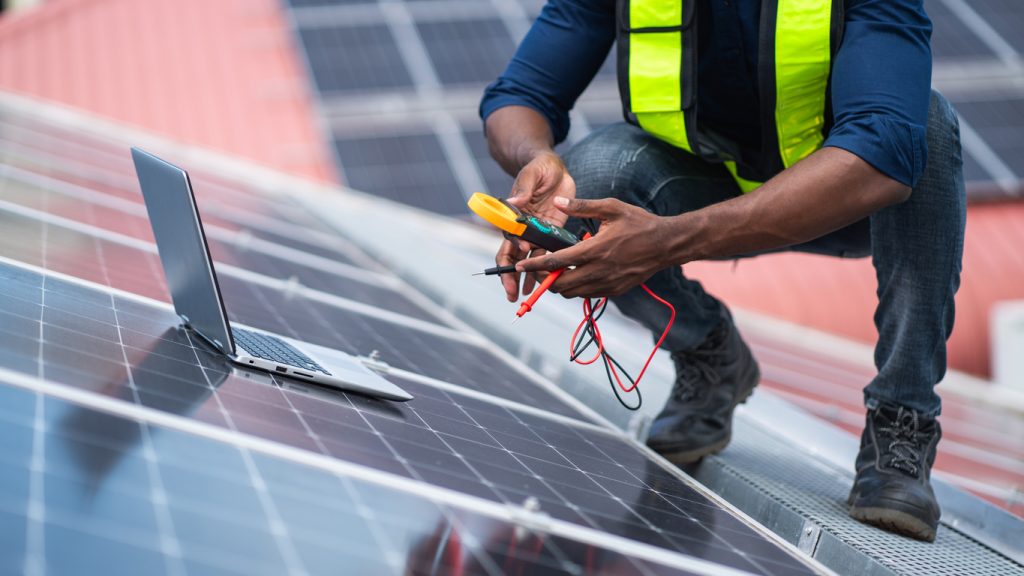
If you are searching for equipment technician careers in Lagos, you are looking at a field that covers much more than repairing machines. Hotels, restaurants, factories, warehouses, hospitals, construction companies, airports and logistics businesses all depend on technicians who can keep equipment working safely and reduce costly downtime.
The type of equipment can vary significantly. One technician may work on kitchen and gas equipment in a restaurant, another may maintain forklifts and warehouse machinery, while others work with generators, industrial machines, electrical systems, medical equipment or airport ground-support equipment.
Recent vacancies in Lagos show this range clearly. Equipment-related roles have included kitchen equipment technicians, industrial maintenance technicians, material-handling equipment technicians, automation technicians and ground-support equipment technicians. (Indeed)
What does an equipment technician do in Lagos?
The job depends on the industry, but most equipment technicians are responsible for keeping machinery available, safe and operational.
Typical duties include:
- Inspecting equipment for faults
- Carrying out preventive maintenance
- Troubleshooting mechanical and electrical problems
- Repairing or replacing faulty components
- Installing new equipment
- Testing equipment after repairs
- Reading technical manuals and wiring diagrams
- Maintaining service and repair records
- Monitoring equipment performance
- Ordering or managing spare parts
- Responding to breakdowns
- Following workplace safety procedures
For example, a technician working for a busy restaurant may need to maintain ovens, refrigerators, fryers, gas systems and other kitchen equipment. A technician in a warehouse may instead work with forklifts, hydraulic systems, batteries and material-handling equipment.
A recent Lagos kitchen-equipment technician vacancy, for instance, required installation, maintenance, troubleshooting and preventive maintenance of gas and kitchen equipment. (Indeed)
Which equipment technician jobs are available in Lagos?
One advantage of this career is that you can specialise as your experience grows.
Industrial equipment technician
Manufacturing companies require technicians to maintain production machinery and prevent unexpected stoppages.
The work can involve motors, pumps, conveyors, control systems, sensors, compressors and automated production equipment.
Material handling equipment technician
Warehouses, factories and logistics centres use equipment such as forklifts and other material-handling machinery.
Employers can look for technicians with knowledge of electrical, hydraulic and mechanical systems. Experience with electric forklifts and traction batteries can also be valuable. (LinkedIn)
Kitchen and laundry equipment technician
Hotels, restaurants and food businesses rely heavily on commercial equipment.
Technicians may maintain ovens, refrigerators, freezers, washing machines, dryers, gas systems and other specialised equipment.
This can be a practical entry route for someone with strong mechanical or electrical skills.
Ground support equipment technician
Lagos also offers opportunities connected to aviation.
Ground-support equipment is used around airports to support aircraft operations. Technicians may work on electrical systems, motors, generators, batteries, hydraulic and pneumatic controls and other equipment.
A 2026 recruitment listing for Air Peace included a Ground Support Equipment Technician (Electrical) position in Lagos requiring OND and relevant technical experience. (MyJobMag)
Automation technician
As factories become more automated, technicians with electrical, electronics and automation skills can work on PLCs, HMIs, sensors, VFDs, control panels and industrial networks.
Recent Lagos listings have included industrial automation positions involving troubleshooting and maintaining automated production equipment such as filling, bottling, packaging and conveyor systems. (Glassdoor)
What qualifications do you need?
The qualification depends heavily on the equipment and employer.
For many technician roles, employers may accept:
- SSCE with substantial practical experience
- Trade qualifications
- OND
- HND
- B.Sc. or B.Eng. for more specialised engineering positions
Technical fields that can be useful include:
- Mechanical Engineering
- Electrical Engineering
- Electrical/Electronics Engineering
- Mechatronics
- Industrial Maintenance
- Automobile Technology
- Instrumentation
- Biomedical Engineering
Do not assume that you need a university degree before entering the field. Some Lagos equipment technician vacancies accept OND or vocational qualifications alongside practical experience. For example, a previous Lagos Equipment Technician vacancy in Ikeja listed OND and vocational qualifications and requested two to three years of experience. (MyJobMag)
The skills that actually make you employable
Having a certificate is useful, but equipment technicians are ultimately hired to solve equipment problems.
Mechanical troubleshooting
You should understand how moving components work and be able to identify issues involving bearings, belts, shafts, pumps, gears, motors and other mechanical components.
Electrical troubleshooting
Basic electrical knowledge is extremely useful because many modern machines combine mechanical and electrical systems.
You should be comfortable working with electrical testing equipment and understanding basic circuits, motors, switches, sensors and control systems.
Preventive maintenance
Good technicians do not wait for equipment to break down.
Regular inspection, cleaning, lubrication, calibration, tightening and component replacement can prevent larger failures.
This is particularly important in Lagos businesses where equipment may operate for long hours every day.
Reading technical documentation
Learn to understand manuals, wiring diagrams, equipment specifications and maintenance instructions.
For specialised equipment, following the manufacturer’s maintenance procedure can be just as important as knowing how to use a spanner or multimeter.
Record keeping
A professional technician should be able to document:
- Equipment faults
- Repairs completed
- Parts replaced
- Service dates
- Downtime
- Inspection results
- Recurring problems
This information helps management identify equipment that is becoming too expensive or unreliable to maintain.
How much can equipment technicians earn in Lagos?
There is no fixed salary because the pay varies according to specialisation, experience, industry and the complexity of the equipment.
For example, a recent Lagos kitchen/gas equipment technician listing advertised ₦100,000–₦160,000 per month, while a previous Lagos Equipment Technician vacancy in Ikeja advertised ₦200,000–₦300,000 per month. A current Lagos technician vacancy covering electrical, mechanical, PDI and EV work lists ₦250,000–₦350,000 monthly. (Indeed)
Specialised technicians can move into higher-paying positions as they gain experience with industrial automation, heavy equipment, aviation equipment, oil and gas machinery or other technically demanding systems.
The important point is not to judge the career only by an entry-level salary. Specialisation can significantly change your earning potential.
Where can you find equipment technician work?
Lagos has a wide range of industries that depend on technical maintenance.
Look at opportunities in:
- Manufacturing plants
- Hotels
- Restaurants
- Hospitals
- Warehouses
- Logistics companies
- Construction firms
- Aviation
- Oil and gas services
- Telecommunications
- Shopping centres
- Property and facility management
- Food-processing companies
- Equipment suppliers and distributors
This means your first job does not necessarily need to carry the exact title Equipment Technician.
Search for related titles such as:
- Maintenance Technician
- Mechanical Technician
- Electrical Technician
- Field Service Technician
- Workshop Technician
- Technical Officer
- Maintenance Officer
- Service Technician
- Industrial Technician
- Equipment Maintenance Technician
- Field Technician
Recent Nigerian job listings show employers using several of these titles for work involving equipment installation, maintenance, troubleshooting and repair. (Indeed)
How to get your first equipment technician job
If you have little experience, start by building hands-on skills rather than waiting for a perfect vacancy.
You could begin through:
- Technical training – Learn mechanical, electrical or electronics fundamentals.
- Workshop experience – Work alongside experienced technicians and learn how equipment is diagnosed and repaired.
- Apprenticeship – Practical exposure can be extremely valuable for technician careers.
- Industrial attachment – Look for opportunities with factories, hotels, engineering companies and equipment suppliers.
- Entry-level maintenance roles – These can give you access to larger equipment and more structured maintenance systems.
Keep records of the equipment you have worked on. If you have repaired generators, pumps, compressors, refrigeration systems, forklifts or industrial machines, list them specifically on your CV rather than simply writing “maintenance experience.”
Lagos conditions make preventive maintenance especially important
Equipment in Lagos can operate under demanding conditions.
Factories may run long production shifts. Restaurants can have equipment operating throughout the day. Warehouses may depend on forklifts and other machinery continuously. Hotels cannot afford to have essential laundry, kitchen or cooling equipment unavailable for long periods.
When equipment fails during a busy operating period, the cost is not just the replacement part. The business can lose production time, delay customers and pay for emergency repairs.
That is why employers value technicians who can identify developing problems before they become major breakdowns.
You can build a career beyond technical repairs
Equipment maintenance can eventually lead into supervisory and management positions.
A possible progression is:
Trainee Technician → Technician → Senior Technician → Maintenance Supervisor → Maintenance Manager
You can also move sideways into:
- Field service
- Technical sales
- Equipment installation
- Engineering support
- Facilities management
- Procurement of technical equipment
- Operations management
The more specialised your technical knowledge becomes, the more options you can have.
Don’t overlook logistics and equipment movement
Equipment technicians sometimes work with businesses that need machinery transported between workshops, warehouses, project sites and customer locations.
For companies operating across Lagos and other Nigerian cities, moving heavy or valuable equipment requires more planning than an ordinary parcel delivery. The business may need suitable transport, loading coordination, delivery scheduling and, in some cases, relocation support.
Travo.ng can be relevant where a business needs practical transport, delivery, cargo logistics or relocation coordination alongside its wider operations.
What employers may ask at an interview
Prepare for practical questions rather than memorised definitions.
You may be asked:
- How would you diagnose equipment that suddenly stops working?
- What is preventive maintenance?
- How do you identify the cause of repeated equipment failure?
- What safety precautions do you take before repairing machinery?
- How do you document maintenance work?
- How would you handle an urgent breakdown during production?
- Which diagnostic tools have you used?
- Can you read a wiring diagram or technical manual?
- How do you determine whether a component should be repaired or replaced?
If you can answer these questions using real examples from your workshop, internship or previous employment, you will be much more convincing than someone who only lists certificates.
Building a stronger equipment technician career in Lagos
If you want to stay competitive, keep adding specialised skills.
Useful areas to learn include:
- PLC programming
- Industrial automation
- Electrical diagnostics
- Hydraulics and pneumatics
- HVAC and refrigeration
- Welding and fabrication
- Preventive and predictive maintenance
- Equipment calibration
- Forklift and material-handling systems
- Generator maintenance
- EV technology
- Maintenance management software
- Workplace health and safety
For example, a technician who starts with general mechanical repairs and later learns PLCs, sensors and industrial automation can qualify for a much broader range of manufacturing and engineering roles.
Equipment technician careers in Lagos are therefore not limited to fixing machines when they break. The strongest technicians understand how equipment works, why failures happen, how to prevent downtime and how their work affects the wider business.
If you are starting out, focus on practical experience, build one strong technical specialisation and gradually add complementary skills. Lagos has opportunities across hospitality, manufacturing, logistics, aviation, construction and other sectors where reliable equipment is essential to daily operations.
