


For many Nigerian businesses, electricity is no longer just a utility expense. It is an operating decision that affects production, customer service, staff productivity, refrigeration, security, and monthly cash flow.
That is why commercial solar leasing in Nigeria is becoming a practical option for companies that want solar power without paying the full installation cost upfront.
Instead of purchasing panels, batteries, inverters, mounting equipment, and other components outright, a business can use a structured solar leasing arrangement and spread the cost over an agreed period. This can be especially useful for businesses trying to reduce dependence on diesel generators while protecting working capital.
What Commercial Solar Leasing Actually Means for a Nigerian Business
A typical solar lease allows a company to use a professionally installed solar power system while making periodic payments rather than funding the entire project at once.
Depending on the arrangement, the package may include:
- Solar panels
- Inverters
- Battery storage
- Installation and cabling
- Monitoring equipment
- Maintenance support
- System upgrades or replacement terms
Before agreeing to any package, the business’s actual electricity consumption should be assessed. A supermarket running freezers throughout the day has very different energy requirements from a small office operating laptops, lighting, internet equipment, and air conditioners.
Proper sizing matters because an undersized system can leave the company dependent on generators, while an oversized installation may increase monthly leasing costs unnecessarily.
How Businesses Use Solar to Reduce Generator Expenses
Consider a medium-sized business in Lagos operating from 8 a.m. until 7 p.m. If the company regularly runs a diesel generator during grid outages, fuel, servicing, engine oil, repairs, and eventual generator replacement can become significant recurring expenses.
Commercial solar can take over much of the daytime load.
During periods of strong sunlight, solar panels can power office equipment, lighting, refrigeration, POS terminals, security systems, pumps, and other essential equipment. Batteries can store additional energy for use later in the day.
The generator can then become backup power instead of the company’s primary electricity source.
For businesses in places such as Ikeja, Lekki, Victoria Island, Surulere, Abuja, Port Harcourt, and other commercial centres, reducing generator running hours can make operating costs easier to control.
What to Check Before Signing a Solar Lease
A low monthly payment should not be the only consideration.
Ask the provider to explain the proposed system capacity, expected daily generation, battery capacity, maintenance responsibility, contract duration, equipment ownership, and what happens when the lease ends.
Businesses should also confirm whether the quoted system can handle important loads such as:
- Air conditioners
- Cold rooms and freezers
- Industrial equipment
- Water pumps
- Computers and servers
- CCTV and access-control systems
- Shop lighting and payment terminals
If your electricity demand changes substantially between daytime and nighttime, that should also influence the solar and battery configuration.
Businesses That Can Benefit From Solar Leasing
Solar leasing can work particularly well for organisations with predictable daily electricity consumption.
Retail stores can keep lighting, POS equipment, fans, refrigeration, and security systems running during outages.
Hotels and serviced apartments can use solar to support selected loads while reducing generator operating hours.
Warehouses, pharmacies, clinics, offices, schools, restaurants, workshops, estates, and small manufacturing facilities may also benefit when systems are properly designed around their actual consumption.
Businesses expanding into multiple locations can also consider leasing where purchasing complete solar systems for every branch would tie up too much capital.
Planning the Installation Without Disrupting Operations
Commercial solar installations require more coordination than simply delivering equipment.
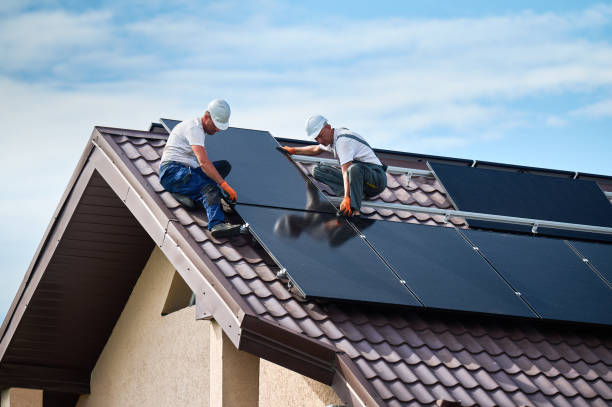
There must be adequate roof or ground space, safe access for installers, suitable locations for batteries and inverters, and proper arrangements for moving heavy or sensitive equipment to the site.
For businesses operating across Nigeria, Travo.ng can support the practical logistics around commercial energy projects, including equipment transportation, cargo movement, vehicle coordination, delivery scheduling, and business logistics support where required.
This is particularly useful when solar equipment must be moved between suppliers, warehouses, offices, construction sites, or branches in different cities.
Get Commercial Solar Leasing in Nigeria Without Heavy Upfront Spending
The strongest reason to consider commercial solar leasing in Nigeria is not simply that solar is available. It is the ability to move toward more predictable business power without immediately spending heavily on infrastructure.
The right arrangement should be based on your actual electricity demand, operating hours, generator usage, expansion plans, and budget.
For companies trying to reduce diesel dependence, improve power reliability, and preserve capital for day-to-day operations, a properly structured commercial solar lease can be a practical long-term energy strategy. Travo.ng can also help coordinate the transport and logistics required to get equipment safely to your business location.
