


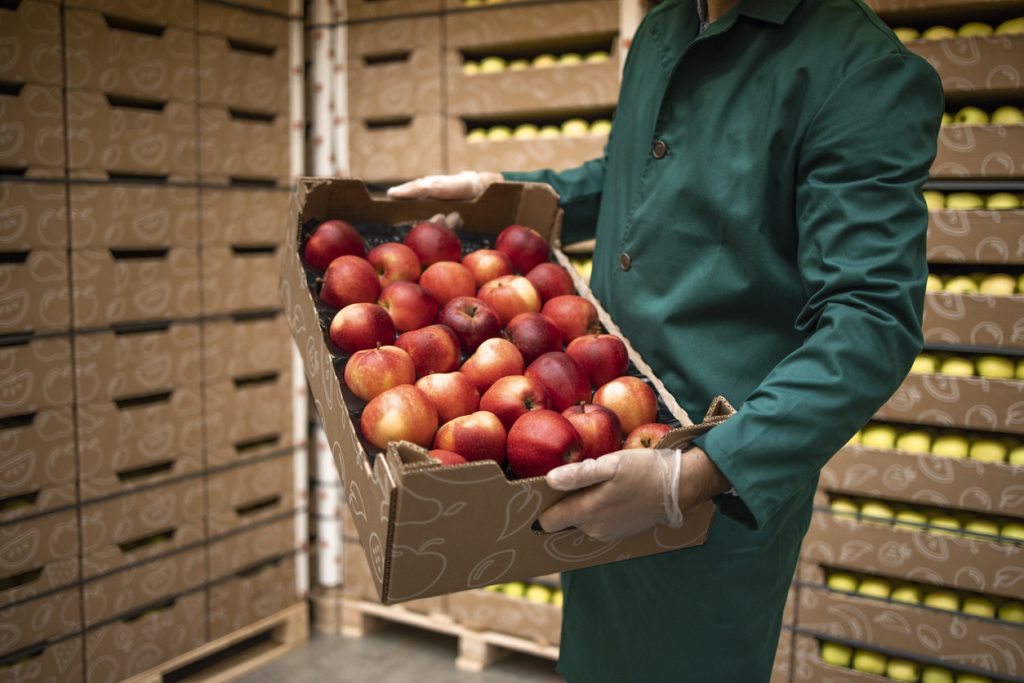
Running a food business in Lagos becomes more complicated the moment orders increase. Supplying ten customers around one neighbourhood is very different from moving cartons, fresh produce, packaged foods, drinks, or frozen items to supermarkets, restaurants, offices, and retailers across the city.
A practical scalable food distribution Lagos operation should allow a business to increase delivery volume without rebuilding its logistics process every few months. The transport, scheduling, storage coordination, and delivery system must be able to handle growth while keeping products moving reliably.
For food suppliers, wholesalers, restaurants, FMCG businesses, and online grocery sellers, this becomes especially important during busy periods when several locations need stock at roughly the same time.
Lagos Traffic Can Quickly Disrupt a Food Delivery Schedule
Food distribution in Lagos is rarely as simple as loading a vehicle and driving to the customer.
A supplier leaving Ikeja for deliveries in Yaba, Victoria Island, Lekki, and Ajah may spend several hours on the road if the route is poorly planned. Add loading delays, customer receiving times, road congestion, and multiple drop-offs, and one vehicle can easily fall behind schedule.
This is why growing businesses need distribution planning rather than occasional delivery arrangements.
Routes can be grouped geographically. For example, deliveries around Ikeja, Ogba, and Agege can be handled separately from orders going toward Victoria Island, Ikoyi, Lekki, and Ajah.
Travo.ng can support businesses with transport coordination and delivery services that make these recurring movements easier to organise.
Growing From 20 Deliveries to 100 Requires Better Planning
One common mistake is using the same informal delivery process as order volume grows.
A restaurant supplier may initially send products using one driver. Once five restaurants become twenty restaurants, that arrangement can become difficult to manage.
Businesses scaling food distribution should consider:
- Daily and weekly order volumes
- Number of delivery locations
- Required delivery windows
- Vehicle capacity
- Product handling requirements
- Loading and unloading time
- Failed delivery procedures
- Peak-day demand
The objective is not simply to add more vehicles. It is to build a distribution structure where additional orders can be absorbed without creating constant delays.
Fresh and Frozen Products Need Different Handling
Not every food shipment can be treated the same way.
Dry packaged goods such as biscuits, cereals, beverages, canned products, and sealed groceries generally provide more flexibility. Fresh meat, dairy products, frozen foods, seafood, vegetables, and other temperature-sensitive products require more careful handling.
Long loading periods under the Lagos sun can affect sensitive products before the actual journey even begins.
Businesses should therefore organise dispatch times carefully and choose transportation according to the food being moved. Where cold-chain handling is necessary, appropriate temperature-controlled arrangements should be planned rather than relying on ordinary vehicles.
Multi-Stop Distribution Can Reduce Repeated Trips
For businesses supplying several customers, properly organised multi-stop delivery can be more efficient than dispatching separate vehicles for every order.
A distributor supplying stores in Surulere, Yaba, and Lagos Island, for example, can plan those deliveries as one coordinated route when vehicle capacity and customer receiving schedules allow it.
The same principle works for restaurant suppliers, bakeries, beverage distributors, grocery businesses, and FMCG companies.
Travo.ng can help coordinate suitable vehicles, scheduled deliveries, cargo movement, and business logistics support based on the number of destinations and the type of goods involved.
Prepare for Festive and End-of-Month Demand
Food distribution volumes often change suddenly.
Festive seasons, weekends, public holidays, promotional campaigns, salary periods, and major events can produce noticeably higher demand. Waiting until orders have already increased before arranging additional transportation often results in missed deliveries.
Growing businesses should forecast busy periods and secure additional delivery capacity early.
A company normally completing two vehicle loads daily, for instance, should already know how it will handle four or five loads when demand increases.
Build a Distribution System That Can Grow With Your Business
Effective scalable food distribution Lagos operations depend on more than having access to vehicles. Businesses need dependable scheduling, suitable transport capacity, sensible route planning, and the flexibility to increase delivery volume when required.
Travo.ng helps businesses coordinate food deliveries, cargo logistics, transport, and recurring distribution requirements across Lagos and other parts of Nigeria.
Whether you are supplying restaurants in Lekki, supermarkets around Ikeja, retailers on Lagos Island, or customers across several parts of the city, a properly organised distribution system can make expansion much easier.
Instead of allowing logistics problems to limit sales, businesses can schedule their food distribution requirements with Travo.ng and build a delivery operation that is ready to grow.
