


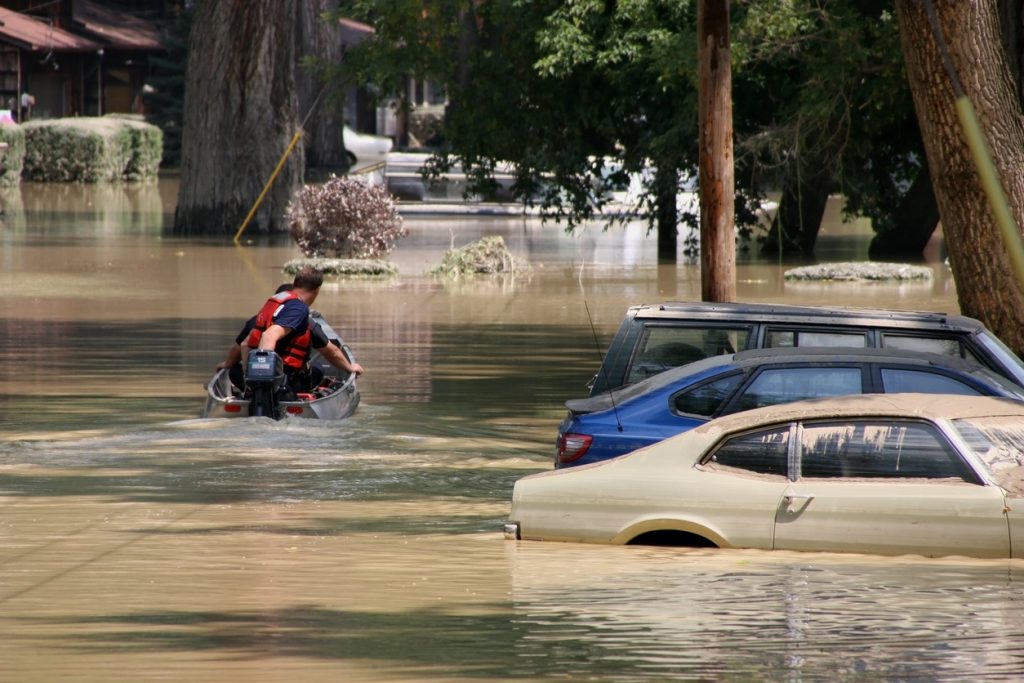
When heavy rainfall cuts off a school, hostel or university community, stranded students flood rescue quickly becomes more than a transport problem. Floodwater can block access roads, disable vehicles, separate students from their families and make normal pickup arrangements impossible.
Nigeria’s rainy season regularly creates these challenges, particularly in low-lying parts of Lagos, Ogun, Rivers, Bayelsa and other flood-prone areas. In July 2026, the National Emergency Management Agency (NEMA) again advised people in communities facing flood risks to follow warnings, move to safer ground and avoid walking or driving through floodwater.
For schools and families, the safest response starts with knowing where the students are, whether the location can still be reached by road and which authorities are already coordinating emergency operations.
What to Do When Students Are Trapped by Floodwater
The first mistake people make is sending an ordinary car into a flooded area simply because students need to leave urgently. A road that looks passable can have hidden potholes, open drainage channels or strong currents.
Students should remain in a secure location on higher ground while responsible adults establish:
- The students’ exact location and number
- Whether anyone needs urgent medical attention
- Which access roads are flooded or blocked
- The nearest safe pickup point
- Whether emergency authorities have already restricted movement
- Suitable onward transport once students reach a safe area
Where floodwater presents an immediate danger, NEMA, the relevant State Emergency Management Agency and other emergency responders should take the lead. Private transport providers should support evacuation logistics rather than attempt hazardous water rescues they are not equipped to perform.
How Transport Works After Students Reach Safe Ground
Getting students out of the flooded zone is only part of the job. Many still need coordinated transportation to their homes, temporary accommodation, hospitals or designated assembly centres.
For example, if students are evacuated from a flooded hostel in Lagos to a safe pickup point, trying to arrange separate vehicles for dozens of people can create confusion. A better arrangement may involve buses or vans with an agreed passenger list and clearly identified destinations.
Travo.ng can assist with the transport side of such situations by helping coordinate suitable vehicles, group movement, driver arrangements and onward journeys once routes are confirmed safe.
For students whose families live outside the affected city, this may also involve arranging interstate transport rather than leaving them stranded at an evacuation centre.
Flood Rescue Transport Needs Proper Coordination
During a flood emergency, information changes quickly. A road that was accessible at 8 a.m. may become unusable after another hour of rainfall.
That is why stranded students flood rescue coordination should not rely only on the shortest Google Maps route. Drivers need current information about flooded streets, diversions, bridge access and safe meeting points.
In Lagos, for instance, flooding around certain neighbourhoods can create long diversions even when the destination itself is not underwater. Similar problems occur in Port Harcourt and other cities where drainage problems and prolonged rainfall affect major and secondary roads.
A practical transport coordinator confirms accessibility before dispatching vehicles rather than sending drivers blindly into dangerous conditions.
Parents Should Avoid Rushing Individually Into Flooded Areas
When students call home saying they are trapped, the natural reaction is for parents to immediately drive toward them. Unfortunately, this can add more people and vehicles to an already dangerous area.
Families should instead maintain contact with the school, hostel management or emergency authorities and agree on a controlled pickup location.
For large groups, Travo.ng can support vehicle hire and transport coordination so students can be collected together and moved to designated safe destinations. Where temporary accommodation becomes necessary, hotel reservation assistance can also help families manage unexpected overnight stays.
Planning Ahead Makes Student Evacuation Safer
Schools, hostels and student organisations in flood-prone areas should have an evacuation transport plan before heavy rainfall becomes an emergency.
That plan should identify safe assembly points, emergency contacts, alternative road exits, available group vehicles and procedures for accounting for every student.
When professional emergency rescue is required, the appropriate authorities must remain responsible for life-saving operations. Travo.ng can complement that response by helping organise practical transport, vehicle hire and onward movement after students are safely evacuated.
For families, schools and institutions dealing with stranded students flood rescue, organised movement is far safer than improvising vehicles during rising floodwater. Early communication, proper emergency response and reliable transport coordination can help students get from danger to a genuinely safe destination.
