


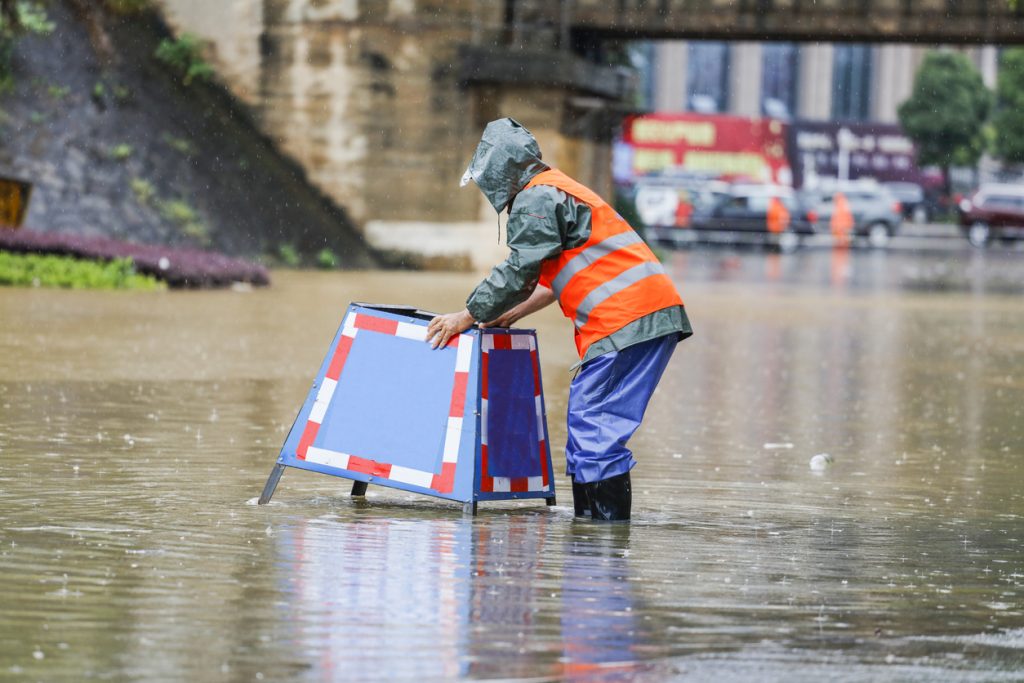
Flooding in Ogun State can turn a straightforward delivery into a difficult transport problem within hours. A road that was passable in the morning may become waterlogged after sustained rainfall, while traffic diversions can quickly increase journey times around Ifo, Sango-Ota, Agbado, Mowe and other busy communities.
For anyone arranging an Ogun flood emergency delivery, speed matters, but route safety matters more. The practical approach is not simply sending the nearest rider or driver. Someone needs to confirm the destination, understand current road conditions, choose suitable transport and maintain communication until the item reaches the recipient.
Recent flooding has shown how quickly movement can be disrupted. In July 2026, heavy rainfall submerged sections of Agbado Road, affecting an important route connecting communities including Adiyan, Ope-Ilu, Itoki and Abule-Ijoko towards Sango-Ota.
What an Ogun flood emergency delivery usually involves
Emergency requests during heavy rain are often different from ordinary courier jobs.
A family may need food, drinking water or essential household supplies delivered to someone who cannot move easily. A business may urgently need documents, replacement equipment or stock transferred between locations. Someone travelling may also need baggage, personal belongings or forgotten items moved while normal transport routes are disrupted.
Before dispatch, it helps to provide:
- Exact pickup and delivery locations
- A working recipient phone number
- A description and approximate size of the item
- Whether the area is currently experiencing serious flooding
- Any known alternative route or nearby landmark
- How urgently the delivery is required
The clearer this information is, the easier it becomes to plan safely.
Flooded roads can completely change the delivery route
During an emergency, the shortest route on a map may not be the fastest route on the ground.
For example, a driver heading between Lagos-border communities and parts of Ogun may normally use Agbado Road to avoid heavier traffic on the Lagos-Abeokuta Expressway. When that alternative road is flooded, however, the delivery may require a longer diversion.
This is why realistic delivery estimates should account for rainfall, traffic buildup, road diversions and conditions at the final destination.
Motorists have also been specifically advised by Ogun State’s Traffic Compliance and Enforcement Corps not to drive through flooded roads because the depth of the water can be difficult to determine and may conceal dangerous road conditions.
Saving twenty minutes is never worth putting a driver, vehicle or customer’s goods at unnecessary risk.
Same-day delivery during heavy rainfall needs flexibility
Customers sometimes expect an emergency parcel to move at exactly the same speed as it would on a dry day.
That is not always realistic.
During intense rainfall, a delivery that normally takes 60 to 90 minutes around a Lagos-Ogun corridor can take considerably longer if major junctions become congested or alternative routes are required. Flash-flood warnings can also affect roads, bridges, visibility and general transportation.
A better emergency logistics plan focuses on getting the item delivered safely while keeping the customer informed about changing conditions.
How Travo.ng can coordinate urgent deliveries in Ogun
Travo.ng can help customers arrange courier, delivery and logistics support when movement becomes complicated.
For an Ogun flood emergency delivery, the process should begin with understanding exactly what is being moved and where it needs to go. From there, suitable transport can be coordinated based on the parcel size, urgency and accessibility of the destination.
Businesses can also use Travo.ng for urgent document movement, stock transfers and other logistics requirements between Ogun and Lagos. Where larger items need to move, cargo logistics or vehicle-based transport may be more practical than relying on a standard motorcycle courier.
The same coordination becomes useful for relocation support, airport transfers or travel arrangements when rainfall disrupts a customer’s original movement plan.
Do not send a driver blindly into a flooded neighbourhood
If the recipient says the street is already submerged, confirm whether there is a safer meeting point nearby.
A filling station, estate gate, supermarket, major junction or other accessible landmark can sometimes provide a safer handover location than forcing a delivery vehicle onto an uncertain road.
Heavy rainfall remains a genuine operational issue during Nigeria’s rainy season, and Ogun has continued to appear in recent flash-flood risk warnings.
When an urgent item must still move, good coordination makes the difference. Travo.ng helps customers arrange practical delivery and transport solutions based on the situation on the ground, so urgent parcels and supplies can keep moving without treating dangerous floodwater like an ordinary road.
