


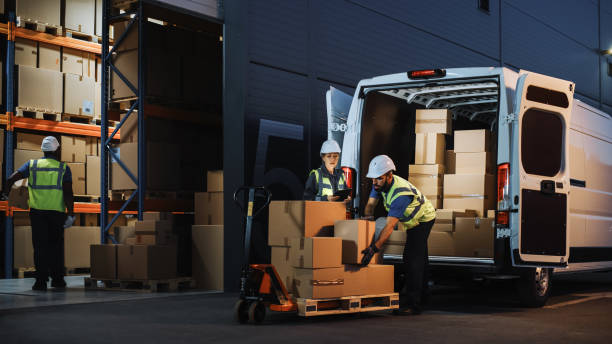
Running a business in Nigeria often means moving something from one place to another.
It could be products going from a supplier in Lagos to a customer in Abuja. It could be construction materials moving to a project site. It could be documents going across town, imported goods leaving a port, or stock being distributed from a warehouse to several retail locations.
That is where a logistics business in Nigeria becomes more than just a delivery company.
A proper logistics partner helps businesses coordinate the movement, storage, handling and delivery of goods so that operations do not depend on someone making emergency transport arrangements every time an order comes in.
But choosing the right provider requires more than searching for the company with the cheapest delivery fee.
What does a logistics business in Nigeria actually handle?
The word “logistics” covers much more than putting a package on a motorcycle.
Depending on the company and its capabilities, logistics services can include:
- Local and interstate deliveries
- Courier services
- Freight forwarding
- Cargo transportation
- Warehousing and distribution
- Transportation coordination
- Fleet management
- Supply chain support
- Customs-related logistics
- Relocation services
- Airport and cargo movement
- Business-to-business deliveries
- Last-mile delivery
A small online retailer might only need a dispatch rider to deliver customer orders around Lagos or Abuja.
A larger company importing goods may need freight forwarding, cargo handling, customs coordination, warehousing and onward transportation.
The logistics provider needs to match the job.
Why logistics can become difficult for Nigerian businesses
Moving goods in Nigeria is not always as straightforward as looking at a map and calculating the distance.
A delivery from Lagos to Abuja, for example, involves much more than the kilometres between the two cities.
The business may need to consider:
- Vehicle availability
- Road conditions
- Traffic
- Fuel costs
- Loading and unloading
- Driver scheduling
- Security considerations
- Delivery deadlines
- Customer availability
- Documentation
- Multiple stops
Then there is Lagos traffic.
A delivery that should take a relatively short time can take much longer depending on the route and time of day. A business that promises customers a delivery window without accounting for actual road conditions can quickly end up dealing with complaints.
This is why experienced logistics planning matters.
What should you expect from a professional logistics provider?
A good logistics company should first understand what you are trying to move and where it needs to go.
Before quoting for a job, the provider may need information such as:
What are you sending?
A small parcel, palletised goods, furniture and industrial equipment require completely different handling.
How much does it weigh?
Weight affects the vehicle and sometimes the overall delivery cost.
How large is it?
A shipment may be light but still require a larger vehicle because of its dimensions.
Where is it going?
A local delivery in Ikeja is different from an interstate shipment from Lagos to Port Harcourt.
When does it need to arrive?
A routine shipment and an urgent delivery should not necessarily be planned the same way.
Are there multiple delivery points?
If goods need to reach ten customers across Abuja, route planning becomes important.
The more accurate the information, the more realistic the logistics plan.
How much does logistics cost in Nigeria?
There is no universal price for logistics services.
The cost can change considerably depending on the shipment and route.
For a delivery, factors can include:
- Distance
- Weight
- Volume
- Vehicle type
- Fuel costs
- Number of stops
- Loading requirements
- Waiting time
- Delivery urgency
- Pickup location
- Destination
- Special handling requirements
For example, sending a few documents from Victoria Island to Ikeja is obviously not the same logistics job as transporting several tonnes of goods from Lagos to Abuja.
Similarly, moving goods from a warehouse in Lagos to five retail outlets may require a different arrangement from sending one large shipment directly to a single customer.
A serious logistics provider should therefore ask questions about the job before giving you a final price.
The cheapest logistics quote is not always the cheapest option
Businesses sometimes focus entirely on the initial transport price.
That can be expensive in the long run.
Imagine a retailer chooses a very cheap delivery option but the shipment arrives late and several customers cancel their orders.
The business may lose much more than it saved on transportation.
Or imagine construction materials arrive at a project site without proper coordination and workers are left waiting.
The transport cost might have been low, but the operational cost of the delay is much higher.
When comparing logistics providers, consider the complete service rather than the headline price.
Ask:
- What does the quoted price include?
- Is pickup included?
- Is loading included?
- Is delivery to the exact destination included?
- Is tracking available?
- What happens if the vehicle is delayed?
- Who handles communication during transit?
- Are there additional charges?
Lagos to Abuja is not the only logistics route businesses use
Nigeria’s commercial activity creates logistics demand across many different corridors.
Common business movements can include:
- Lagos to Abuja
- Lagos to Ibadan
- Lagos to Benin City
- Lagos to Port Harcourt
- Lagos to Onitsha
- Abuja to Kaduna
- Abuja to Kano
- Port Harcourt to Aba
- Lagos to Ilorin
The appropriate transport method depends on the type of goods, quantity, urgency and destination.
For example, a business sending a few cartons may need a different service from a manufacturer moving heavy equipment.
This is why logistics companies that can coordinate different transport options are useful for businesses with changing requirements.
How logistics affects an online business
For an e-commerce business, delivery is part of the customer experience.
A customer does not separate the seller from the delivery company in their mind.
If they pay for an order and the package arrives late, damaged or at the wrong location, they usually blame the business they purchased from.
Consider an Abuja-based fashion business.
The company may receive orders from customers in Wuse, Gwarinpa, Maitama, Jabi and Kubwa on the same day.
If the business owner personally handles every delivery, several hours can disappear into transportation.
As order volume grows, this becomes difficult to manage.
Using a delivery or logistics partner allows the business to concentrate on stock, marketing, customer service and sales while the movement of orders is handled separately.
What businesses should know about last-mile delivery
The final part of a shipment can be one of the most complicated.
Getting a bulk shipment to a city is one thing.
Getting individual orders to customers’ homes and offices is another.
The customer may provide:
- An incomplete address
- An incorrect phone number
- A landmark that is difficult to identify
- An office that closes early
- A location inside a large estate
The rider or driver may then spend unnecessary time trying to locate the recipient.
Businesses can reduce these problems by collecting accurate delivery information at checkout.
Ask customers for their full address, phone number and useful location instructions before dispatching their order.
Why tracking matters for business deliveries
Tracking becomes increasingly important as the number of shipments increases.
If you send three packages a month, you might be able to remember where everything is.
If you send 100 packages a week, you need a system.
Tracking can help businesses know:
- When an item was collected
- Whether it is in transit
- Whether it has reached the destination
- Whether delivery was attempted
- Whether the recipient received it
It also makes customer service easier.
Instead of telling a customer, “Let me ask the rider,” your business can check the shipment status and provide a more useful response.
When a business needs more than a courier
A courier service is useful for small packages, documents and everyday deliveries.
But businesses eventually encounter shipments that require more specialised logistics.
You may need a different arrangement for:
- Heavy machinery
- Construction materials
- Large quantities of stock
- Furniture
- Pallets
- Industrial equipment
- Bulk goods
- Interstate cargo
- Temperature-sensitive products
Trying to use a small delivery vehicle for every type of shipment can create unnecessary problems.
A logistics provider should be able to help determine what type of transportation is appropriate for the job.
Customs can become part of your logistics operation
Businesses importing products into Nigeria need to think beyond transportation.
The shipment may involve international freight, documentation, customs procedures, cargo handling and inland transportation.
For example, goods arriving through Lagos ports do not necessarily end their journey there.
They may eventually need to move to a warehouse in Lagos, a distribution centre in Ogun State or customers in another part of Nigeria.
Coordinating these stages properly is part of logistics.
A business should understand who is responsible for each stage before the shipment begins.
How to choose a logistics business in Nigeria
Before committing to a logistics provider, ask practical questions.
1. Do they handle your type of shipment?
A provider specialising in small parcels may not be the right choice for heavy cargo.
2. Do they operate along your routes?
If your business regularly moves goods between Lagos and Abuja, make sure the provider can reliably support that corridor.
3. Can they handle recurring deliveries?
A business with regular orders needs something more dependable than arranging a new rider every time.
4. How do they communicate?
You should know who to contact when there is a delay, address problem or delivery issue.
5. Is tracking available?
This becomes particularly valuable when handling multiple shipments.
6. Is pricing clear?
Ask about additional charges before confirming the job.
7. Can their services grow with your business?
Your logistics needs may change as your business expands.
A company that only handles local parcels today may eventually need interstate distribution, warehousing or cargo transportation.
Common logistics mistakes Nigerian businesses make
Some logistics problems are caused by poor planning rather than poor transportation.
Giving incomplete addresses
“Opposite the filling station” may seem obvious to the person sending the parcel but may not be enough for a new driver.
Waiting until the last minute
Urgent logistics usually cost more and provide fewer options.
Underestimating shipment size
A business may describe something as “just a few cartons” without considering the actual dimensions.
Choosing solely on price
The cheapest transport option may not provide the reliability the business requires.
Not preparing goods before pickup
If a driver arrives and the goods are still being packaged, the entire route can be delayed.
Failing to plan multiple deliveries
Several individual deliveries may be more efficiently handled through proper route planning.
How businesses can make logistics more efficient
You do not always need to spend more money to improve logistics.
Sometimes the biggest improvements come from better organisation.
Prepare shipments early.
Have goods packed and labelled before the driver arrives.
Standardise customer information.
Collect complete delivery addresses and phone numbers.
Group deliveries intelligently.
Where practical, organise deliveries according to location and route.
Track recurring problems.
If deliveries to a particular area frequently fail because customers are unavailable, change the delivery process.
Keep delivery records.
A basic record of orders, collection times and delivery status can help identify bottlenecks.
Use the right vehicle.
Do not pay for a large truck when a smaller vehicle is sufficient, and do not overload a vehicle simply to reduce transport costs.
When should a business outsource logistics?
You do not necessarily need to build your own delivery fleet.
For some businesses, outsourcing makes more sense because maintaining vehicles, hiring drivers, handling repairs, managing fuel and coordinating routes can become a significant operational responsibility.
Outsourcing may be worth considering when:
- Deliveries are becoming too frequent for your staff
- Customers expect faster delivery
- You are expanding into other cities
- Your team spends too much time transporting orders
- You need interstate delivery
- You need different vehicle types
- You want to scale without buying additional vehicles
The decision should be based on your actual delivery volume and business model.
How Travo.ng fits into business logistics in Nigeria
Travo.ng provides logistics, delivery and transport solutions designed around the practical needs of individuals and businesses.
For a company that needs to send customer orders, coordinate transportation or move goods between locations, the right service depends on what is being transported, the route and the required delivery timeline.
Travo.ng can support relevant needs such as courier services, delivery services, cargo logistics and transport coordination without requiring every shipment to be treated in exactly the same way.
For businesses operating across Nigerian cities, having one logistics partner that understands local routes and delivery realities can make day-to-day operations easier to coordinate.
The goal is not simply to move an item.
It is to make sure the item gets where it needs to go, in the appropriate way, while giving the business enough visibility to manage its customers and operations.
A practical checklist before booking logistics
Before handing over your shipment, confirm:
- What exactly is being transported?
- How much does it weigh?
- What are the dimensions?
- Where is the pickup location?
- Where is the final destination?
- Is the delivery local or interstate?
- When does it need to arrive?
- Does it require special handling?
- Does the shipment need tracking?
- Who will receive it?
- Is the recipient’s contact information correct?
- What exactly is included in the quoted price?
Having this information ready can make the booking process faster and reduce misunderstandings.
The right logistics partner should make business easier
A logistics provider should not create another problem for the business to manage.
Whether you are sending a customer order across Abuja, moving stock from Lagos to another state, coordinating cargo or arranging regular deliveries, the service should fit the actual requirements of the shipment.
The best logistics decisions are rarely based on price alone. Reliability, communication, route knowledge, suitable transportation and proper planning all affect the final result.
For Nigerian businesses, that matters because a delayed shipment can affect far more than transportation. It can affect inventory, customer relationships, sales and the ability to keep daily operations moving.
Travo.ng gives businesses and individuals access to practical logistics and transport support for different delivery and movement requirements across Nigeria.
