


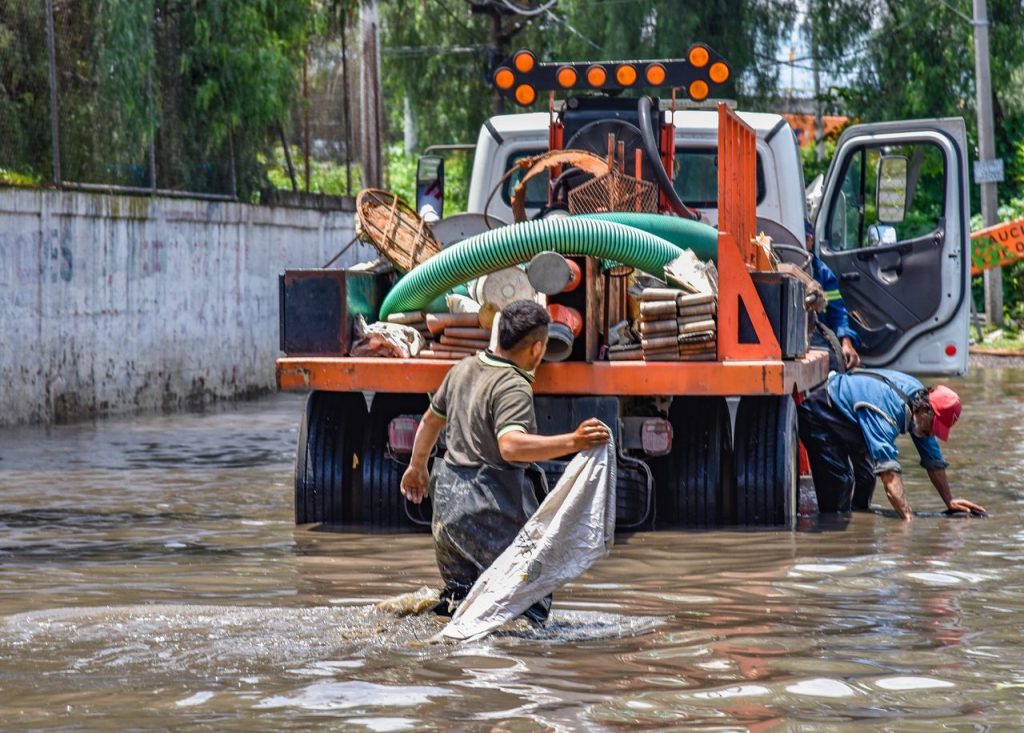
Floodwater can enter a building within minutes but take days to remove without the right equipment. In Lagos, blocked drains, intense rainfall, low-lying streets and overflowing canals can leave homes, shops, offices, warehouses and construction sites submerged.
Professional flood pumping services in Lagos help remove standing water faster than buckets, small household pumps or improvised drainage methods. The service is especially useful when water has entered large rooms, basements, compounds, underground car parks or active work sites.
Fast action matters because the longer water remains, the greater the risk of damaged equipment, weakened walls, mould growth and interrupted business operations.
Check Where the Water Can Be Discharged
Pumping water out is only useful when there is a safe place to send it. Moving floodwater from one part of a compound to another does not solve the problem.
Before pumping begins, the team should identify a suitable discharge point, such as a functioning drain, approved channel or tanker. If nearby drains are already full, the water may flow back into the property.
This is common in areas such as Lekki, Ajah, Victoria Island, Ikoyi and parts of the Lagos Mainland during heavy rainfall. A site may require longer hoses, higher-capacity pumps or water evacuation by tanker when normal drainage routes are blocked.
The team should also check whether the water contains sewage, oil, chemicals or construction waste because contaminated water requires more careful handling.
The Right Pump Depends on the Site
A small pump may work for a shallow residential compound, but it may be ineffective in a flooded warehouse or construction excavation.
The equipment choice usually depends on:
- The depth of the water
- The total area affected
- The amount of mud or debris present
- The distance to the discharge point
- Available electricity or generator power
- Whether the water is clean or contaminated
- How quickly the area must be cleared
Submersible pumps are often used inside flooded rooms or pits, while larger petrol or diesel-powered pumps may be needed where there is no electricity. Sites with thick mud, leaves or solid waste may require specialised pumps that can handle dirty water without blocking.
Providing videos and measurements before the team arrives can help prevent the wrong equipment from being dispatched.
What to Do Before the Pumping Team Arrives
Safety should come before protecting furniture or stock. Turn off electricity at the main supply if water has reached sockets, appliances or electrical panels. Do not walk through flooded rooms while the power is still connected.
Where it is safe, move important documents, electronics and lightweight goods to a higher level. Keep children and unauthorised workers away from the affected area.
Prepare the following information for the service provider:
- The exact property location
- Estimated water depth
- Size of the flooded area
- Possible water source
- Condition of the access road
- Availability of power
- Nearest usable drainage point
In heavily flooded streets, regular vehicles may be unable to reach the property. The pumping equipment may need to be transferred using a high-clearance vehicle or delivered to the nearest accessible point.
Construction Sites Need Faster Water Removal
Flooded construction sites present additional problems. Water can fill foundation trenches, lift stored materials, weaken excavated soil and delay concrete or reinforcement work.
Simply pumping the water away may not be enough if rainfall continues or groundwater keeps entering the excavation. Contractors may need continuous pumping, temporary drainage channels or multiple pumps operating at the same time.
Site managers should also keep fuel available for powered equipment and ensure hoses do not block walkways or vehicle access. If the project is located in a developing part of Ibeju-Lekki, Epe or another area with poor roads, equipment movement should be arranged before rainfall becomes severe.
Travo.ng can support the delivery of pumps, generators, hoses and other emergency equipment to affected sites.
Common Mistakes That Make Flooding Worse
One mistake is waiting until the water becomes extremely deep before requesting help. Early pumping is usually easier, faster and less expensive.
Another is using a pump without removing large debris from the intake area. Plastic bags, leaves and fabric can block the equipment and stop the operation.
Property owners should also avoid pumping dirty water into a neighbour’s compound or active roadway. The discharge route must be planned responsibly to prevent accidents, disputes and repeated flooding.
After the water is removed, the area may still need cleaning, disinfection, drying and inspection for structural or electrical damage.
Arrange Flood Pumping Support With Travo.ng
Reliable flood pumping services in Lagos require suitable equipment, experienced operators and proper logistics. The team must be able to reach the property, set up safely and discharge the water without creating another problem nearby.
Travo.ng helps individuals, businesses, estates and construction companies coordinate pumping equipment delivery, generator transport, emergency vehicles and related logistics across Lagos.
With early planning and the right pumping capacity, flooded spaces can be cleared faster, reducing damage and helping normal activities resume sooner.
