


Flooding can disrupt an office within minutes. Roads may become impassable, car parks can fill with water, and employees may struggle to find safe transport home. In areas such as Lekki, Victoria Island, Ikoyi, Ajah, Port Harcourt and parts of Abuja, heavy rainfall can quickly turn an ordinary workday into an emergency.
A properly planned office staff flood evacuation helps businesses move employees away from danger without creating confusion. It also reduces the risk of staff attempting to walk through deep water, board unsafe vehicles or remain stranded in the office after dark.
The best evacuation plans are prepared before the rainy season, not after floodwater has entered the premises.
Decide Who Needs Help First
Not every employee will require the same level of assistance. Some staff members may have vehicles parked in safe areas, while others depend on public transport. Priority should be given to people who may find evacuation more difficult.
This may include:
- Pregnant employees
- Staff with disabilities or medical conditions
- Employees travelling with young children
- People unfamiliar with the area
- Staff whose homes are far from the office
- Employees working late shifts
The office should maintain an updated staff register showing emergency contacts, home areas and any transport support that may be required.
This information makes it easier to group employees by destination rather than sending vehicles in different directions without a clear plan.
Do Not Wait Until Every Road Is Blocked
One of the biggest evacuation mistakes is delaying movement until flooding becomes severe. Managers may hope the rain will stop or that water levels will fall, but conditions can worsen quickly.
If a business in Lekki needs to move staff towards the mainland, waiting until major routes are already submerged may leave vehicles trapped in traffic. Early departure gives drivers more route options and allows employees to reach safer pickup points.
Businesses should monitor rainfall, nearby drainage conditions and reports from drivers already on the road. Once water begins rising around the office or access roads become difficult, the evacuation decision should not be delayed unnecessarily.
Match the Vehicle to the Flood Conditions
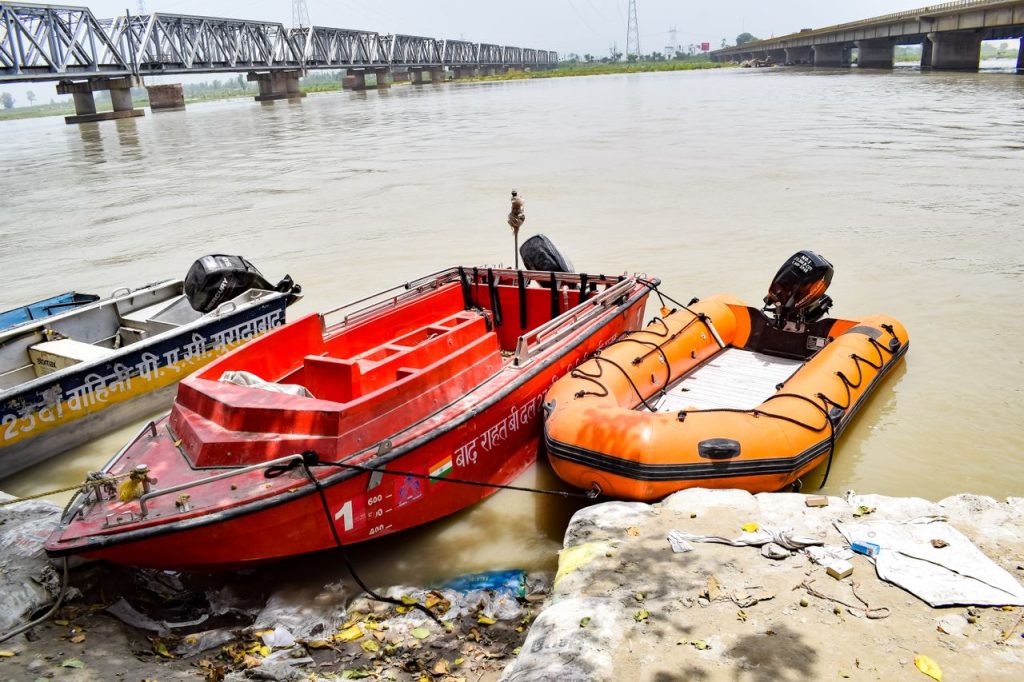
Ordinary saloon cars may not be suitable for flooded roads. Depending on the water level and access route, the company may need buses, SUVs, higher-clearance vehicles or, in severe cases, boat transport.
Vehicle selection should consider:
- The number of employees
- Road and water conditions
- Staff destinations
- Available pickup points
- Luggage or equipment being moved
- Whether the journey includes both road and water transport
Drivers should never be pressured to enter water when the road surface cannot be seen. Open drains, damaged roads and stalled vehicles may be hidden below the floodwater.
Travo.ng can help businesses coordinate suitable vehicles, emergency pickups and alternative transport where normal routes are no longer safe.
Use Safe Assembly and Pickup Points
Employees should know exactly where to gather before transport arrives. The assembly point must be above the flood level and away from electrical equipment, generators, underground parking areas and fast-moving water.
Where the office entrance is already affected, staff may need to move to a nearby hotel, filling station, shopping centre or other secure location that vehicles can still reach.
The transport coordinator should have the driver’s phone number, vehicle details and passenger list. Employees should not board unconfirmed vehicles simply because they appear to be offering transport.
A headcount should be completed before each vehicle leaves.
Plan Routes Around Where Staff Live
Sending every employee to one location may create additional problems. Staff living in Surulere, Ikeja, Yaba, Ajah and the mainland should be grouped according to practical routes.
For example, one bus may take employees towards Yaba and Surulere, while another handles Ikeja and nearby mainland locations. Staff living near each other can also be dropped at agreed safe points rather than at individual homes where roads are difficult.
The aim is to move everyone out of danger efficiently without keeping the vehicles on flooded roads longer than necessary.
Keep Communication Clear During the Evacuation
Employees need short, direct instructions during an emergency. Management should communicate:
- When work is stopping
- Where staff should assemble
- Which vehicle each person will use
- What items they may carry
- Who is coordinating movement
- What to do if they become separated from the group
Avoid sending conflicting messages through several managers. One person or a small emergency team should control updates.
Staff should also be told not to return for laptops, bags or parked vehicles once the building has been cleared. Personal safety must come before office property.
Coordinate Office Staff Flood Evacuation With Travo.ng
A reliable office staff flood evacuation plan combines early decision-making, safe assembly, suitable vehicles and clear communication.
Travo.ng helps companies arrange emergency transport, staff buses, vehicle hire, boat movement and coordinated pickups during flooding. Businesses can also plan transport support in advance for offices located in flood-prone parts of Nigeria.
With a clear evacuation process and dependable transport coordination, employers can protect their staff and respond calmly when severe weather disrupts normal operations.
