


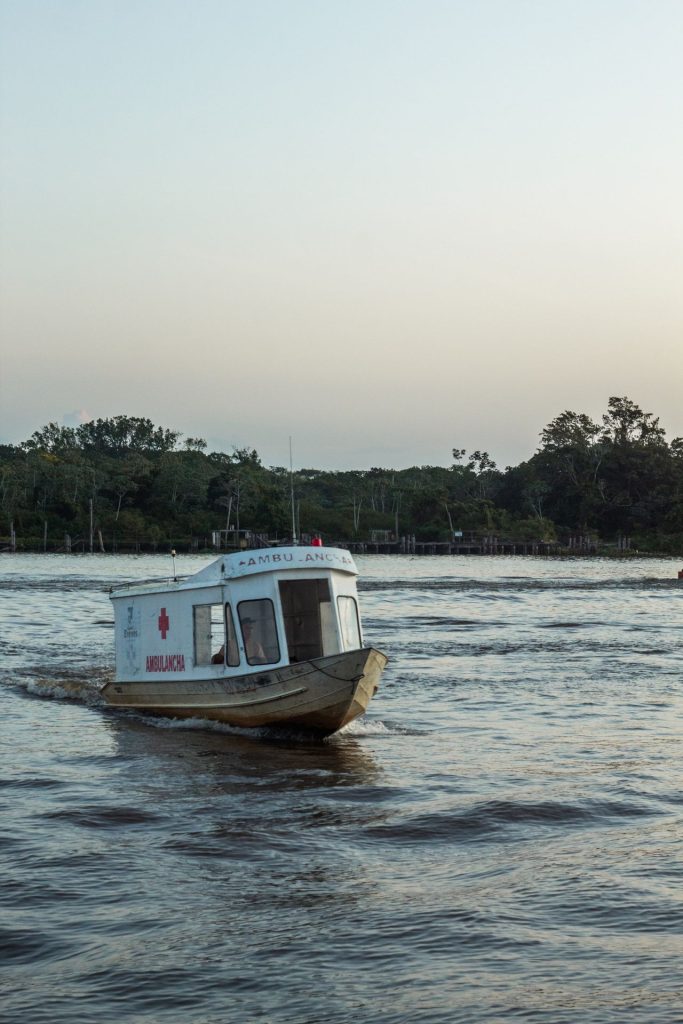
In riverine and flood-affected parts of Nigeria, an ambulance may not be able to reach every patient directly. Communities around the Niger Delta, Lagos waterfronts, Bayelsa, Rivers, Delta and parts of Cross River often depend on waterways for daily movement. During a medical emergency, this makes emergency patient transport by boat an important link between the patient and the nearest accessible hospital.
A boat transfer is not the same as an ordinary passenger trip. The patient’s condition, weather, loading point, travel time and onward ambulance arrangement must all be considered before departure. Poor coordination can cause delays at the jetty or expose the patient to unnecessary movement.
The priority should always be reaching appropriate medical care as safely and quickly as conditions allow.
When Road Transport Cannot Reach the Patient
Boat transport may be necessary when a patient is located in an island community, fishing settlement or neighbourhood cut off by flooding. It can also be used when the fastest route to a hospital begins with a short water crossing.
For example, a patient in a riverine Bayelsa community may need to travel by boat to Yenagoa before continuing by road. Around Lagos, someone in a waterfront settlement may require transfer to an accessible jetty where an ambulance or suitable vehicle is waiting.
The boat journey should be arranged only as one part of the full medical route. Reaching land without confirmed onward transport can create another delay when every minute matters.
Information the Transport Team Needs Immediately
Clear information helps the coordinator choose a suitable boat and prepare the pickup properly. The person booking should provide:
- The patient’s exact location and nearest jetty
- The nature of the emergency
- Whether the patient is conscious and able to sit
- The number of accompanying people
- The receiving hospital or clinic
- Whether medical personnel will travel with the patient
- The condition of the loading and arrival points
The transport provider should also know whether the patient is on a stretcher, using oxygen or connected to any medical equipment. A small open boat may not be suitable for a patient who must remain flat or protected from rain.
Moving the Patient Without Causing More Harm
The transfer from a home, clinic or accident location into the boat is often the most difficult part of the journey. Narrow walkways, unstable jetties and steep steps can make loading risky.
Where possible, trained medical personnel should advise on how the patient should be positioned. A stretcher must be secured so it does not slide when the boat changes direction or meets waves.
The patient should be protected from direct sun, rain and water spray. Loose equipment, oxygen cylinders and medical bags must also be secured before the boat moves.
Family members may want to accompany the patient, but passenger numbers should be limited to avoid overcrowding. Space must remain available for medical support and safe handling.
Safety Checks Before the Boat Leaves
Even during an emergency, basic safety checks should not be ignored. The operator must understand the route and current water conditions. The vessel should have enough fuel to complete the journey without stopping.
Life jackets should be available for everyone on board, including the patient where their medical condition permits. Communication phones should be charged, and the receiving team should know the estimated arrival time.
Night travel, heavy rainfall and strong currents can make the route more dangerous. Where movement must continue, the operator should use a suitable vessel with proper lighting and navigation support.
Coordinating the Boat With an Ambulance or Vehicle
One of the most common causes of delay is poor handover planning. The boat may reach the jetty only for the patient to wait while an ambulance is still on its way.
The boat operator, road transport driver and receiving hospital should be updated before departure. The destination jetty must also have enough space for safe unloading.
If an ambulance is unavailable, the alternative vehicle must be appropriate for the patient’s condition. A patient requiring medical observation should not be transferred into an ordinary car simply because it is available.
Travo.ng can help coordinate water transport, emergency road pickup and other mobility arrangements needed to complete the journey.
Plan Emergency Patient Transport With Travo.ng
Reliable emergency patient transport by boat requires fast communication, a suitable vessel and a clear transfer plan from the patient’s location to the receiving medical facility.
Travo.ng supports individuals, clinics, businesses and organisations with boat transport, vehicle coordination and emergency delivery logistics across Nigeria. Where the journey involves both water and road travel, the stages can be arranged together to reduce waiting time at the jetty.
Boat transport does not replace professional medical care. However, when roads are inaccessible or the patient is in a riverine community, properly coordinated water movement can provide a vital connection to treatment.
