


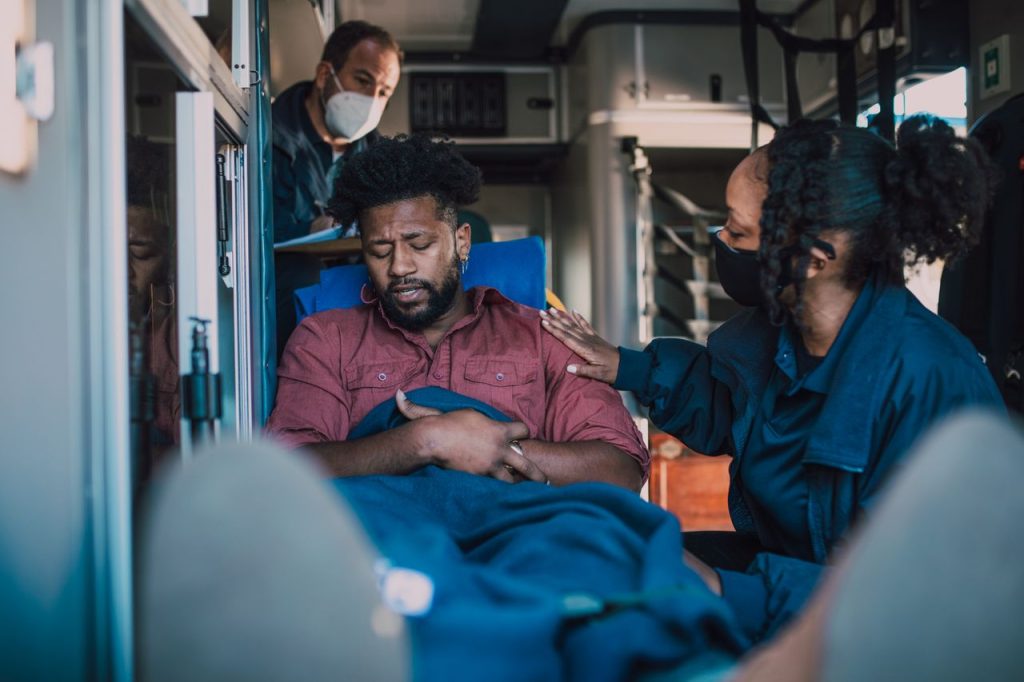
Medical emergencies in riverine and flood-prone communities often become more difficult because ordinary road ambulances cannot reach the patient. In places connected mainly by creeks, rivers or flooded roads, a water ambulance in Nigeria can provide a practical way to move a patient to a jetty, clinic or hospital access point.
This service is especially relevant in parts of Lagos, Bayelsa, Rivers, Delta, Cross River, Akwa Ibom and other areas where water transport is part of daily movement.
A water ambulance should not be treated as an ordinary passenger boat. The condition of the patient, available medical support, travel time, weather and handover arrangements must all be considered before departure.
When Road Ambulances Cannot Reach the Patient
Some communities are several kilometres away from the nearest motorable road. During the rainy season, flooding can also cut off areas that are normally accessible by car.
A water ambulance may be needed when:
- A patient is in an island or riverine community
- Floodwater has blocked the normal road route
- A workplace accident occurs on a vessel or waterfront site
- A pregnant woman requires urgent transfer
- Medical supplies must reach an isolated clinic
- A patient needs to be moved between a jetty and hospital
In Lagos, for example, a patient may need boat transport from a waterfront settlement to a safe jetty before continuing by road ambulance to a hospital in Victoria Island, Lekki or Lagos Island.
The entire route should be planned as one journey rather than arranging each section separately after the patient starts moving.
Details That Must Be Shared Before Dispatch
Accurate information helps the coordinator determine the type of boat, medical support and loading arrangement required.
The booking request should include:
- The patient’s current location
- The nearest safe jetty or waterside access point
- The patient’s condition
- Whether the patient can sit, lie down or walk with assistance
- The number of accompanying relatives or medical workers
- The intended hospital or receiving facility
- The availability of an ambulance at the arrival jetty
- Current weather and water conditions
The receiving hospital should be contacted early. Moving a patient without confirming where they will be treated can cause dangerous delays after arrival.
For life-threatening emergencies, contact the appropriate emergency and medical authorities immediately while transport coordination is taking place.
What a Suitable Water Ambulance Should Provide
The exact equipment available may differ, so families and organisations should confirm what is included before departure.
Depending on the patient’s condition, the vessel may need a stretcher space, first-aid supplies, oxygen support, communication equipment or room for a trained medical worker.
The boat should also have:
- Life jackets for everyone onboard
- A competent operator familiar with the route
- A stable loading area
- Protection from rain and water spray
- Adequate fuel
- A working phone or radio
- Enough space to avoid overcrowding
A small passenger boat may not be suitable for someone who must remain flat or requires continuous medical attention. The vessel should be chosen around the patient, not simply because it is the first boat available.
Coordinating the Boat and Road Ambulance
Many water ambulance trips still require road transport at one or both ends. The patient may need to be collected from a house, moved to the boat, transferred at a jetty and then taken to hospital.
Transfer points are where delays often happen. The road ambulance may arrive late, the jetty may be crowded or the boat may have nowhere safe to berth.
A proper plan should confirm the departure point, arrival jetty, estimated travel time and contact person waiting at each stage.
Travo.ng can help coordinate water transport, emergency vehicle movement and onward transfer so the patient is not left waiting unnecessarily between the boat and hospital.
Weather and Night Travel Can Change the Plan
Heavy rain, strong currents and poor visibility can make emergency boat movement more difficult. Night journeys may also require lighting and an operator with strong knowledge of the route.
Where conditions are unsafe, the operator may need to use an alternative jetty or adjust the departure time. Families should share live updates about water levels and access conditions rather than relying on information from earlier in the day.
Medical urgency is important, but the journey must still be completed without placing the patient, crew and accompanying passengers at greater risk.
Book a Water Ambulance in Nigeria With Travo.ng
Arranging a water ambulance in Nigeria requires fast communication, suitable transport and a clear patient handover plan.
Travo.ng helps individuals, hospitals, companies and organisations coordinate emergency boat transport, road ambulance connections, vehicle hire and urgent delivery of medical supplies.
Whether the patient is in a riverine community, offshore work location or flood-affected area, early planning can reduce delays and create a safer route from the pickup point to the receiving medical facility.
