


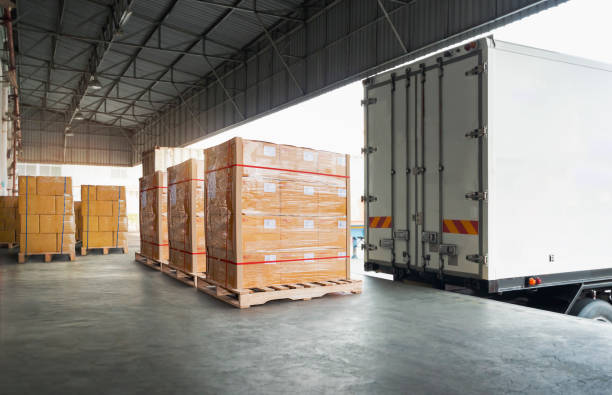
A 3–5 year warehouse lease in Lagos can give businesses more stability than short-term storage arrangements. It can be suitable for distributors, manufacturers, importers, e-commerce companies and logistics operators that expect to maintain a consistent warehouse operation for several years.
Long-term leases can also provide more room to negotiate rental rates and property improvements. Current Lagos warehouse listings show several properties requiring two or more years, while some are specifically marketed for three-year or longer commitments. (Rent in Lagos)
Why Businesses Choose a 3–5 Year Warehouse Lease
A longer lease can make sense when the warehouse is going to become an important part of the company’s daily operations.
Common reasons include:
- Stable inventory storage
- FMCG distribution
- E-commerce fulfillment
- Manufacturing support
- Import and export operations
- Spare-parts distribution
- Regional distribution
- Long-term logistics operations
- Equipment and project storage
If a business has to move warehouses every few months, it can face additional transportation, installation, inventory and operational costs.
3 Years vs 5 Years
The difference between a three-year and five-year commitment is significant.
A 3-year lease can provide stability while giving the business an earlier opportunity to renegotiate or relocate.
A 5-year lease provides greater long-term certainty but requires more confidence that the location, warehouse size and operating conditions will remain suitable.
Before choosing five years, consider how quickly your inventory volume, workforce and delivery network are likely to change.
Can You Negotiate the Rent?
Long-term commitment can strengthen your negotiating position.
Some Lagos warehouse listings specifically indicate that longer lease periods are acceptable or preferred. For example, current Oregun listings include warehouses advertised with minimum two-year terms, while another 500 sqm warehouse is marketed on a three-year upfront basis. (Nigeria Property Centre)
A tenant taking a large facility for three to five years can negotiate around:
- Annual rent
- Upfront payment
- Rent-free fit-out period
- Repairs before occupation
- Service charges
- Security arrangements
- Renewal terms
- Rent-review frequency
- Tenant improvements
However, never assume that a longer lease automatically guarantees a discount. The landlord’s requirements and the property’s demand determine the final agreement.
Calculate the Total Lease Value
Always calculate the full value of the commitment.
For example, suppose a 2,000 sqm warehouse is offered at ₦45,000 per sqm per year.
Annual base rent:
2,000 × ₦45,000 = ₦90 million
A three-year commitment at the same rate would represent:
₦90 million × 3 = ₦270 million
A five-year commitment would represent:
₦90 million × 5 = ₦450 million
This is before agency, legal, service charges, taxes, utilities, maintenance and other applicable costs.
If the landlord requires multiple years upfront, the amount of capital tied up can become substantial.
Upfront Payment vs Annual Payment
One of the most important points to negotiate is the payment structure.
Some Lagos warehouse listings require multiple years’ rent upfront. Current listings include properties requesting three years upfront and others specifying multiple years’ payment for long leases. (Nigeria Property Centre)
Before agreeing to a large upfront payment, consider the effect on:
- Inventory purchasing
- Staff costs
- Transportation
- Equipment
- Marketing
- Working capital
- Emergency expenses
A lower rental rate is not necessarily beneficial if the payment structure puts unnecessary pressure on the company’s cash flow.
Rent Review During a 3–5 Year Lease
A long lease should clearly explain what happens to the rent during the tenancy.
Ask:
- Is rent fixed for the entire term?
- Is there an annual increase?
- When does the first review occur?
- Is the increase a fixed percentage?
- Is the increase linked to market rent?
- Is there a maximum increase?
- Can the landlord review the rent more than once during the term?
These clauses can make a major difference to the total cost of a five-year lease.
Choosing the Right Lagos Location
The best location depends on what the warehouse is being used for.
Ikeja and Oregun
These areas can suit businesses serving Mainland Lagos, distributors, manufacturers and logistics companies.
Current listings show warehouses in Oregun ranging from around ₦40,000 to ₦50,000 per sqm per year, with some larger properties specifically marketed for longer leases. (Nigeria Property Centre)
Apapa and Tin Can Corridor
These areas can be relevant for importers and businesses that need close access to port-related cargo movement.
The higher rental cost in some port-oriented locations should be compared against potential transportation savings.
Isolo and Oshodi
These areas can work for businesses requiring access to Mainland distribution routes, particularly where inventory needs to move frequently around Lagos.
Lekki and Ibeju-Lekki
These locations can be useful for businesses serving the Lekki corridor or planning for future industrial expansion.
The important point is to select the warehouse based on your actual supplier, customer and transportation network rather than simply choosing the cheapest area.
What to Negotiate Besides Rent
Rent is only one part of a long-term warehouse agreement.
You can also negotiate:
- Repairs before occupation
- Painting
- Roofing work
- Drainage improvements
- Loading-bay upgrades
- Office refurbishment
- Security arrangements
- Generator access
- Parking
- Truck access
- Signage
- Racking installation
- Fit-out period
- Service charges
- Renewal rights
Getting an important improvement included before signing can sometimes be more valuable than a small reduction in annual rent.
Inspect the Warehouse Carefully
A three-to-five-year lease makes a detailed inspection particularly important.
Check:
- Roof condition
- Floor loading capacity
- Ceiling height
- Drainage
- Flooding history
- Loading bays
- Truck access
- Compound size
- Fire-safety systems
- Electrical installation
- Water supply
- Security
- Generator
- Office facilities
- Toilets
- Ventilation
- Road condition
A small defect that is manageable during a three-month lease can become a major problem over five years.
Check the Warehouse Title and Landlord
Because a long lease involves substantial money, verify that the person or company granting the lease has the authority to do so.
Review the relevant property documentation and confirm the landlord’s identity before making substantial payments.
Where necessary, have a qualified property lawyer review the title and lease documentation.
Understand Maintenance Responsibilities
The lease should clearly explain who handles different categories of repairs.
Separate:
Routine maintenance
from
Major structural repairs.
For example, responsibility for replacing a light fitting may be very different from responsibility for repairing a damaged roof.
Do not leave these responsibilities to verbal agreements.
Long-Term Warehouse for E-Commerce
E-commerce businesses should think about future order volumes before committing to five years.
A warehouse that comfortably handles 500 orders per day may become restrictive if the business eventually processes several thousand.
Consider whether there is:
- Expansion space
- Additional storage capacity
- Room for packing stations
- Rider staging
- Loading capacity
- Returns space
- Parking
- Reliable power
- Good internet connectivity
The lease should also permit the operational activities the business intends to conduct.
Long-Term Warehouse for FMCG and Distribution
For FMCG businesses, location and truck access are particularly important.
Check whether the warehouse can accommodate the expected receiving and dispatch volume.
A facility with good loading infrastructure can help reduce delays when multiple trucks arrive and leave during the same working period.
Also consider pallet capacity, inventory rotation, security and access to major delivery corridors.
Tribal and Cultural Considerations in Lagos
Lagos warehouse operations involve landlords, tenants, workers, drivers, agents and surrounding communities from different ethnic and cultural backgrounds.
Long-term arrangements should be based on clear contracts and professional communication rather than assumptions about particular communities.
Before signing, clarify loading schedules, security procedures, access arrangements and any local operational requirements that could affect trucks, employees or visitors.
Using Travo.ng for Long-Term Warehouse Logistics
A long-term warehouse lease is only useful if goods can move efficiently in and out of the facility.
Travo.ng can support businesses with transportation, cargo movement, delivery coordination and related logistics requirements connected to warehouse operations.
When comparing facilities, consider the full supply chain:
Supplier or port → warehouse → distribution point → customer
A warehouse with slightly higher rent may produce better overall economics if it reduces transportation time, delivery distance and handling problems.
Questions to Ask Before Signing a 3–5 Year Lease
Before committing to a long-term warehouse, ask:
- What is the annual rent per sqm?
- What is the total lease value?
- How many years must be paid upfront?
- Is the rent negotiable?
- What is the rent-review formula?
- Are there service charges?
- Who handles major repairs?
- Can the tenant modify the building?
- Is there a fit-out period?
- Can the lease be renewed?
- What happens if the business needs to exit early?
- Can the warehouse accommodate future expansion?
- Can 20ft and 40ft trucks access the property?
- Are there restrictions on operating hours?
- What additional fees apply?
A 3–5 year warehouse lease can provide valuable stability, but the agreement should be evaluated based on the total financial commitment, property condition, location, lease protections and logistics requirements, not just the advertised rent.
