


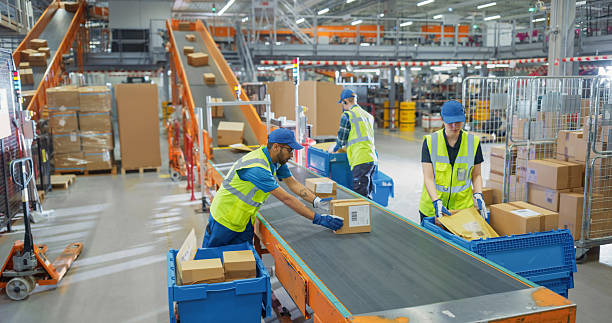
When people search for mineral packaging and FIBC solutions, they are usually dealing with a very practical export problem — how to safely package bulk minerals like lithium, lead ore, zinc, tin, or manganese so they can move from mining sites or stockyards in Nigeria to ports and international buyers without loss, contamination, or rejection.
In mineral trading, packaging is not just wrapping. It is a critical control point that affects weight accuracy, cargo quality, transport safety, and export compliance.
Poor packaging can ruin even a high-quality shipment before it reaches the port.
What mineral packaging and FIBC solutions mean
Mineral packaging refers to the safe containment, handling, and preparation of bulk mineral materials for storage, transport, and export.
FIBC (Flexible Intermediate Bulk Containers) are large industrial bags used to store and transport bulk dry materials efficiently and safely.
Together, they are used to:
- Store minerals securely at mining or aggregation sites
- Prevent contamination and moisture damage
- Enable efficient loading into trucks or containers
- Support accurate weighing and handling
- Prepare cargo for export shipment
Why proper mineral packaging is important in Nigeria
Minerals in bulk form are highly sensitive to handling conditions, especially during long-distance transport from inland locations to ports like Apapa, Tin Can Island, or Lekki.
Without proper packaging, exporters may face:
- Loss of material during transport
- Moisture contamination from weather exposure
- Mixing of different mineral grades
- Weight discrepancies at destination
- Buyer rejection due to poor condition
- Delays during inspection or export clearance
In many cases, packaging quality directly affects export acceptance.
What FIBC bags are used for in mineral exports
FIBC bags are designed for heavy-duty bulk storage and transport.
Common types used in mineral logistics include:
- Standard bulk FIBC bags
- Coated FIBC bags for moisture protection
- Ventilated FIBC bags for certain ore types
- Lined FIBC bags for fine or sensitive materials
- UV-protected FIBC bags for outdoor storage
Each type is selected based on mineral type, storage duration, and transport conditions.
How mineral packaging is carried out
Proper packaging follows a structured process to ensure safety and consistency.
1. Material preparation
Minerals are sorted, cleaned, and prepared for bagging.
2. Quality check before packaging
Materials are inspected to ensure:
- No contamination
- Correct grade separation
- Proper moisture levels
3. Bag selection
The appropriate FIBC type is chosen based on:
- Weight capacity
- Mineral type
- Transport distance
- Storage conditions
4. Filling and sealing
Minerals are loaded into bags under controlled conditions and sealed securely.
5. Labeling and documentation
Each bag or batch is labeled for:
- Identification
- Weight tracking
- Export documentation
- Stock control
Why packaging quality affects export success
International buyers expect minerals to arrive in a clean, stable, and accurately measured condition.
Poor packaging can lead to:
- Reduced product value
- Rejection at destination ports
- Payment disputes
- Increased handling costs
- Loss of future contracts
Packaging is often the first visible indicator of exporter professionalism.
Common packaging mistakes in Nigeria’s mineral trade
Many exporters face avoidable issues such as:
- Using low-quality or damaged FIBC bags
- Overfilling or underfilling containers
- Mixing different ore grades in one bag
- Poor sealing leading to spillage
- Lack of proper labeling and traceability
- Exposure to rain and humidity during storage
These mistakes often lead to disputes during inspection or export verification.
How packaging connects to logistics and export operations
Mineral packaging is closely linked to:
- Stockpile management
- Weighing and inspection
- Truck loading and transportation
- Port handling and container stuffing
- Customs documentation and export clearance
If packaging is not done correctly, every downstream process becomes more difficult.
Why FIBC solutions improve export efficiency
Using standardized FIBC systems helps exporters:
- Reduce material loss during transport
- Improve loading and unloading speed
- Maintain consistent weight measurements
- Protect cargo from environmental damage
- Streamline port handling operations
For bulk mineral exports, efficiency and consistency are critical.
When mineral packaging should be done
Packaging is typically carried out:
- After stockpile inspection and weighing
- Before transportation to port
- During consolidation for export shipments
- Prior to final export documentation submission
Timing ensures materials remain in export-ready condition.
How packaging affects transport and logistics planning
Properly packaged cargo allows logistics teams to:
- Plan truck capacity accurately
- Optimize container loading efficiency
- Reduce delays at loading points
- Improve safety during long-distance transport
- Prevent spillage or cargo damage
Without proper packaging, logistics becomes unpredictable and costly.
How Travo.ng supports mineral packaging and export logistics
For mineral exporters in Nigeria, Travo.ng helps coordinate the logistics and movement side of packaging and export preparation.
Support may include:
- Coordination of mineral movement from site to packaging location
- Logistics planning for packaged bulk cargo transport
- Support for stockpile-to-packaging workflow
- Coordination with inspection and weighing activities
- Port delivery and export shipment preparation
- End-to-end mineral export logistics management
By linking packaging operations with transport and export processes, Travo.ng helps exporters reduce losses, improve cargo handling efficiency, and ensure smoother shipment execution.
