


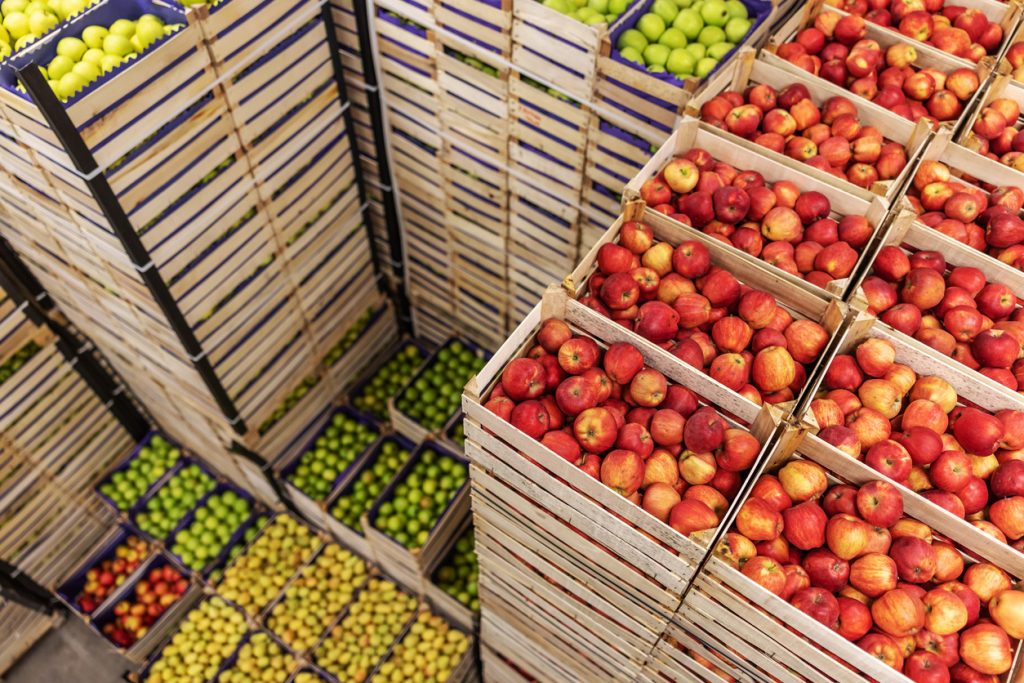
Cold chain logistics in Africa connects cooling, storage, handling and transport so perishable products reach the next stage under suitable conditions. For a farmer, this may mean cooling produce before collection. For a distributor, it means managing warehouse-to-retail handoffs. For an exporter, it means maintaining the agreed conditions through the border, terminal and destination.
A refrigerated warehouse or solar cold room is one part of the chain. This guide helps farmers, cooperatives, food businesses and project teams compare cold-chain solutions, providers and infrastructure without assuming that every African market or product has the same needs.
Design the food cold chain from buyer requirements backwards
Start with the product, destination, buyer’s specification and delivery window. Map harvest or production, initial handling, pre-cooling, aggregation, storage, dispatch, transport and receiving. Identify who controls each step and where the goods may wait.
Fresh produce logistics differs from frozen food logistics. Agree the product-specific temperature and humidity requirements and which goods can share a room or vehicle. Do not adopt a single setting for all fruit, vegetables, dairy, meat and fish simply because they are perishable.
The UNEP/FAO sustainable cold-chain report recommends a systems approach. For a project, that means assessing market access, energy, equipment, people and transport together rather than treating cooling as an isolated purchase.
Farm and produce cold storage: assess the first mile
Farm cold storage and aggregation hubs need to match harvest volumes, seasonal variation, access and collection schedules. Ask how incoming produce is handled and whether the system cools warm product or mainly holds already cooled stock. Confirm packaging, airflow and stock identification arrangements.
Agricultural logistics should protect quality while moving goods towards a real market. Storage cannot compensate for poor product condition, incompatible mixed loads or an unconfirmed buyer. Check who manages sorting, grading and dispatch and how rejected material is handled.
Solar cold storage Africa and off-grid refrigeration
Solar refrigeration can be useful where grid supply is limited or energy costs are uncertain. The proposal must still cover the refrigeration duty, site conditions, operating hours and periods without sunlight. Ask whether the system uses batteries, thermal storage, backup generation or another arrangement and how this is maintained.
Compare the complete system’s expected performance under realistic loading and weather conditions. A panel rating alone does not prove overnight autonomy or suitable product temperature. Confirm usable capacity, warranty, service support and replacement-part costs before choosing a solar cooling system.
FAO’s sustainable cooling resource discusses renewable energy for viable cold-chain expansion. Renewable power should be assessed alongside efficiency and operating discipline rather than used as a blanket promise of zero operating cost.
Refrigerated transport and temperature-controlled distribution
Compare vehicle capacity, loading access, refrigeration duty, temperature records and contingency plans. A vehicle described as refrigerated still needs to match the product and route. Agree whether it can maintain required conditions during long waits, multiple stops and unloading.
For a cold-chain distribution network, document the storage hubs, transfer points, delivery sequence and receiving capacity. Multi-drop food logistics needs a plan for repeated door opening, refused deliveries and delays. Route planning and temperature management must work together.
Cross-border refrigerated transport adds clearance, document and terminal handoffs. Confirm the actual corridor, parties and destination requirements before loading. A domestic provider’s website is not evidence that it can execute every international route.
| Stage | Question to resolve |
|---|---|
| Farm or processor | What condition and temperature does the product have when collected? |
| Cold room or warehouse | Is usable capacity available for the actual goods and duration? |
| Transport | Can the vehicle and route maintain the agreed conditions? |
| Terminal or border | Who controls waiting time, power and handling? |
| Buyer or distributor | Is receiving capacity ready, and what evidence is needed for acceptance? |
Cold-chain technology, platforms and monitoring
Useful technology links product identity, inventory, movements and temperature history. A platform may coordinate bookings or stock, while a monitoring system records sensor data and alarms. Clarify which functions are included rather than assuming a dashboard does all of them.
Ask about offline recording, connectivity gaps, sensor suitability, calibration, data ownership, exportable records and user access. Agree who responds to alerts and who decides what happens to affected stock. Cold-chain analytics can help identify repeated excursions, slow handoffs and equipment problems, but only if the underlying records are reliable.
For detailed operational questions, read our monitoring and tracking guide. Location tracking alone does not establish cargo condition.
Cold-chain providers in Africa: verify country and service scope
Provider examples can help research, but confirm current location, products and availability directly. The following are official references, not endorsements, rankings or Travo partnerships.
| Reference | What its official site describes | What to confirm |
|---|---|---|
| ColdHubs | Solar-powered cold storage, refrigerated transportation, packaging and digital inventory/tracking services in Nigeria | Your location, capacity, accepted products and the service contract |
| SokoFresh | Solar-powered cold rooms and market-access services, with deployments described in Kenya and other named markets | Actual country coverage, model, availability and maintenance responsibilities |
| UNEP’s ACES resource | Technical assistance, testing, knowledge transfer and training for sustainable cooling | Appropriate programme or knowledge resource; it is not a general freight booking service |
Cold-chain startups, investment and infrastructure
For a cold storage business in Africa, test customer demand and revenue assumptions at the proposed location. Assess the cost of energy, equipment, people, maintenance, monitoring and distribution. Compare low-season utilisation as well as harvest peaks.
Agritech cold-chain projects should demonstrate how farmers gain a usable service and how operators receive reliable income. Technology does not replace a workable collection and buyer network. Financing eligibility, permits and commercial arrangements vary by country.
Our Nigerian business and financing guide provides a project-planning framework. Use local professional and regulatory advice before adapting it to another jurisdiction.
Prepare an enquiry that a provider can price
Provide the product and packaging, volume, origin, destination, dates, required conditions, storage duration and any export requirements. Ask for a written scope covering pickup, handling, monitoring, storage, dispatch and contingency arrangements.
Compare complete costs and responsibilities. Ask who pays for waiting time, additional handling, rejected stock or emergency transfers. Request evidence supporting any claimed approvals or specialist capability.
How Travo can assist with Nigerian movements
Travo’s agricultural transport service describes refrigerated produce movement and recurring distribution enquiries in Nigeria. Its international shipping service is a separate enquiry route for cross-border requirements; confirm the actual cold-chain scope and corridor.
Contact Travo with the shipment details above. For preparation, use the equipment and maintenance guide, food-storage compliance guide and export cold-storage guide. Booking support should be based on confirmed product requirements and available capability for each leg.
