


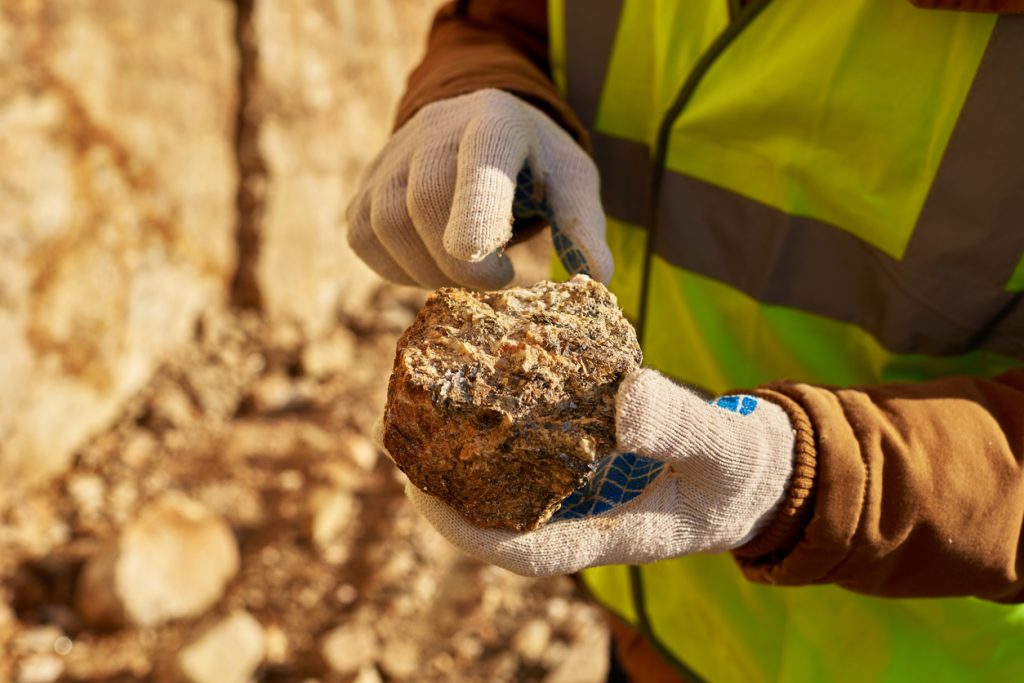
When people search for mineral quality verification for trade, they are usually trying to solve a real commercial problem — how to prove that minerals being sold or exported from Nigeria actually meet the agreed grade, purity, and specification before money changes hands or cargo is shipped.
In mineral trade, quality is not assumed. It is tested, verified, and documented. Without verification, buyers lose confidence, prices become disputed, and shipments risk rejection at destination ports.
This is especially important for bulk minerals such as lithium, lead ore, zinc, tin, manganese, and iron ore, where small differences in grade can significantly affect value.
What mineral quality verification actually means
Mineral quality verification is the process of confirming the physical and chemical characteristics of a mineral to ensure it matches trade or contract specifications.
It typically involves:
- Laboratory testing of samples
- Grade and purity confirmation
- Moisture content analysis
- Contaminant detection
- Physical property evaluation
- Comparison with agreed buyer standards
The goal is simple: ensure what is being sold is exactly what is being delivered.
Why quality verification is critical in mineral trade
In Nigeria’s mineral export market, transactions often involve international buyers who rely heavily on verified data before making payments or approving shipments.
Without proper verification, exporters may face:
- Payment disputes after shipment
- Rejection of cargo at destination ports
- Price renegotiation after delivery
- Loss of long-term buyers
- Regulatory or documentation issues during export
In most cases, disputes happen not because of fraud, but because of lack of verified data.
How mineral quality is tested
Quality verification follows a structured process to ensure accuracy and consistency.
1. Sample collection
Representative samples are taken from stockpiles, bags, or loading points.
2. Sample preparation
Samples are crushed, mixed, and prepared for laboratory testing.
3. Laboratory analysis
Tests are conducted to determine:
- Mineral composition
- Grade percentage
- Moisture levels
- Presence of impurities
- Physical and chemical properties
4. Result interpretation
Laboratory results are compared with contract specifications.
5. Reporting
A formal report is issued for use in trade, export, or buyer validation.
When mineral quality verification should be done
To avoid disputes and delays, verification is typically carried out at key stages:
- Before signing trade agreements
- During stockpile formation
- Before loading for transport
- Prior to export documentation submission
- Before shipment at the port
Early verification helps prevent last-minute disagreements.
Why buyers demand independent verification
International buyers often prefer third-party verification because it ensures neutrality.
Independent testing helps:
- Build trust between buyer and seller
- Reduce disputes over quality claims
- Support contract enforcement
- Provide reliable pricing justification
- Improve transparency in trade relationships
For high-value minerals, independent reports are often mandatory.
Common problems caused by poor quality verification
Without proper testing and verification, exporters may face:
- Undervalued shipments due to unknown grade
- Cargo rejection at destination ports
- Delayed or withheld payments
- Contract termination
- Reputation damage in international markets
In mineral trade, uncertainty is expensive.
How quality affects pricing in mineral trade
Mineral pricing is heavily influenced by verified quality.
Key factors include:
- Grade percentage (metal content)
- Moisture levels
- Purity and contamination levels
- Consistency across stockpiles
Even small differences in quality can significantly change market value.
Link between quality verification and export compliance
Quality verification also supports export documentation by:
- Providing laboratory-backed reports for customs
- Supporting export declarations
- Assisting regulatory compliance checks
- Strengthening shipment credibility during inspection
Accurate data reduces delays during export processing.
Why disputes happen without proper verification
Most trade disputes arise from:
- Estimated rather than tested quality
- Lack of independent laboratory reports
- Poor sampling procedures
- Miscommunication between buyers and sellers
- Inconsistent documentation across shipment stages
Once cargo is exported, correcting these issues becomes difficult.
How quality verification supports logistics planning
Accurate quality data helps logistics teams:
- Determine packaging requirements
- Plan shipment segregation if needed
- Optimize container loading
- Reduce inspection delays at ports
- Improve export scheduling accuracy
Quality and logistics are closely connected in mineral trade.
How Travo.ng supports mineral quality verification logistics
For mineral exporters in Nigeria, Travo.ng helps coordinate the logistics and movement side of quality verification and export preparation.
Support may include:
- Coordination of mineral movement for sampling and testing
- Logistics planning for stockpile-to-laboratory transport
- Export preparation support for verified cargo
- Coordination with inspection and verification activities
- Port handling and shipment scheduling
- End-to-end mineral export logistics coordination
By linking quality verification with transport and export logistics, Travo.ng helps businesses reduce disputes, improve shipment confidence, and move cargo more efficiently.
