


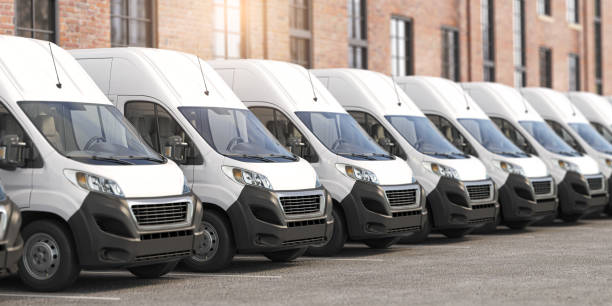
Logistics assets generating recurring income streams refers to transportation and supply chain equipment—such as trucks, delivery vans, cargo fleets, and distribution infrastructure—that are structured and operated in a way that produces consistent, repeatable revenue over time rather than one-off earnings.
In Nigeria, where goods movement is continuous across FMCG, e-commerce, manufacturing, construction, and interstate trade corridors, logistics assets can function like income-generating infrastructure when properly deployed and professionally managed.
The key difference between a normal fleet and a recurring income system is not ownership—it is utilization, structure, and demand continuity.
Why Logistics Assets Can Produce Recurring Income
Unlike many traditional assets, logistics equipment is directly tied to real economic activity.
Recurring income is possible because:
- Goods must be moved daily across cities and regions
- Businesses depend on continuous distribution and restocking
- E-commerce requires constant last-mile delivery
- Manufacturing relies on inbound and outbound logistics
- Interstate trade never fully stops
This creates ongoing demand for transport capacity.
What Turns Logistics Assets Into Income-Generating Systems
1. Continuous Asset Utilization
The most important factor is keeping assets active:
- Daily freight movement
- Scheduled delivery routes
- Back-to-back trip assignment
- Reduced idle time between jobs
Idle assets generate no income, regardless of value.
2. Contract-Based Logistics Demand
Recurring income becomes stable when assets are tied to:
- FMCG distribution contracts
- Retail supply chain agreements
- E-commerce logistics partnerships
- Manufacturing and industrial logistics needs
Contracts ensure predictable revenue flow.
3. Route-Based Revenue Systems
Certain corridors in Nigeria generate consistent movement:
- Lagos ↔ Abuja freight corridor
- Lagos ↔ Port Harcourt industrial logistics route
- Lagos ↔ Ibadan distribution network
- Northern agricultural supply chains
- Lekki and Apapa port logistics systems
These routes support repeat operations.
4. Efficient Operational Management
Recurring income depends heavily on efficiency:
- Optimized dispatch scheduling
- Reduced empty return trips
- Fuel-efficient routing
- Proper driver coordination
- Preventive maintenance systems
Efficiency directly increases net income.
Why Many Logistics Assets Fail to Generate Recurring Income
Without structure, logistics investments often become inconsistent.
Common issues include:
- Irregular demand and poor scheduling
- High vehicle downtime due to maintenance issues
- Weak operational coordination
- Poor route planning and inefficiency
- Lack of centralized logistics demand access
Most failures come from operations—not lack of demand.
The Role of Technology in Recurring Logistics Income
Modern logistics systems use technology to stabilize performance:
- GPS tracking for real-time visibility
- Dispatch management platforms
- Route optimization tools
- Predictive maintenance systems
- Performance dashboards and analytics
Technology ensures consistency and accountability.
How Returns Are Stabilized Over Time
Recurring income improves when systems achieve:
- High utilization rates across fleets
- Predictable logistics demand pipelines
- Efficient cost control structures
- Reduced downtime and faster turnaround
- Scalable route planning systems
Over time, logistics assets behave more like infrastructure than individual vehicles.
Real-World Context in Nigeria
Nigeria’s logistics ecosystem supports recurring income through:
- Daily FMCG distribution across urban centers
- Continuous import and export logistics at ports
- Growing e-commerce delivery demand
- Industrial expansion across major economic zones
- Constant interstate trade activity
These conditions create a naturally recurring logistics economy.
How Travo.ng Supports Recurring Logistics Income Systems
Within Nigeria’s logistics environment, Travo.ng supports the execution layer that helps logistics assets remain active, coordinated, and connected to real, repeat demand.
Travo.ng assists with:
- Cargo and delivery coordination
- Transport scheduling and dispatch planning
- Fleet deployment support
- Vehicle hire and logistics arrangements
- Interstate logistics coordination
- Business logistics execution support
This helps ensure logistics assets are consistently deployed into active demand environments where recurring revenue is possible.
The Future of Recurring Income From Logistics Assets
The logistics industry is evolving toward structured systems where:
- Assets are managed as income-producing infrastructure
- Operations are handled by professional logistics managers
- Demand is continuously matched to available capacity
- Technology ensures efficiency and transparency
- Investors focus on long-term yield stability
As global and Nigerian logistics demand continues to grow, recurring income from logistics assets will become more system-driven and less dependent on manual operations.
