


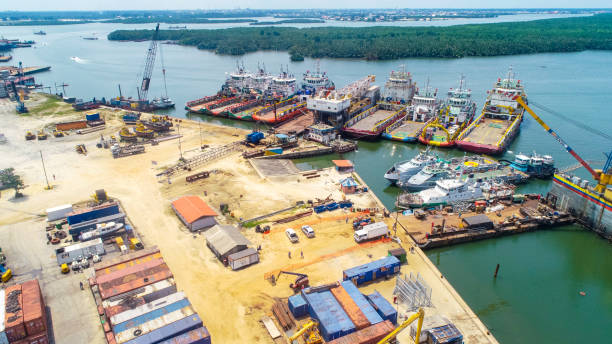
Port operations in Nigeria are the activities involved in handling ships, containers, bulk cargo, vehicles, and other goods that enter or leave the country through its seaports. These operations form the backbone of Nigeria’s international trade, supporting imports, exports, manufacturing, oil and gas projects, and commercial distribution across the country.
Major ports such as Apapa Port, Tin Can Island Port, Onne Port, and Lekki Deep Sea Port handle millions of tonnes of cargo annually, making efficient port operations essential to the Nigerian economy.
What happens during port operations?
Many people think port operations simply involve unloading ships. In reality, a vessel’s arrival triggers a complex chain of activities involving multiple stakeholders.
Typical port operations include:
- Vessel berthing and docking
- Cargo discharge and loading
- Container handling
- Customs processing
- Cargo inspections
- Terminal operations
- Storage and warehousing
- Truck evacuation
- Export cargo processing
Every stage must work efficiently for cargo to move smoothly from the port to its final destination.
The ports driving Nigeria’s maritime trade
Nigeria’s port system is spread across several locations, each serving different sectors and cargo types.
Apapa Port
Apapa remains one of the country’s busiest ports and handles significant volumes of:
- Containerized cargo
- General imports
- Consumer goods
- Industrial equipment
Due to its importance, operational efficiency at Apapa often affects supply chains nationwide.
Tin Can Island Port
Tin Can Port specializes heavily in:
- Container traffic
- Vehicle imports
- Commercial cargo
Many importers use Tin Can because of its extensive terminal facilities and shipping connections.
Onne Port
Located in Rivers State, Onne serves as a major hub for:
- Oil and gas logistics
- Project cargo
- Industrial equipment
- Offshore support operations
The port plays a crucial role in supporting Nigeria’s energy sector.
Lekki Deep Sea Port
As one of Nigeria’s newest port developments, Lekki is designed to:
- Handle larger vessels
- Improve cargo throughput
- Reduce pressure on older Lagos ports
- Support future trade growth
Where delays occur during port operations
Even when vessels arrive on schedule, delays can happen at several points.
Cargo clearance bottlenecks
Importers often experience delays due to:
- Documentation issues
- Customs inspections
- Regulatory approvals
- Duty assessment reviews
A small documentation error can sometimes delay cargo release by several days.
Container evacuation challenges
One of the biggest operational challenges remains moving cargo out of the port.
Factors include:
- Truck shortages
- Road congestion
- Terminal scheduling delays
- High cargo volume periods
This is especially noticeable in Lagos, where road infrastructure serves both commercial and port traffic.
Yard congestion
When containers remain inside terminals longer than expected:
- Storage areas fill up
- Equipment movement slows
- Loading operations become less efficient
This creates a ripple effect throughout the port system.
How technology is changing Nigerian port operations
The maritime sector is gradually moving toward digital operations.
Recent improvements include:
- Electronic cargo documentation
- Digital customs processing
- Automated tracking systems
- Electronic truck scheduling
- Integrated port management platforms
The goal is to reduce paperwork, improve transparency, and shorten cargo clearance timelines.
What businesses should consider before shipping cargo
Successful imports often depend on preparation before a vessel arrives.
Businesses can reduce operational delays by:
- Preparing documentation early
- Verifying cargo classifications
- Arranging transportation before arrival
- Monitoring vessel schedules
- Planning warehouse capacity in advance
The companies that experience the fewest disruptions are usually those that prepare well before cargo reaches Nigerian waters.
Seasonal factors that affect port operations
Port activity is rarely consistent throughout the year.
Periods that often experience increased pressure include:
- End-of-year import season
- Major festive periods
- High consumer demand cycles
- Large industrial project phases
During these periods:
- Cargo volume increases
- Truck demand rises
- Clearance timelines may extend
- Storage costs can increase
Planning around seasonal demand helps businesses avoid unnecessary costs.
How Travo.ng supports businesses involved in port operations
Coordinating the people behind the cargo
Port operations involve more than ships and containers. Import managers, suppliers, inspectors, logistics teams, and international partners often need to move between airports, ports, warehouses, hotels, and business locations.
Travo.ng supports these operational needs through:
- Airport pickup services
- Executive transportation
- Hotel reservations
- Corporate travel coordination
- Vehicle hire services
- Logistics support for business teams
For companies managing imports, exports, and supply chain activities, efficient movement of personnel can be just as important as efficient movement of cargo.
Why efficient port operations matter for Nigeria
Strong port operations affect nearly every sector of the economy.
When ports operate efficiently:
- Goods reach businesses faster
- Import costs remain more predictable
- Supply chains become more reliable
- Trade volumes increase
- Economic growth is supported
As Nigeria continues investing in port infrastructure, digital systems, and logistics modernization, efficient port operations will remain a critical factor in supporting national and regional trade.
