

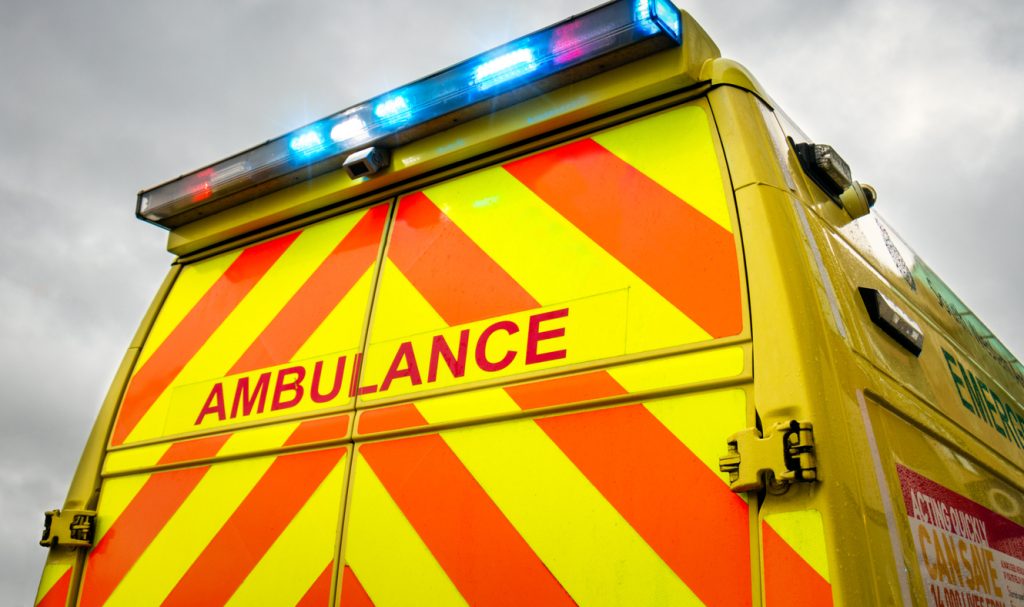
Emergency vehicles are selected by the service responding to the incident or assessing the patient’s transport needs. A vehicle label or picture cannot establish the personnel, equipment or authority needed. If you are searching for an ambulance, large ambulance, police vehicle or fire engine in Lagos, start with the nature and urgency of the request.
What the vehicle labels do and do not tell you
| Label | Practical meaning |
|---|---|
| Ambulance | Confirm the qualified provider, crew and suitability for the patient’s assessed transport needs. |
| Large Ambulance | More space is a physical description, not proof of a particular level of clinical care. |
| Fire Engine | Response equipment is assigned by the responsible fire and rescue service. |
| Police 1 / Police 2 | These labels alone do not identify standard public vehicle classes, capabilities or booking entitlements. |
Ambulance versus planned patient transport
For an emergency, contact the emergency service directly. For a planned movement, the patient’s clinician or medical transport provider should assess the required care, crew, equipment and receiving facility. Explain the origin and destination through the provider’s appropriate private channels. Do not select the vehicle solely because it is larger, cheaper or nearer on a map.
Confirm whether the request is for a routine appointment journey, a transfer requiring medical support or another assessed service. A standard car-and-driver booking cannot provide the clinical support of an appropriately staffed medical vehicle. If medical support is needed during travel, follow professional advice about the suitable arrangement rather than adapting an ordinary vehicle booking.
Large ambulances: access and clinical capability are separate
A larger vehicle may offer additional physical space, but the provider must confirm the usable configuration and whether it fits the assessed transport requirement. Ask about access at the collection and receiving locations, stairs, lifts, parking and the handover. These practical details help the qualified team plan; they do not replace clinical assessment.
For an inter-facility transfer, the sending and receiving teams should agree the appropriate arrangements, acceptance and documentation. A vehicle reservation does not itself confirm that the destination can receive the patient. Keep the clinical coordination with the healthcare professionals and use the agreed communication channel for changes.
Fire engines and police vehicles
For a fire, rescue event or immediate threat, describe what is happening and where when calling the responsible emergency service. Let it determine the response resources. An article cannot promise that a named appliance or vehicle is available, and a general booking receipt should not be read as a dispatch confirmation from a public service.
The labels “Police 1” and “Police 2” may be internal categories in a particular system. They should not be interpreted as nationally standard vehicle specifications or private hire choices. If a request concerns an official police matter or a lawful planned service, establish the appropriate procedure directly with the responsible authority. Do not assume a vehicle label grants police powers, road priority or access.
Give a location the responding service can use
Provide the street, area, building or gate, a clear landmark and a callback number. If the incident is on a road, state the direction of travel and relevant access point. Tell the operator about controlled gates or difficult access. A location pin can support these details, but answer the questions asked and follow the instructions you receive.
Do not wait for an ordinary vehicle quote when urgent response is needed. For non-emergency follow-up, such as a relative’s routine pickup, a delivery or vehicle recovery, the practical booking can be arranged separately once the appropriate needs are clear. Avoid sharing medical records, identity documents or private incident details in public comments.
How to assess a planned quotation
For a professionally assessed non-emergency medical transport arrangement, obtain the provider identity, agreed service, crew or assistance scope, collection window, destination acceptance, waiting terms and cancellation conditions. Ask who coordinates a change if timing or the patient’s needs alter. Any clinical questions should go back to the qualified provider.
Travo’s published catalogue includes emergency-connection enquiries and breakdown support. Availability and scope should be confirmed; it should not be understood as a claim that Travo owns public-service vehicles or controls official dispatch. For routine healthcare access and provider checks, use the Lagos healthcare-location guide.
Open the response and transport information checklist
For non-emergency transport or logistics enquiries, contact Travo with the practical task. For emergencies use the official response route. Sources: Lagos State emergency information and the Lagos emergency-services guide.
Reviewed 19 October 2026. Confirm vehicle specification, availability, operating suitability and quotation for the actual booking.
