


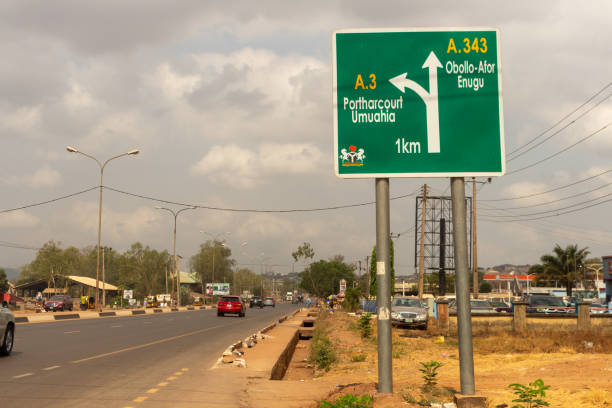
Speed limits depend on the country, road type, vehicle class and any applicable signs. A number remembered from a motorway is not a permission to keep that speed through a town, school area or roadworks. Prepare for the actual route and vehicle before driving in Nigeria, Ghana, Kenya or South Africa.
This guide summarises selected official information checked for trip planning. Follow current local restrictions and drive below the maximum when conditions require it. An online table cannot describe every temporary limit, class restriction or local road situation.
Speed limits in Nigeria
The FRSC vehicle speed-limit table lists private cars at 50km/h in built-up areas, 80km/h on highways and 100km/h on expressways. It lists taxis and buses differently on expressways. Check the actual vehicle category and applicable signs rather than applying the private-car row to every vehicle.
The FRSC speed-limiter FAQ also gives preset categories for speed-limiting devices. A device’s maximum setting is not a permission to exceed a lower road limit. A working limiter supports fleet control but does not replace observation or compliance with a sign.
Use the Nigeria speed-limit guide for further local preparation. A commercial trip should identify its vehicle class, route restrictions and driver responsibilities before dispatch.
Speed limits in Ghana
The Ghana Police Service’s Traffitech-GH guidance describes general categories under its current road-traffic guidance: 30km/h around schools and other areas where human activity predominates, 50km/h in urban or built-up areas, 90km/h on highways and 100km/h on motorways.
Read the specific road environment as you approach a settlement or busy pedestrian area. Do not continue at a highway speed merely because the route remains an important intercity road. The National Road Safety Authority emphasises compliance with posted limits and care near schools, markets and other human activity.
Speed limits in Kenya
Kenya’s Traffic Act, section 42 sets vehicle-class restrictions and a 50km/h restriction within the boundaries of trading centres, townships, municipalities or cities, with its signage provisions. Check the current law, route signs and class-specific rules together.
For other roads, use the Traffic (Speed Limits) Rules and the applicable vehicle row. This article does not present one universal Kenyan highway maximum for every vehicle. A private car, public-service vehicle and loaded commercial vehicle should not be assumed to have identical limits.
Speed limits in South Africa
South African government road-safety guidance describes the general limits as 60km/h on urban public roads, 100km/h on public roads outside urban areas that are not freeways, and 120km/h on freeways. Check signs and restrictions for the actual road and vehicle; those general figures do not override a lower posted limit.
Use the right kind of comparison
| Country | Planning point |
|---|---|
| Nigeria | Private-car road categories differ from taxi, bus and heavy-vehicle rows. |
| Ghana | Human-activity areas and settlements require lower speeds than highways and motorways. |
| Kenya | Check section 42, the vehicle-class schedule and route signs together. |
| South Africa | General urban, non-freeway and freeway limits still require local and vehicle checks. |
Do not add an assumed enforcement allowance
A rumoured percentage or camera tolerance is not a universal right to exceed the limit. Follow the applicable maximum and allow for conditions. The UK traveller driving guide explains why another country’s rules need separate checks; UK mile-per-hour signs should not be confused with kilometre-per-hour figures.
Build safer travel and fleet plans
Allow realistic time for towns, stops, weather and driver rest. Do not turn a theoretical distance divided by maximum speed into a promised arrival time. For a bus or hired driver, ask how the operator plans the journey and handles delays without pressure to speed.
Route and speed-limit preparation
Use this checklist to prepare your enquiry. Selections stay in this page only.
Contact Travo for driver, bus or fleet transport enquiries and confirm coverage. Use roadside assistance planning and Nigeria journey comparisons alongside the road-rule checks.
