


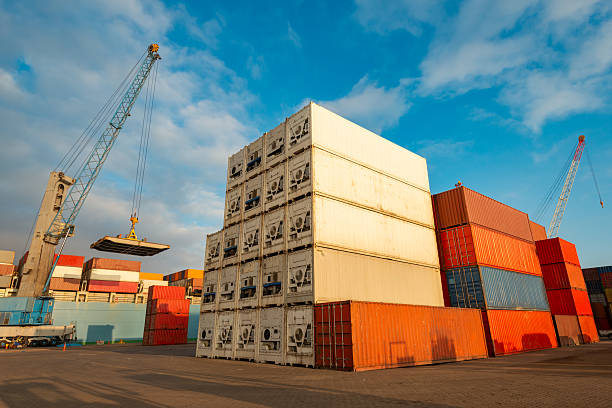
Global trade is changing as businesses respond to shifting supply chains, technology, geopolitical tensions, new regulations and changing consumer demand. For Nigerian businesses involved in importing, exporting, sourcing and logistics, understanding these trends can help with supplier selection, market research and shipment planning.
Global trade reached a record level in 2025, with UN Trade and Development estimating that trade increased by about 7.5% to roughly $35 trillion. However, the outlook for 2026 is more uncertain, with trade growth facing higher costs and geopolitical risks. (UNCTAD)
Trade Growth Is Becoming More Uneven
Global trade is still expanding, but growth is not evenly distributed across countries and sectors.
Developing economies, particularly in East Asia and parts of Africa, recorded stronger trade growth in 2025. South-South trade also expanded faster than the global average, highlighting the growing importance of trade between developing economies. (UNCTAD)
For African businesses, this creates opportunities to look beyond traditional European and North American markets and explore stronger commercial relationships with other emerging markets.
Supply Chains Are Being Diversified
Companies are increasingly reconsidering the idea of depending heavily on one country or supplier.
Geopolitical tensions, shipping disruptions, tariffs and regulatory changes are encouraging businesses to diversify suppliers and production locations. UN Trade and Development reports that companies are increasingly balancing cost efficiency with supply-chain resilience. (UNCTAD)
For a Nigerian importer, this could mean maintaining alternative suppliers in China, India, Turkey, Dubai or other markets rather than depending entirely on one source.
Digital Trade Is Growing
Digitalisation is changing how international businesses sell, purchase, communicate and deliver services.
Digitally deliverable services now represent a substantial share of global services exports. UN Trade and Development reported that they accounted for 56% of global services exports, showing the increasing importance of digital infrastructure and skills in international commerce. (UNCTAD)
For Nigerian businesses, this includes opportunities in software, digital marketing, professional services, online education, creative work and other services that can be delivered internationally without physical shipping.
Services Are Becoming More Important
International trade is not only about containers and physical products.
Services are becoming an increasingly important part of global commerce. WTO reporting in 2026 projects services trade volume to grow faster than goods trade, with services trade volume projected to expand by 4.8%. (World Trade Organization)
This creates opportunities for businesses that can sell professional and digital services across borders.
AI Is Affecting Global Trade
Artificial intelligence is influencing demand for technology products, data infrastructure and digital services.
UN Trade and Development reported that AI-related goods and digital technologies helped drive manufacturing trade growth in 2025 and are expected to remain important in 2026. (UNCTAD)
For importers, this can affect demand for computers, networking equipment, electronics, components and other technology-related products.
It also creates opportunities for businesses providing AI-enabled services internationally.
Tariffs and Trade Regulations Are Changing
Another major global trade trend is the increased use of tariffs and other trade measures.
UN Trade and Development reports that tariff increases became more prominent in 2025, particularly in manufacturing, while technical regulations and other non-tariff measures continue to affect international commerce. (UNCTAD)
For importers and exporters, this makes regulatory research more important. A product that was commercially attractive under one set of trade rules may become more expensive when tariffs, certification requirements or other regulations change.
Shipping Routes Are Under Pressure
International shipping remains sensitive to geopolitical developments.
In 2026, disruptions affecting major maritime routes have contributed to higher energy and transportation costs and increased uncertainty around global supply chains. WTO and UN Trade and Development reports have highlighted the effects of recent Middle East disruptions on shipping, energy markets and trade. (UNCTAD)
Businesses importing into Nigeria should therefore avoid building their budgets around outdated freight quotations.
Africa’s Role in Global Trade
African businesses have opportunities to participate more actively in regional and international value chains.
Growing South-South trade and changes in global supply chains can create opportunities for African producers, distributors and logistics businesses.
However, taking advantage of these opportunities requires improvements in logistics, infrastructure, digital capabilities, compliance and access to reliable trade information.
For Nigerian companies, this can include exporting agricultural products, manufactured goods, creative services and professional services while also developing more efficient import and distribution operations.
Sustainability Is Influencing Trade
Environmental requirements are increasingly becoming part of international commerce.
Businesses exporting to markets with environmental standards may face additional requirements relating to products, production processes, packaging, emissions and supply-chain information.
This means sustainability is becoming a commercial consideration rather than something businesses can treat entirely separately from international trade.
What Global Trade Trends Mean for Nigerian Importers
Nigerian businesses can respond to these changes by:
- Diversifying important suppliers.
- Comparing sourcing markets.
- Monitoring international freight rates.
- Calculating landed costs before purchasing.
- Keeping track of tariffs and regulations.
- Using digital tools for supplier research.
- Building relationships with alternative logistics providers.
- Planning inventory around potential shipping disruptions.
- Exploring regional and international export opportunities.
- Reviewing supplier performance regularly.
The objective is not to predict every change in global trade, but to build a business that can adapt when conditions change.
How Travo.ng Can Help With Global Trade Logistics
Travo.ng can help Nigerian businesses coordinate the logistics involved in international trade.
Depending on the shipment, this can include freight coordination, cargo consolidation, international shipping arrangements, transportation planning and final delivery.
For businesses sourcing from China, Dubai, the UK and other markets, coordinating logistics early can help them understand shipping requirements and estimate the landed cost before committing to an order.
Preparing for the Next Phase of Global Trade
Global trade in 2026 is being shaped by several connected developments: supply-chain diversification, digital services, AI-related demand, changing tariffs, geopolitical disruptions and tighter regulatory requirements. (UNCTAD)
For Nigerian businesses, staying competitive means monitoring these developments and adjusting sourcing, pricing, logistics and market strategies when necessary.
The businesses best positioned to participate in changing trade flows will need reliable suppliers, accurate cost calculations, flexible logistics and a clear understanding of the markets they serve.
