


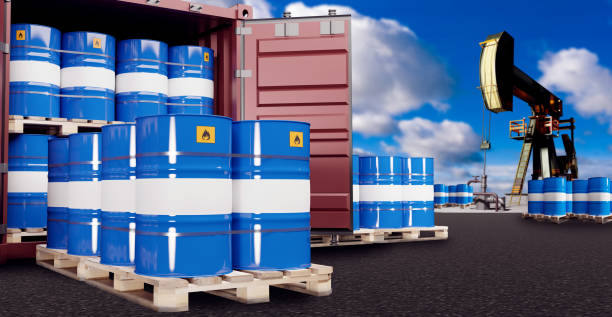
Shipping container prices are an important part of the cost of importing goods into Nigeria. For businesses shipping from China, Dubai, Turkey, the UK and other international markets, the amount paid for a container depends on its size, origin, destination, shipping line, season, cargo type and the services included in the quotation.
There is no single fixed price for a 20ft or 40ft container. Freight rates change with market conditions, while destination charges and local logistics can significantly increase the final amount paid by an importer.
How Much Does Shipping a Container to Nigeria Cost?
Recent 2026 market references show significant variation in container freight prices.
For example, indicative rates published by the Nigerian Shippers’ Council for January to March 2025 showed average import freight rates of about $4,156 for a 20ft container and $5,225 for a 40ft container on its Far East/China route category. (Shippers Council)
More recent commercial 2026 quotations for China to Nigeria vary by origin port and shipping arrangement. One current market reference gives approximately $2,970–$3,630 for a 20ft container and $3,150–$3,850 for a 40ft container on the China-Nigeria route. (Sino Shipping)
These figures should be treated as indicative rather than guaranteed prices. A final quotation can change depending on the shipping line, departure port, booking date, cargo and whether destination charges are included.
20ft vs 40ft Container Prices
The two common container sizes for commercial imports are 20ft and 40ft.
A 20ft container is commonly suitable for smaller or heavier shipments where the cargo does not require the additional volume of a 40ft container.
A 40ft container provides substantially more volume and can be appropriate for larger shipments.
Interestingly, the price of a 40ft container is not necessarily twice the price of a 20ft container. Current market quotations can show a relatively small difference between the two, although the exact relationship changes by route and market conditions.
What Determines Container Shipping Prices?
Several factors influence the freight quotation.
Origin: Shipping from Shanghai, Shenzhen, Ningbo, Guangzhou or another port can produce different rates.
Destination: Apapa, Tin Can Island, Onne and other Nigerian ports can have different costs and operational conditions.
Container size: 20ft, 40ft and 40ft high-cube containers have different pricing.
Season: Freight prices can rise when demand for vessel space increases.
Fuel and carrier surcharges: Changes in operating costs can affect shipping rates.
Cargo: Dangerous goods, oversized cargo, refrigerated goods and other specialised shipments may require additional charges.
Booking time: Rates can change between the date you request a quotation and the date the cargo is actually booked.
China to Nigeria Container Prices
China is one of the most important sourcing markets for Nigerian importers.
Current 2026 commercial rate references show China-Nigeria 20ft FCL quotations ranging from roughly $2,000 to above $4,000 depending on the Chinese origin port, Nigerian destination and pricing arrangement. 40ft rates can range from roughly $2,500 to above $4,000 on some current quotations. (CNDDP Shipping)
The Nigerian Shippers’ Council’s published data also demonstrates why importers should not rely on one historical rate when preparing a current budget. Freight rates can change substantially over time. (Shippers Council)
What Is Included in the Freight Price?
Always ask a freight forwarder or shipping line what the quoted amount actually covers.
A quotation may include the basic ocean freight but exclude:
- Destination terminal charges
- Port fees
- Customs duty
- Clearing agent charges
- Demurrage
- Storage
- Documentation
- Inland transportation
- Delivery to your warehouse
For example, Pacific International Lines announced changes to certain Nigerian import charges effective June 2026, demonstrating that destination-related charges can change independently of the basic ocean freight rate. (PIL Nigeria)
Don’t Confuse Freight Price With Total Import Cost
A $3,500 container quotation does not mean the entire import will cost $3,500 to bring into Nigeria.
The importer may still have to pay for:
- The goods themselves
- Customs duty and applicable taxes
- Clearing
- Terminal charges
- Port-related expenses
- Insurance
- Local transportation
- Warehousing
- Other applicable charges
This is why importers should calculate the total landed cost before confirming a purchase.
LCL Can Be Cheaper for Smaller Shipments
You do not always need to rent an entire container.
Less-than-container-load shipping allows smaller shipments to share container space with cargo belonging to other importers. LCL is generally charged according to cargo volume or other applicable measurements.
For a business importing only a few cubic metres of goods, comparing LCL against the cost of an entire 20ft container may make more sense.
However, LCL has its own handling and destination charges, so compare the complete cost rather than assuming it will always be cheaper.
How to Get a Better Container Shipping Price
Importers can improve their shipping costs by:
- Comparing quotations from multiple providers.
- Asking for an itemised quote.
- Comparing 20ft and 40ft options.
- Consolidating compatible shipments.
- Booking early when market conditions require it.
- Negotiating based on regular shipment volume.
- Checking destination charges before booking.
- Avoiding unnecessary storage and demurrage.
- Comparing different Nigerian ports where appropriate.
- Calculating the full landed cost.
The Nigerian Shippers’ Council maintains a freight-rate information section and publishes indicative rates and freight-rate analyses for major trading routes to Nigeria. (Shippers Council)
How Travo.ng Can Help With Shipping Containers
Travo.ng can help Nigerian businesses coordinate the logistics involved in moving imported goods by sea.
Depending on the shipment, this can include freight coordination, cargo consolidation, container shipping arrangements, transportation and final delivery planning.
For importers purchasing from several overseas suppliers, coordinating cargo before booking the container can also help determine whether LCL, consolidation or FCL is more suitable for the shipment.
Check These Costs Before Booking
Before accepting a container quotation, ask:
- What is the origin port?
- Which Nigerian port will receive the container?
- Is it 20ft, 40ft or 40ft high cube?
- Is the quote port-to-port or door-to-door?
- Are destination charges included?
- Are terminal handling charges included?
- How much free time is provided?
- What happens if the container is delayed?
- Are customs and clearing included?
- Is inland delivery included?
Getting these details in writing makes it easier to compare competing quotations and avoid unexpected expenses.
Shipping container prices change regularly, so Nigerian importers should obtain a current quotation for their specific origin, destination, container size and cargo rather than relying on a generic online price.
