


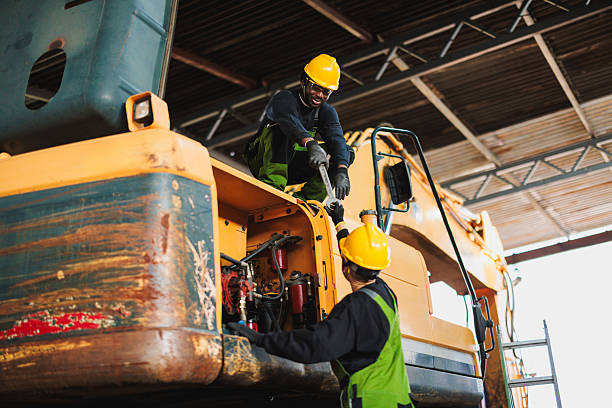
Heavy equipment repair training in Nigeria provides practical skills for people who want to work on excavators, loaders, bulldozers, cranes, graders, dump trucks, agricultural machinery and other heavy-duty equipment.
The field combines diesel mechanics, hydraulics, electrical systems, pneumatics, diagnostics and preventive maintenance. With the growth of construction, mining, quarrying, agriculture and infrastructure projects, trained heavy-equipment technicians can build careers across several industries.
What Does Heavy Equipment Repair Training Cover?
A strong programme should combine technical theory with extensive practical work.
Common training areas include:
- Heavy-duty diesel engines
- Hydraulic systems
- Pneumatic systems
- Electrical and electronic systems
- Transmissions
- Powertrains
- Steering systems
- Braking systems
- Cooling systems
- Preventive maintenance
- Fault diagnosis
- Equipment inspection
- Workshop safety
- Technical documentation
For example, NIATEC’s heavy-duty and agricultural machinery programme covers diesel engines, hydraulics, pneumatics, electrical systems and practical diagnosis and repair.
Heavy Equipment Diesel Mechanic Training
Diesel engines are central to many construction and industrial machines.
Training can cover:
- Diesel engine operation
- Engine servicing
- Engine overhaul
- Fuel systems
- Injectors
- Turbochargers
- Cooling systems
- Lubrication
- Engine diagnostics
- Electronic engine controls
A strong diesel foundation can allow technicians to work on excavators, loaders, generators, trucks, tractors and other diesel-powered machinery.
Heavy Equipment Hydraulic Training
Hydraulics is one of the most important specialist skills for heavy-equipment technicians.
Training can include:
- Hydraulic pumps
- Hydraulic motors
- Hydraulic cylinders
- Control valves
- Relief valves
- Hydraulic hoses
- Filters
- Accumulators
- Pressure testing
- Flow testing
- Hydraulic schematics
- Hydraulic troubleshooting
Training providers in Nigeria offer dedicated hydraulic courses covering system fundamentals, schematic interpretation, component functions and troubleshooting.
Excavator Repair Training
Excavator technicians need to understand mechanical, hydraulic, electrical and electronic systems.
Training may cover:
- Engine maintenance
- Hydraulic pumps
- Hydraulic motors
- Hydraulic cylinders
- Boom and arm systems
- Swing systems
- Undercarriage
- Travel systems
- Electrical controls
- Diagnostic systems
Excavator-focused programmes can also include troubleshooting hydraulic, mechanical and electrical faults and advanced maintenance procedures.
Loader and Bulldozer Repair Training
Wheel loaders and bulldozers require technicians who understand heavy-duty engines, transmissions, hydraulics and drivetrains.
Training can cover:
- Engine servicing
- Transmission systems
- Hydraulic systems
- Axles
- Differentials
- Steering
- Brakes
- Cooling systems
- Electrical systems
- Preventive maintenance
Crane Repair Training
Crane maintenance requires additional knowledge because cranes combine heavy mechanical, hydraulic, electrical and control systems.
Technicians may learn:
- Hydraulic systems
- Hoisting systems
- Slewing systems
- Braking systems
- Mechanical drives
- Electrical controls
- Hydraulic cylinders
- Engine systems
- Safety inspections
Heavy Equipment Electrical Training
Modern equipment uses electronic systems for engine management, machine controls, monitoring and diagnostics.
Useful skills include:
- Battery systems
- Alternators
- Starters
- Wiring
- Sensors
- Electronic control modules
- Instrument panels
- Machine-control systems
- Electrical fault diagnosis
- Diagnostic tools
Combining mechanical, hydraulic and electrical skills can make a technician much more versatile.
Computerised Heavy Equipment Diagnostics
Modern heavy machinery often requires electronic diagnostic tools to identify faults accurately.
Training can cover:
- Fault-code reading
- Electronic control modules
- Sensor testing
- Diagnostic software
- Electrical testing
- Engine diagnostics
- Hydraulic-electronic controls
- Technical service information
Technicians should learn not only how to connect a diagnostic tool but also how to interpret the information and identify the underlying mechanical problem.
Equipment Preventive Maintenance Training
Preventive maintenance is essential for reducing expensive equipment breakdowns.
Technicians can learn:
- Service scheduling
- Oil changes
- Filter replacement
- Lubrication
- Hydraulic-fluid inspection
- Cooling-system checks
- Belt inspection
- Hose inspection
- Undercarriage inspection
- Component wear monitoring
- Maintenance documentation
Proper preventive maintenance can extend equipment life and reduce downtime.
Where Can You Study Heavy Equipment Repair in Nigeria?
Potential training routes include:
- Heavy-equipment training institutes
- Technical colleges
- Vocational training centres
- Industrial training institutions
- Equipment dealerships
- Manufacturer-supported programmes
- Apprenticeships
- Specialist hydraulic training programmes
- Plant-maintenance programmes
For example, the Institute for Industrial Technology in Lagos offers Plant Maintenance Technology training covering mechanical systems, hydraulics, engines, electrical systems and troubleshooting, with substantial practical training.
Manufacturer-Based Heavy Equipment Training
Manufacturer and dealer training can be particularly useful for technicians who want brand-specific knowledge.
Mantrac Nigeria, a Caterpillar dealer, currently offers the Technicians for the World programme, a free online programme with 22 modules covering Caterpillar machinery, electricity, engines, hydraulics and related fundamentals. Successful participants can receive a Cat foundation certification after completing the programme.
This can be useful for someone who wants to build a career around Caterpillar equipment.
Heavy Equipment Repair Training in Lagos
Lagos has several options for people interested in industrial and heavy-equipment maintenance.
Training opportunities can include:
- Plant maintenance
- Hydraulic troubleshooting
- Diesel-engine maintenance
- Equipment diagnostics
- Industrial electrical systems
- Heavy machinery maintenance
Engequip, for example, provides technical training in Lagos and Abuja covering hydraulic systems, pneumatic systems, diesel engines and maintenance practices.
The Institute for Industrial Technology also operates in Lagos and offers practical plant-maintenance training.
Heavy Equipment Repair Training in Nigeria for Beginners
If you are starting from zero, a useful progression is:
Basic mechanical training → Diesel fundamentals → Hydraulics → Electrical systems → Workshop apprenticeship → Diagnostics → Heavy-equipment specialisation
Do not focus only on certificates. Heavy-equipment repair is highly practical, so time spent working directly on machinery is extremely valuable.
Training for Experienced Mechanics
Already-qualified mechanics can specialise in:
- Heavy-duty diesel diagnostics
- Hydraulic troubleshooting
- Equipment electronics
- Caterpillar systems
- Komatsu systems
- JCB systems
- Volvo construction equipment
- SANY equipment
- XCMG equipment
- Mining equipment
- Fleet maintenance
- Predictive maintenance
Short specialist courses can be useful for filling specific technical gaps. IIT’s general technical programmes, for example, use a practical-heavy training model for people seeking additional technical skills.
Certifications After Heavy Equipment Training
Depending on the programme, you may receive:
- Technical training certificates
- Heavy-equipment technician certificates
- Plant maintenance certificates
- Hydraulic competency certificates
- Manufacturer certifications
- National technical qualifications
- Skills-based qualifications
For professional employment, it is useful to combine certification with documented practical experience.
Skills Employers Look For
Heavy-equipment employers commonly value:
- Diesel engine repair
- Hydraulic troubleshooting
- Electrical diagnostics
- Mechanical fault diagnosis
- Preventive maintenance
- Equipment inspection
- Transmission repair
- Powertrain knowledge
- Diagnostic equipment
- Technical drawing and schematic interpretation
- Workshop safety
- Field-service experience
Heavy Equipment Repair Jobs After Training
Training can prepare you for positions such as:
- Heavy Equipment Mechanic
- Plant Mechanic
- Heavy-Duty Technician
- Diesel Technician
- Hydraulic Technician
- Equipment Maintenance Technician
- Excavator Technician
- Construction Equipment Technician
- Field Service Technician
- Mining Equipment Technician
- Fleet Maintenance Technician
- Workshop Technician
- Maintenance Supervisor
Industries Hiring Heavy Equipment Technicians
Potential employers include:
- Construction companies
- Mining companies
- Quarry companies
- Road construction companies
- Equipment rental companies
- Agricultural businesses
- Logistics companies
- Transport companies
- Manufacturing companies
- Industrial companies
- Oil and gas service companies
- Heavy-equipment dealerships
How to Choose a Good Training Programme
Before enrolling, check:
- How much practical training is included.
- Whether you will work on actual heavy equipment.
- Whether diesel engines are covered.
- Whether hydraulic troubleshooting is taught.
- Whether electrical diagnostics are included.
- Whether diagnostic tools are available.
- Whether the trainers have industry experience.
- What certificate is awarded.
- Whether there is an internship or workshop placement.
- Whether the programme covers the equipment brands you want to work with.
For a serious heavy-equipment career, a programme with substantial hands-on training is generally more useful than one based almost entirely on classroom theory.
What Travo.ng Can Do
Travo.ng provides transportation, mobility and logistics solutions for individuals and businesses. Reliable vehicles and properly maintained equipment are important for efficient transportation and logistics operations.
Skilled heavy-equipment technicians help reduce machinery downtime, maintain operational reliability and support businesses that depend on transportation and equipment.
Why Choose Travo.ng?
Travo.ng focuses on practical transportation and logistics solutions designed around the needs of individuals and businesses.
Reliable transportation and logistics operations depend on properly maintained vehicles and competent technical personnel. Travo.ng understands the importance of dependable mobility and operational reliability.
Career Progression
A heavy-equipment technician can progress through:
Trainee → Apprentice → Junior Technician → Heavy Equipment Technician → Senior Technician → Specialist Technician → Lead Technician → Workshop Supervisor → Maintenance Manager
Specialising in hydraulics, diesel engines, diagnostics or a particular equipment brand can create additional career opportunities.
Final Thoughts
Heavy equipment repair training in Nigeria can provide a strong foundation for a career in construction, mining, quarrying, agriculture, transportation and industrial maintenance.
The most valuable combination is:
Practical training + workshop experience + diesel skills + hydraulics + electrical diagnostics + recognised certification.
For technicians who want to work on modern excavators, loaders, cranes and other machinery, continuously developing diagnostic and electronic skills is increasingly important.
