


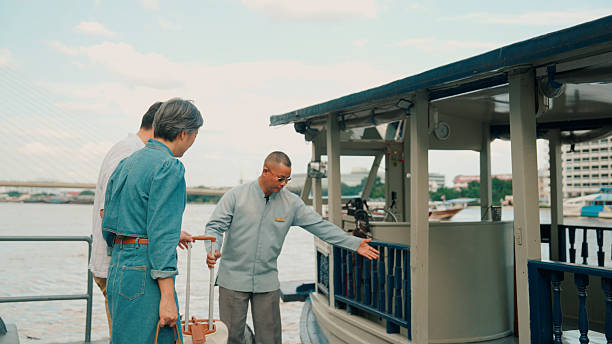
Electric water taxi Lagos is an emerging form of water transportation that uses battery-powered boats to move passengers across Lagos waterways. As Lagos expands its water transportation network, electric-powered vessels are expected to provide cleaner, quieter and more efficient alternatives to conventional fuel-powered boats.
What Is an Electric Water Taxi?
An electric water taxi is a small passenger boat powered by an electric motor and rechargeable batteries.
Unlike conventional boats that depend on petrol or diesel engines, electric water taxis use stored electrical energy for propulsion. This can provide quieter journeys and eliminate direct exhaust emissions while the vessel is operating.
Electric water taxis can be particularly useful for short and medium-distance trips where passengers want to avoid congested roads.
Electric Water Taxi Services in Lagos
Lagos is developing electric marine transportation through both public-sector projects and private-sector initiatives.
The Omi Eko Project is a major example. It is designed to introduce electric passenger vessels alongside improved ferry routes, terminals, charging infrastructure and modern passenger facilities. The project includes 15 structured ferry routes covering 140 kilometres, 25 ferry terminals and 75 electric vessels.
LAGFERRY has also announced plans to introduce electric-powered boats into its fleet, with the aim of improving the sustainability and affordability of water transportation for commuters.
Electric Water Taxi and Omi Eko
Omi Eko is primarily being developed as an organised public ferry transportation network rather than a conventional on-demand water taxi service.
Its electric vessels will operate on structured routes connecting different parts of Lagos. The project is designed to improve connections between waterfront communities, commercial areas and other transportation networks.
Therefore, passengers should distinguish between an Omi Eko electric ferry service and a private electric water taxi that may operate on a point-to-point or charter basis.
Electric Water Taxi Lagos Routes
The wider Lagos waterways network connects numerous waterfront communities and commercial areas.
Potential areas served by electric water transportation as the network develops include:
- Ikorodu
- Badore
- Falomo
- Ikoyi
- Victoria Island
- Marina
- Ebute Ero
- Oworonshoki
- Lekki
- Ebute Ojo
- Festac
- Liverpool
The Omi Eko project will establish 15 structured routes, including trunk and feeder services, rather than providing unrestricted on-demand travel between every location.
Electric Water Taxi for Commuters
Electric water taxis can provide an alternative for workers and students travelling between waterfront communities and business districts.
A passenger travelling between areas such as Ikorodu, Badore, Ikoyi or Victoria Island may be able to save time by using water transportation instead of travelling entirely by road.
The availability of a particular electric service will depend on the operator, route, terminal and stage of implementation.
Electric Water Taxi for Businesses
Businesses can use electric marine transportation for corporate travel, employee movement and meetings between waterfront locations.
For companies that need transportation for several employees or clients, a private boat arrangement may provide more flexibility than a scheduled public ferry.
Corporate water transportation can also be useful for events, conferences and waterfront business activities.
Electric Water Taxi for Tourists
Electric water taxis can also support tourism and sightseeing in Lagos.
The quieter operation of an electric boat can make waterfront journeys more comfortable for visitors exploring Lagos Lagoon and surrounding waterways.
Private electric boat trips can potentially be used for sightseeing, leisure transportation, organised tours and waterfront events as the technology becomes more widely available.
Benefits of Electric Water Taxis in Lagos
Lower Direct Emissions
Electric boats do not produce direct exhaust emissions while operating, making them a cleaner option for urban waterways.
Quieter Journeys
Electric motors generally produce considerably less operating noise than conventional marine engines.
Reduced Fuel Dependence
Electric water transportation reduces dependence on petrol and diesel for propulsion.
Potentially Lower Operating Costs
Electric propulsion can reduce certain fuel and maintenance costs, although the overall economics depend on electricity prices, battery capacity, charging infrastructure and vessel utilisation.
Faster Waterfront Connections
For suitable routes, water transportation can help passengers avoid road congestion and reduce journey times.
Electric Water Taxi Charging Infrastructure
Charging infrastructure is essential for reliable electric water transportation.
The Omi Eko Project includes charging facilities as part of its planned ferry infrastructure. Project documents provide for 25 ferry terminals and jetties, with selected terminals equipped with power generation and charging facilities.
This infrastructure is intended to allow electric vessels to recharge between operating cycles and support regular passenger services.
Electric Water Taxi Safety
Electric propulsion does not remove the need for standard marine safety procedures.
Passengers should use properly regulated operators and approved boarding facilities. Vessels should have appropriate safety equipment and trained crews, while charging infrastructure must also be properly managed.
Passengers should confirm the operator and service arrangements before boarding an electric boat.
Is Electric Water Taxi Lagos Available Now?
Electric boat technology is already being introduced and demonstrated in Lagos, but passengers should distinguish between electric vessel projects, planned public ferry services and fully operational on-demand electric water taxi services.
The Omi Eko Project is still being implemented. In July 2026, Lagos State commenced the Project Management, Operations and Design Consultancy phase of the project as part of its implementation process.
LAGFERRY has also announced plans to introduce electric boats into its fleet, while the wider Omi Eko project is developing a much larger electric ferry network.
As a result, passengers should confirm the current operator, route, schedule, fare and vessel availability before planning an electric water taxi journey.
How Travo.ng Can Help
Travo.ng can help coordinate electric water transportation, ferry transfers and marine travel arrangements in Lagos where suitable operators and services are available.
Customers can provide their pickup location, destination, travel date, number of passengers and preferred departure time to help identify an appropriate water transportation option.
Plan Your Electric Water Taxi Lagos Journey
Electric water transportation is becoming an important part of Lagos’s future mobility system. Government initiatives such as Omi Eko and LAGFERRY’s electric boat plans are helping move the city’s waterways towards cleaner propulsion.
The Omi Eko Project alone is planned to include 75 electric vessels, 15 structured routes and 25 ferry terminals, creating a large-scale electric passenger transportation network across Lagos.
For private, corporate or point-to-point journeys, electric water taxi and boat charter services may provide additional flexibility as the electric marine sector expands.
Passengers should confirm the current operator, route, terminal, fare and schedule before travelling.
Travo.ng can help coordinate Lagos electric water taxi and water transportation arrangements based on your route, schedule, passenger numbers and travel requirements.
