


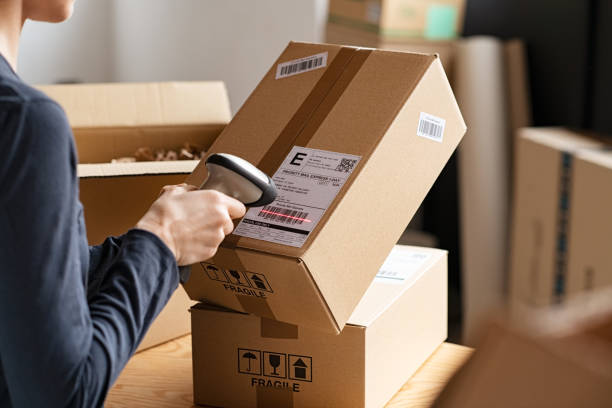
Sending a package across Nigeria sounds straightforward until you actually need it delivered.
A customer in Lagos is waiting for an order. A company in Abuja needs signed documents in Port Harcourt. Someone in Ibadan needs to send a personal package to a family member in Enugu. An online seller has ten customer orders to dispatch before the end of the day.
In each case, the challenge is not simply finding someone with a motorcycle or vehicle. You need to know that the parcel will be collected from the correct address, handled properly, transported along the right route and delivered to the intended recipient.
That is where reliable courier services in Nigeria become important.
Whether you are sending one personal package or managing daily deliveries for a business, the right courier arrangement can save time and prevent the common problems that come with informal delivery arrangements.
What do courier services in Nigeria actually handle?
Courier companies handle the collection and transportation of packages from one location to another.
The shipment could be a small document, a customer’s online order or a larger parcel that requires a different form of transportation.
Common courier deliveries include:
- Documents and contracts
- Clothing and fashion orders
- Shoes and accessories
- Small electronics
- Personal belongings
- E-commerce orders
- Business samples
- Office materials
- Non-perishable packaged goods
- Small parcels between branches
The appropriate delivery method depends on what is being transported, where it is going and how quickly it needs to arrive.
A small package moving across Ikeja may require a very different solution from several cartons travelling from Lagos to Abuja.
How much do courier services cost in Nigeria?
There is no single nationwide courier price.
The cost of sending a parcel depends on several practical factors, including:
- Pickup location
- Delivery location
- Distance
- Parcel weight
- Parcel dimensions
- Delivery speed
- Number of items
- Collection requirements
- Type of vehicle required
- Whether the shipment is local or interstate
For example, a small parcel travelling from Lekki to Victoria Island will generally involve a different delivery calculation from a 20 kg package moving from Lagos to Abuja.
The same applies to interstate deliveries. A shipment from Abuja to Kaduna is not priced in exactly the same way as one travelling from Abuja to Port Harcourt.
When requesting a quotation, provide the actual pickup and delivery locations and the parcel details rather than asking for a generic “courier price.”
That gives the courier provider enough information to estimate the job properly.
Same-day delivery is not the same as interstate delivery
One of the biggest mistakes people make when arranging courier services is treating every delivery as if it follows the same timeline.
It doesn’t.
A same-day delivery within Lagos or Abuja can be handled differently from a shipment moving between major Nigerian cities.
For example:
Local delivery:
A package collected in Wuse and delivered to Garki may potentially be handled within the same day, depending on the route, traffic and booking time.
Interstate delivery:
A parcel moving from Lagos to Abuja requires additional transportation and route planning.
Long-distance delivery:
A shipment travelling to a less accessible location may require more coordination and a longer delivery window.
Always ask for an estimated delivery timeframe based on your actual route rather than assuming that every courier operates on a same-day model.
Why Lagos traffic can affect local deliveries
Courier delivery in Lagos is heavily influenced by traffic.
A route that looks short on a map can take much longer during peak periods.
Consider a parcel moving between Lekki and Ikeja. The distance alone does not tell you how long the delivery will take. Traffic conditions, road works, rain and the time of day can all affect the journey.
This is why businesses should avoid promising customers an exact delivery time unless the courier provider has confirmed that timeframe.
A better approach is to provide a realistic delivery window.
For urgent deliveries, booking earlier in the day can also give the rider or courier more room to deal with unexpected delays.
What about courier deliveries in Abuja?
Abuja has its own delivery considerations.
Areas such as Wuse, Garki, Maitama, Asokoro, Jabi, Gwarinpa, Utako and Kubwa can all form part of a business’s regular delivery network.
For small parcels, motorcycle delivery can be practical because the rider can navigate the city without the same parking difficulties associated with larger vehicles.
But address accuracy is still important.
“Deliver to Wuse” is not enough information.
The courier may need:
- Street name
- Building name
- Office number
- Estate or complex name
- Nearby landmark
- Recipient’s phone number
- Gate or access instructions
The more precise the information, the less time is wasted trying to locate the recipient.
What should you tell a courier before booking?
You do not need to write a long explanation, but you should provide the important details upfront.
A proper booking should normally include:
Pickup address: Where should the parcel be collected?
Delivery address: Where should it go?
Recipient details: Who is receiving it and how can they be contacted?
Parcel description: What exactly is being transported?
Weight and size: How large or heavy is the package?
Delivery deadline: Does it need to arrive today, tomorrow or by a specific time?
Special instructions: Does the recipient need to sign for it or provide an identification detail?
Giving this information at the beginning reduces the chance of unexpected problems after the courier has already started the job.
What businesses should look for in a courier partner
For an individual sending one parcel, a basic delivery may be enough.
For a business, courier requirements are different.
An online store may have 15 orders to deliver in one day. A pharmacy may have several customer deliveries. A corporate organisation may need documents moved between offices.
In these situations, reliability and organisation matter as much as the delivery vehicle.
Businesses should consider whether their courier provider can support:
- Multiple deliveries
- Scheduled pickups
- Regular business deliveries
- Delivery tracking
- Proof of delivery
- Customer notifications
- Interstate shipping
- Clear pricing
- Support when a delivery problem occurs
A business should not have to spend half its working day calling individual riders to find out where every customer order is.
Why tracking matters for important parcels
Tracking becomes particularly useful when the parcel is valuable, time-sensitive or being sent to a customer.
Instead of wondering whether the package has left the pickup location, you can use the available shipment information to monitor its progress.
For businesses, this also improves customer communication.
A customer asking, “Where is my order?” is easier to respond to when there is delivery information available.
Tracking is especially useful for:
- Business documents
- Customer orders
- Interstate shipments
- Time-sensitive packages
- Multiple daily deliveries
- High-value permitted items
When comparing courier companies, ask whether tracking is available and what information you will receive.
How to package something before sending it
Good courier service cannot compensate for poor packaging.
If the item is fragile, protect it before the courier arrives.
For ordinary parcels:
- Use packaging appropriate for the item.
- Fill unnecessary empty space where practical.
- Seal the package properly.
- Clearly identify the recipient.
- Keep important shipping information visible.
- Tell the courier if the package requires special handling.
For clothing or other non-fragile items, strong packaging may be sufficient.
For fragile products, additional protection may be necessary.
If you are an online seller, standardising your packaging can make your dispatch process faster and reduce avoidable damage.
What items can you send through a courier?
Courier companies do not accept every type of item.
Restrictions can apply to products such as:
- Dangerous goods
- Flammable materials
- Certain chemicals
- Illegal substances
- Weapons
- Some batteries
- Perishable goods
- Certain medicines
- Cash
- Other restricted or regulated items
The exact rules vary according to the courier, shipment type and destination.
If you are unsure whether an item can be sent, ask before booking.
Do not simply put a questionable item inside a parcel without declaring it.
Interstate courier delivery requires more planning
Sending something from one Nigerian city to another is not the same as making a local delivery.
For example, a business sending products from Lagos to Abuja needs to think about:
- Collection from its warehouse or shop
- Packaging
- Shipment documentation
- Transportation
- Expected arrival time
- Final-mile delivery
- Recipient availability
If the parcel is needed for a specific event, meeting or business deadline, do not leave the shipment until the last possible day.
Transport schedules can be affected by traffic, road conditions, vehicle availability, weekends and other operational issues.
Build some time into your plan.
The mistake of giving customers unrealistic delivery times
If you operate an online business, your delivery promise can affect customer satisfaction.
Saying:
“Your order will arrive in exactly two hours.”
may sound attractive, but it creates a problem if traffic or another operational issue causes a delay.
A more responsible approach is to give customers a realistic delivery window based on the courier’s estimated route and service level.
This is particularly important in major cities where traffic conditions can change quickly.
Good courier management is not only about getting packages from A to B. It is also about managing customer expectations.
How to reduce delivery problems for your business
A few simple processes can make courier operations much smoother.
Keep customer addresses organised
Do not rely on incomplete WhatsApp messages or handwritten notes.
Maintain accurate delivery information for each customer.
Confirm phone numbers
A wrong phone number can turn a straightforward delivery into a failed attempt.
Package orders before pickup
The courier should not have to wait while your staff are still looking for the customer’s items.
Group deliveries intelligently
If you have several orders going to nearby locations, ask whether they can be planned efficiently as part of your delivery schedule.
Record completed deliveries
Keep information about when orders were collected and delivered.
This is useful when dealing with customer complaints or internal order reconciliation.
When should you use a courier instead of regular transport?
Courier services are generally designed around moving specific parcels from one location to another.
If you are transporting a few documents or customer orders, a courier is usually more appropriate than hiring a large vehicle.
But if you are moving furniture, heavy equipment, large quantities of goods or an entire household, you may need a different logistics service.
For example:
- Small parcel: Courier delivery
- Several cartons: Cargo or larger transport solution
- Household belongings: Relocation logistics
- Large equipment: Heavy equipment transport
- Passenger movement: Transport or vehicle hire
Choosing the correct service prevents you from paying for a vehicle that is much larger than necessary—or trying to force a large shipment into an unsuitable delivery method.
Courier services for Nigerian online businesses
For many Nigerian online businesses, delivery is part of the customer experience.
You can have excellent products, attractive packaging and good customer service, but if orders consistently arrive late, customers will remember the delivery problem.
This is particularly relevant to businesses selling through Instagram, WhatsApp, websites and other online channels.
A customer in Surulere may order from a seller in Lekki. Another customer may be in Ikeja. A third may be in Abuja.
The business needs a delivery process that can handle these different locations without turning every order into a separate administrative headache.
Using a structured courier service can allow the business owner to focus on selling and fulfilling orders while the logistics side is handled separately.
How Travo.ng fits into your delivery plans
Travo.ng provides courier and delivery solutions for individuals and businesses that need to move parcels within Nigeria.
Whether you need a local delivery in Lagos or Abuja, a parcel moved between Nigerian cities or broader logistics coordination, the appropriate service depends on the size, route and requirements of your shipment.
Travo.ng can also support related logistics needs such as transport coordination and cargo logistics where a standard motorcycle or small-parcel courier is not sufficient.
The advantage of approaching delivery as a logistics requirement is that the solution can be matched to the actual shipment instead of treating every package the same way.
A practical checklist before sending your parcel
Before your courier arrives, confirm:
- The parcel is properly packaged.
- The contents are permitted for shipment.
- The pickup address is complete.
- The delivery address is accurate.
- The recipient’s phone number is correct.
- The parcel’s weight and dimensions are known.
- The required delivery timeframe has been communicated.
- Special handling instructions have been provided.
- You know how the shipment will be tracked.
- You understand what is included in the delivery price.
These small checks can prevent many of the problems that cause failed or delayed deliveries.
Finding courier services in Nigeria that you can rely on
The best courier service is not necessarily the one offering the lowest advertised price.
Look at the entire delivery process.
Can the provider collect the parcel when agreed? Can you reach someone if there is a problem? Is the delivery route properly understood? Can you track the shipment where applicable? Is the pricing clear?
For a one-off personal parcel, you may need only a straightforward point-to-point service.
For an online business, you may need recurring pickups and multiple deliveries.
For interstate or larger shipments, you may need a broader logistics solution.
The important thing is to match the courier service to what you are actually trying to move.
From a small parcel travelling across Lagos to business shipments moving between Lagos, Abuja, Port Harcourt, Ibadan and other Nigerian cities, good logistics starts with accurate information and realistic expectations.
When those pieces are in place, courier delivery becomes much easier to manage—and you can spend less time worrying about where your parcel is and more time getting on with your day.
