


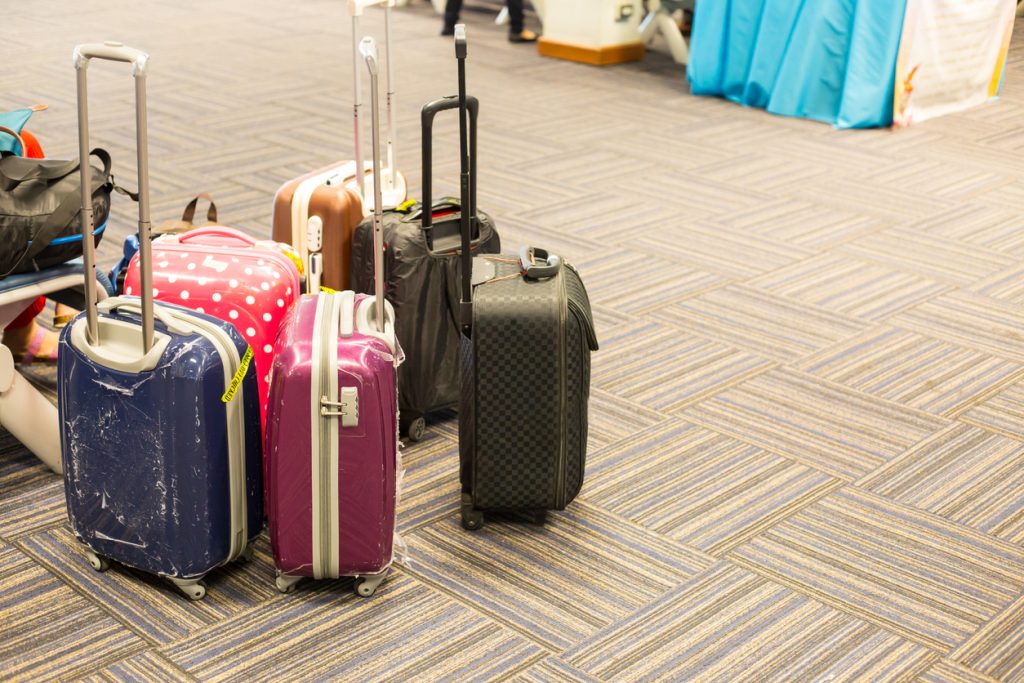
Travelling between West Africa and another country can involve more luggage than a standard holiday trip. Students relocating for university, families moving temporarily, business travellers carrying equipment and people returning home after years abroad may all have more belongings than their airline baggage allowance allows.
That is where a specialist West African traveller baggage courier can be useful.
Instead of paying expensive excess baggage charges or struggling through an airport with several heavy suitcases, travellers can arrange for additional luggage to be collected and transported separately.
For someone travelling from Lagos, Accra, Abuja, Kumasi or another West African city, however, choosing a baggage courier is not simply about finding the lowest price. The route, weight, destination, customs requirements, delivery address and timing all matter.
Why travellers use baggage couriers instead of adding another suitcase
Airlines make it easy to check luggage, but additional bags can become expensive.
There is also a practical limit to how much one person can comfortably manage.
Picture a student flying from Lagos to London with two large suitcases, a cabin bag and a backpack. After immigration and baggage collection at Heathrow, they still need to get to their accommodation.
Adding another suitcase might technically be possible, but it can make the journey much more difficult.
A separate luggage delivery service allows the traveller to divide their belongings.
Travel with the essentials. Send the rest separately.
This can work particularly well for:
- International students
- Families relocating abroad
- Long-term travellers
- Professionals travelling with additional belongings
- Nigerians returning from overseas
- West Africans moving between countries
- Travellers carrying personal effects that are not needed immediately
What makes a baggage courier “specialist”?
A baggage courier should understand that traveller luggage is different from ordinary commercial cargo.
A suitcase may contain personal clothing, shoes, books, toiletries and household belongings rather than products being sold to a customer.
The service therefore needs to account for the traveller’s schedule and destination.
A specialist provider should be able to help you understand:
- How your luggage will be collected
- How it will be transported
- What documents are required
- Which items are restricted
- How the shipment is tracked
- How customs requirements affect the shipment
- How the luggage reaches the final address
- What happens if delivery takes longer than expected
This becomes even more important when the shipment crosses international borders.
West African routes can require more planning than people expect
A luggage shipment from Lagos to Abuja is very different from one travelling from Lagos to London.
Even movement between neighbouring West African countries can involve different border, customs and transportation considerations.
For example, someone travelling from Nigeria to Ghana may need a different logistics arrangement from someone sending luggage from Nigeria to the UK.
The same applies to routes involving destinations such as:
- Lagos to Accra
- Abuja to Accra
- Lagos to Dakar
- Lagos to Abidjan
- Accra to London
- Lagos to London
- Lagos to Manchester
- Abuja to Dubai
The correct service depends on the actual origin, destination and nature of the luggage.
This is why giving a courier your complete route at the beginning is important.
How much luggage can you send?
There is no universal baggage limit for every courier.
The acceptable weight and dimensions depend on the service and transportation method.
Before requesting a quote, weigh each suitcase and record its approximate dimensions.
For example:
Bag 1: 18 kg
Bag 2: 23 kg
Bag 3: 12 kg
This is much more useful to a logistics provider than saying, “I have three big suitcases.”
Dimensions also matter because an unusually large suitcase can take up more handling or transportation space even when its actual weight is relatively low.
What should stay with you during your flight?
One of the biggest mistakes travellers make is putting everything into their shipped luggage.
Your most important belongings should remain with you.
These can include:
- Passport
- Visa and immigration documents
- Flight information
- University or employment documents
- Money and bank cards
- Phones and laptops
- Essential medication
- Important personal documents
- Items you need immediately after arrival
If a separately shipped suitcase is delayed by a few days, you should still be able to function normally.
For example, a student arriving in Manchester should not put all their clothes into a shipment arriving later. Keep enough clothing and essentials with you to cover the first few days.
What can you put inside a baggage shipment?
Typical personal belongings may include clothing, shoes, books and other permitted personal effects.
However, international baggage delivery is not an opportunity to pack anything you want.
Always check the courier’s restrictions before sending items such as:
- Liquids
- Aerosols
- Batteries
- Flammable products
- Perishable foods
- Certain medicines
- Sharp objects
- Valuable items
- Cash
- Agricultural products
Food deserves particular attention when travelling internationally.
West African travellers often want to take familiar foods or ingredients with them, but import rules differ between countries. An item that is commonly carried personally may still be restricted when sent commercially or through a particular courier network.
If you are unsure, ask before packing.
Why accurate declarations matter
When luggage crosses an international border, the contents may need to be declared.
Do not simply write “personal items” if the courier requires more detailed information.
A proper description of the contents can help the shipment move through the process more smoothly.
For example, describing a shipment as containing personal clothing, shoes and books is more useful than providing an intentionally vague description.
You should also avoid deliberately declaring an unrealistic value to reduce potential charges.
Incorrect information can create problems later, including delays.
Your delivery address matters more than you think
A courier needs to know exactly where the luggage is going.
“London, UK” is not a delivery address.
You should provide the complete address, including the postcode where applicable.
This is particularly important for students living in university accommodation.
Before sending your suitcase, check:
- Whether the accommodation accepts large deliveries
- Whether reception can sign for luggage
- Whether there are delivery hours
- Whether there is a separate parcel collection point
- Whether you will have arrived before the shipment
The same principle applies when delivering to hotels, offices or temporary accommodation.
A shipment can arrive successfully and still create a problem if nobody is available to receive it.
What happens if your luggage arrives before you?
This is one of the questions worth asking before booking.
Suppose you fly from Lagos to Birmingham on 10 September but your luggage is expected to arrive on 8 September.
If your student accommodation does not accept deliveries before your check-in date, where will the suitcase go?
Do not leave this until the shipment is already in transit.
Confirm the delivery arrangements with both your accommodation and the courier.
Good luggage planning means thinking about the recipient’s availability, not just the dispatch date.
How to choose between a cheap courier and a reliable one
Price matters, particularly when you are a student or travelling on a budget.
But the cheapest quotation is not automatically the cheapest overall option.
When comparing providers, ask what the quoted amount actually includes.
For example:
| What to check | Why it matters |
|---|---|
| Collection | You may not need to transport the suitcase yourself |
| International transportation | Determines how the luggage moves between countries |
| Customs handling | Important for cross-border shipments |
| Final delivery | Check whether it reaches your actual address |
| Tracking | Helps you monitor the shipment |
| Weight limits | Prevents unexpected charges |
| Restricted items | Helps avoid preventable delays |
A courier offering a slightly higher price but a clearer door-to-door service may be better value than a cheaper service requiring you to arrange several stages yourself.
Don’t wait until the day before your flight
International luggage delivery requires planning.
If you have a flight from Lagos to London tomorrow and suddenly realise that you have 40 kg of additional belongings, your options become much more limited.
Start planning several days or weeks before your trip where possible.
This gives you time to:
- Sort the items you actually need.
- Separate what will travel with you.
- Weigh your additional luggage.
- Check prohibited items.
- Confirm the delivery address.
- Compare baggage and courier costs.
- Arrange collection.
- Prepare the necessary shipment information.
The earlier you organise the shipment, the easier it is to account for possible transportation or customs delays.
What travellers should know about customs
International baggage delivery does not bypass customs.
Your shipment may need to go through the appropriate customs procedures in the destination country.
The requirements can depend on:
- Country of origin
- Destination country
- Contents
- Declared value
- Purpose of shipment
- Applicable import rules
For personal belongings, provide accurate information and follow the courier’s documentation instructions.
If you are moving abroad permanently or for several months, tell the logistics provider that the shipment contains personal effects rather than assuming they will automatically know.
A practical example: a Nigerian student moving to the UK
Consider a student travelling from Lagos to Leeds for university.
She has:
- Two suitcases within her airline allowance
- One additional 25 kg suitcase
- A cabin bag
- A laptop backpack
Instead of paying for another checked bag or attempting to travel with more luggage than she can comfortably manage, she could compare the cost of sending the 25 kg suitcase separately.
The additional suitcase might contain winter clothes, shoes, books and other belongings she will need after settling in.
She can then travel with her most important documents and immediate essentials while arranging delivery of the additional suitcase to her UK accommodation.
This is the type of situation where a specialist baggage courier can make practical sense.
Baggage delivery is also useful for families
The same principle applies to families travelling from West Africa.
A family of four may have considerably more luggage than four individual travellers would normally need.
Parents travelling with children may already have enough to manage at the airport without adding several additional suitcases.
Sending non-essential belongings separately can reduce the amount of luggage the family needs to handle during check-in, boarding and airport transfers.
For families relocating rather than taking a short holiday, the savings in convenience can be significant.
Think about your airport transfer too
Luggage planning should not stop at the flight booking.
If you are travelling with three suitcases and several carry-on bags, consider how you will get from the airport to your destination.
For example, a traveller arriving at Heathrow with several bags may need a larger vehicle than someone travelling alone with one suitcase.
If you are arranging an airport pickup, tell the transport provider how many bags you have.
This allows the vehicle to be matched to the actual journey.
Travo.ng can assist with related travel logistics, including airport pickup and transport coordination, so your journey does not stop being organised the moment you leave the aircraft.
What to do before handing over your suitcase
Use this checklist before your luggage is collected:
- Weigh every suitcase.
- Measure oversized bags.
- Photograph the luggage before collection.
- Make a simple inventory of the contents.
- Remove passports and essential documents.
- Check prohibited and restricted items.
- Confirm your destination address.
- Check that someone can receive the shipment.
- Keep your tracking or shipment reference.
- Ask what the quoted price includes.
- Confirm the expected delivery timeframe.
- Keep enough essentials with you while travelling.
These small steps can prevent many of the problems travellers encounter with international luggage.
How Travo.ng can help with baggage and travel logistics
For West African travellers, arranging luggage transportation is often only one part of the trip.
You may also need to book flights, organise accommodation, arrange an airport pickup or coordinate transportation after arrival.
Travo.ng provides travel and logistics services designed around these practical needs. Depending on your journey, this can include delivery services, courier arrangements, airport pickups, travel bookings, hotel reservations and transport coordination.
The advantage of planning these pieces together is that your luggage arrangements can be considered alongside your actual travel itinerary.
Whether you are a student leaving Nigeria for university, a professional travelling with additional belongings or a family relocating temporarily, the right baggage plan can make the journey considerably easier.
A good baggage courier should not simply move a suitcase from one location to another. It should help you understand the process, prepare the shipment correctly and know what to expect from collection through to delivery.
For West African travellers, that local understanding matters.
Before you book, know your route, weigh your luggage, check the restrictions, confirm your delivery address and leave enough time for international transportation.
That is how you turn an oversized luggage problem into a manageable travel arrangement.
