


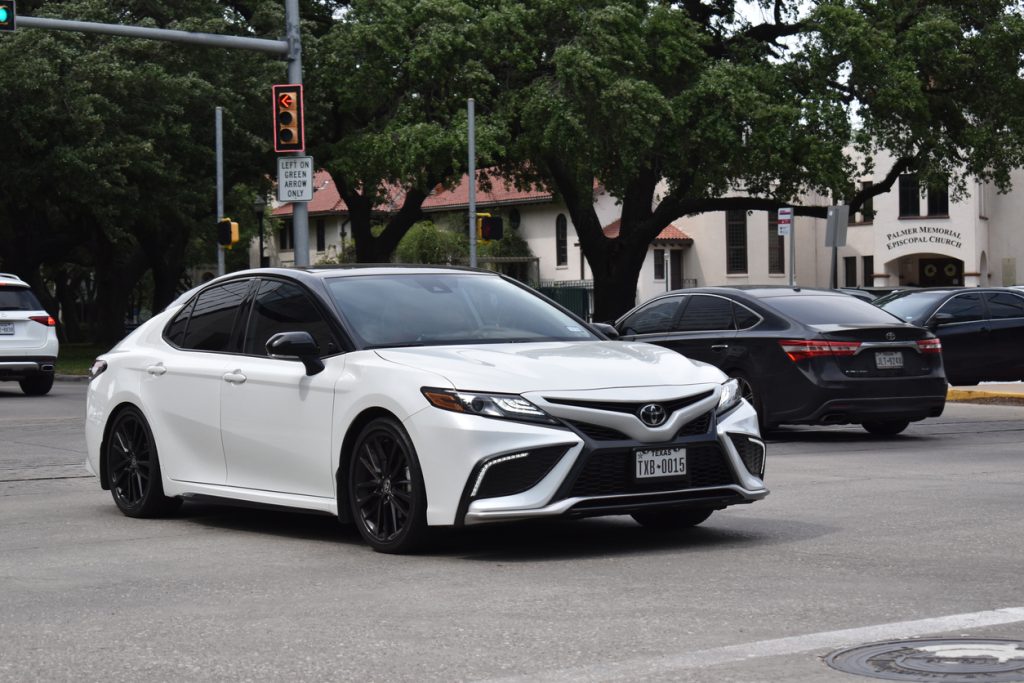
Importing a car into Nigeria can look straightforward until the vehicle arrives at the port and you have to deal with customs documentation, valuation, terminal procedures, inspections and transportation.
For importers using the Calabar route, Calabar port car clearing comes with its own practical considerations. The Calabar Port Complex in Cross River State is one of Nigeria’s recognised seaports under the Nigerian Ports Authority (NPA), but vessel schedules and the availability of direct calls can affect how a vehicle moves through the port.
That means clearing a car is not simply about paying customs duty. You need to confirm where the vehicle will discharge, have the correct documents ready, understand the customs assessment and plan what happens after release.
If you are importing a Toyota, Lexus, Honda, Mercedes-Benz or another vehicle into Nigeria, this guide explains what to expect and where a logistics provider such as Travo.ng can help coordinate the process.
Is Calabar Port Still Used for Vehicle Imports?
Yes, Calabar Port is a functioning Nigerian port, and imported goods can be handled through the Calabar maritime area. However, importers should not assume that every shipping line currently offers a direct and regular vehicle service into Calabar.
Tinapa’s official information notes that Calabar Port is operational, while some importers have been receiving consignments through other arrangements because regular calls by major shippers or barge operators have not always been consistent.
This is important when buying a vehicle overseas.
Before paying for shipping, confirm:
- The shipping line’s actual destination
- Whether the vehicle is coming by RoRo or in a container
- The terminal where the vehicle will be discharged
- The expected arrival date
- Who will handle customs clearance
- Where the vehicle will be collected after release
A vehicle advertised as being “shipped to Calabar” may still require careful checking of its actual shipping and discharge arrangements.
What Documents Do You Need to Clear a Car?
Documentation is one of the easiest parts of the process to get wrong.
Nigeria Customs Service (NCS) identifies Form M, PAAR and the Single Goods Declaration (SGD) as important parts of the import process. Its current guidance explains that Form M is obtained through an authorised dealer bank, while PAAR is used for customs assessment before the goods physically arrive. The importer or agent then submits the SGD with the supporting documentation.
Depending on the transaction, your clearing agent may need documents such as:
- Bill of Lading
- Commercial invoice
- Form M
- PAAR
- Single Goods Declaration (SGD)
- Packing list where applicable
- Certificate of origin or other supporting documents where required
- Vehicle details and identification information
- Customs payment evidence
- Terminal or shipping-line release documents
The exact requirements can depend on the type of import and applicable regulations, so it is better to have a clearing professional review the paperwork before the car arrives.
Why should you prepare the documents early?
Because a documentation problem discovered after arrival can cost more than the paperwork itself.
For example, if the vehicle’s description, value, chassis number or shipping documents do not match, the clearance process may require additional verification. While the issue is being resolved, terminal and other port-related costs can continue accumulating.
NCS itself advises importers to have the necessary pre-shipment documents ready because incomplete or incorrect documentation can cause delays.
How Calabar Port Car Clearing Usually Works
The exact sequence can vary depending on the shipment, terminal and customs requirements, but a typical process looks like this:
1. Confirm the vehicle’s shipping details
Before the vehicle arrives, your clearing representative should have the Bill of Lading and other relevant shipping information.
The first question should be simple: Where exactly is this vehicle arriving?
This prevents a situation where an importer expects to collect a car in Calabar only to discover that the shipping arrangement requires collection or transfer elsewhere.
2. Review the import documents
Your clearing agent checks the vehicle documentation and ensures the information supplied to Customs is consistent.
Pay particular attention to the vehicle’s:
- Make and model
- Year
- Chassis/VIN number
- Engine information
- Declared value
- Country of origin
- Shipping information
Small discrepancies can create unnecessary questions during clearance.
3. Customs assessment takes place
Customs duties and other applicable taxes and charges are assessed using the relevant customs valuation and tariff classification.
This is why it is risky to ask someone for a guaranteed “Calabar car clearing price” without giving them the actual vehicle details.
The cost of clearing a 2018 Toyota Camry cannot simply be assumed to be the same as clearing a 2021 Lexus RX.
The Nigeria Customs Service maintains a tariff and HS-code system for classification, and applicable charges can change with government policy and the classification of the vehicle.
4. Duties and applicable charges are paid
Once the assessment is completed, the required duties, taxes and other statutory charges must be paid through the appropriate channels.
Do not make a budget based only on the purchase price of the vehicle.
Your total landed cost can include:
Vehicle purchase price + shipping/freight + customs duties and taxes + port/terminal charges + clearing fees + inland transportation
That is the number that matters when deciding whether importing the vehicle is actually worthwhile.
5. Customs examination may be required
Depending on the customs risk assessment, the vehicle may be subject to document verification, scanning or physical examination.
This does not necessarily mean there is a problem with the vehicle. Customs uses risk-based procedures, and consignments can be selected for further examination.
If an inspection is required, your clearing representative should coordinate the process rather than leaving you to figure out the terminal procedures yourself.
6. Vehicle release and collection
After the required customs and terminal procedures have been completed, the vehicle can be released according to the applicable port process.
At this point, you still have one important decision to make:
How is the car getting from the port to you?
If you live in Calabar, that could mean arranging local vehicle movement. If you are in Abuja, Lagos, Port Harcourt, Enugu or another city, you will need an interstate transportation plan.
How Much Does It Cost to Clear a Car at Calabar Port?
There is no single flat price for Calabar port car clearing.
Anyone giving you one universal figure without first asking about your vehicle should be treated cautiously.
Your final cost can depend on factors such as:
- Vehicle make and model
- Year of manufacture
- Customs valuation
- Vehicle classification
- Applicable duty and taxes
- Shipping arrangement
- Terminal charges
- Clearing agent’s professional fees
- Storage or other port-related charges
- Inspection requirements
- Inland transportation after release
For example, clearing a relatively inexpensive used sedan will not necessarily cost the same as clearing a newer SUV simply because both are four-wheel vehicles.
The safest approach is to request a vehicle-specific estimate before the car arrives.
Give your clearing provider the vehicle details and shipping documents available to you. They can then separate statutory charges from service and logistics costs instead of giving you one unexplained lump sum.
Don’t Confuse Customs Duty With Clearing Fees
This is a common source of misunderstanding among first-time importers.
Customs duty is a statutory charge assessed by the relevant authorities.
Clearing fees are what you pay a professional to handle the clearance work, documentation, coordination and related services.
You may also have terminal, shipping-line, storage, transportation and other legitimate charges.
A quotation should therefore tell you what you are actually paying for.
If someone says, “Your car clearing is ₦X million,” ask for a breakdown.
A transparent estimate should distinguish between government/statutory charges, terminal or shipping-related costs, professional fees and delivery.
How Long Does Car Clearing Take at Calabar Port?
There is no responsible one-size-fits-all answer.
A straightforward shipment with correct documents and no additional examination can move much more smoothly than a vehicle with documentation problems or a shipment affected by vessel or terminal scheduling.
The timeline can be influenced by:
- Vessel arrival and discharge
- Availability of shipping documents
- Customs assessment
- Examination requirements
- Payment confirmation
- Terminal procedures
- Release documentation
- Any discrepancy that needs clarification
This is why experienced importers start the clearance preparation before the vehicle arrives rather than waiting until the car is sitting at the port.
What Happens If Your Car Arrives Before You Are Ready?
This is where costs can become uncomfortable.
Imagine your vehicle arrives on a Friday, but your documentation is incomplete and your clearing agent has not yet reviewed the shipment.
You may spend the following days trying to resolve paperwork while the vehicle remains within the port or terminal system.
The lesson is simple: port clearance should be planned around the vessel’s arrival, not started after arrival.
A good logistics workflow should look something like:
Shipping confirmation → document review → customs preparation → vessel arrival → assessment/examination → payment → release → vehicle collection → final delivery
The earlier the process is organised, the easier it is to identify problems before they become expensive.
Can a Cleared Car Be Delivered From Calabar to Another Nigerian City?
Yes. Clearing the vehicle is only one part of the logistics journey.
After release, you may need to move the car from Calabar to another part of Nigeria.
For example, an importer based in Abuja may need:
Calabar Port → vehicle collection → interstate transport → Abuja delivery
Someone in Port Harcourt may require a shorter road movement, while an importer in Lagos may need to compare the cost and practicality of moving the vehicle from Calabar against alternative shipping arrangements.
This is where transport coordination becomes useful.
Instead of arranging customs clearance separately and then searching for a transporter after release, you can plan the entire movement from the beginning.
Travo.ng can help customers coordinate relevant cargo logistics, transport and delivery services around their shipment, depending on the specific requirement.
5 Mistakes to Avoid When Clearing a Car in Calabar
1. Choosing a clearing agent based only on the cheapest quote
The lowest quote is not necessarily the lowest final cost.
Ask what is included and what is excluded before making payment.
2. Waiting until the vehicle arrives
Your documents should be reviewed before arrival wherever possible.
3. Assuming all Nigerian ports operate the same way
Apapa, Tin Can, Lekki, Onne and Calabar have different operational circumstances. Do not assume that a process or timeline you experienced in Lagos will automatically apply in Calabar.
4. Ignoring the delivery stage
Your responsibility does not end when Customs releases the vehicle.
Budget for transportation from the port to its final destination.
5. Paying unexplained charges
Request an itemised breakdown. You should know whether a charge is a government payment, terminal charge, shipping-line charge, professional fee or transportation cost.
When Should You Start Planning Calabar Port Car Clearing?
Ideally, start as soon as the vehicle is purchased and shipping arrangements are confirmed.
You do not need to wait for the vessel to reach Nigerian waters before asking:
- Are the documents complete?
- Does the vehicle information match across the documents?
- Where will the vehicle discharge?
- Who is handling customs?
- What is the expected customs assessment?
- What terminal charges should be expected?
- How will the car leave the port?
- Where is the final delivery address?
That preparation gives you a much clearer picture of your actual landed cost.
Let Travo.ng Help Coordinate the Logistics Around Your Vehicle
Car importation involves more than getting a vehicle onto a ship. You also have to coordinate documentation, customs clearance, port procedures and transportation after release.
For importers who do not want to manage each stage separately, Travo.ng can support the wider logistics process by coordinating relevant cargo logistics, transport, delivery and other mobility services based on the shipment.
If your vehicle is coming through Calabar and you need help planning the movement from port to final destination, getting the logistics organised early can save unnecessary delays and last-minute transportation problems.
Before your car arrives, get the documents reviewed, confirm the actual discharge location, understand the expected charges and arrange the vehicle’s onward movement.
That is the practical way to approach Calabar port car clearing without leaving the most expensive decisions until the last minute.
