


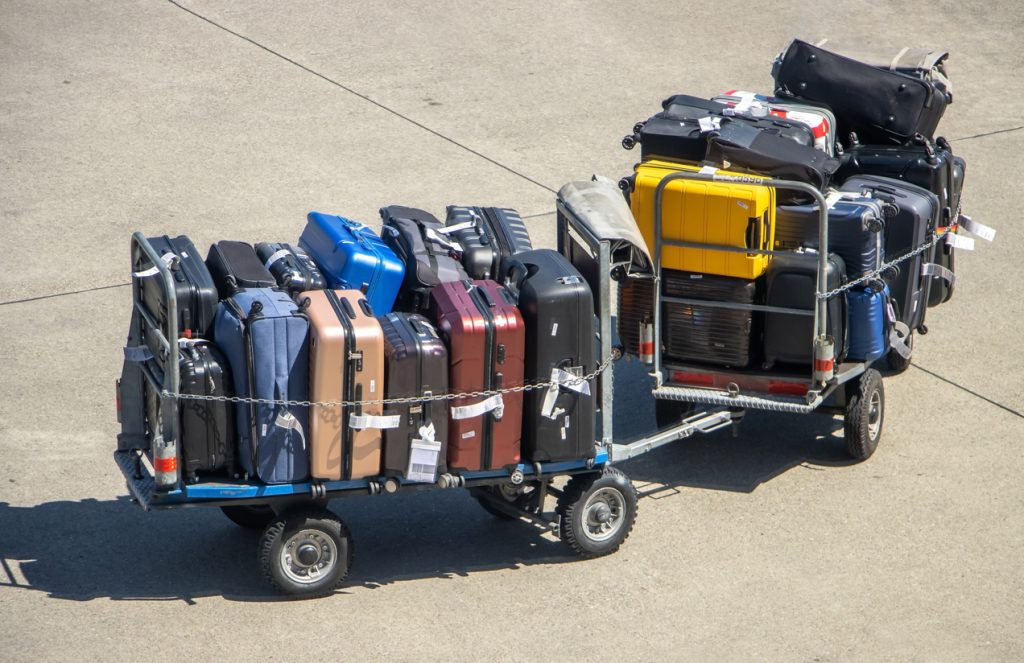
Travelling within or outside West Africa often means dealing with more luggage than you can comfortably carry.
A passenger flying from Lagos to Accra may have personal belongings that exceed the airline’s baggage allowance. Someone travelling from Abuja to Dakar for work may need to move equipment, clothing or other items separately. A student relocating from Nigeria to another West African country may also prefer to send some belongings ahead rather than travel with several heavy suitcases.
In situations like these, using a professional baggage courier for West African passengers can be a practical alternative to paying expensive excess baggage fees or struggling with multiple suitcases at the airport.
But international and regional luggage delivery is not the same as sending a parcel across town. You need to consider the route, airline restrictions, customs requirements, delivery address, timing and how your baggage will be tracked.
When does it make sense to send your luggage separately?
You do not necessarily need to ship every suitcase you own.
Separate baggage delivery becomes useful when you have more belongings than you want to take on the aircraft or when transporting them independently is more convenient.
Common situations include:
- Moving to another West African country
- Students relocating for school
- Business travellers carrying additional work materials
- Families travelling with several pieces of luggage
- People relocating between Nigeria and Ghana
- Passengers who have exceeded their airline baggage allowance
- Travellers sending belongings ahead before their own journey
- Returning residents moving personal effects
For example, someone travelling from Lagos to Accra might have two checked bags included in their ticket but still have another suitcase of clothing and personal items.
Instead of automatically paying for another checked bag, they can compare the airline’s excess baggage charge against the cost of sending that suitcase separately.
Why airline baggage is not always the simplest option
Airlines are convenient for transporting luggage, but convenience has limits.
A passenger travelling with several heavy bags has to get them to the airport, check them in, collect them at the destination and arrange transportation that can accommodate everything.
This becomes more noticeable when travelling alone.
Imagine landing at Kotoka International Airport in Accra with three large suitcases, a cabin bag and a backpack. You still have to clear the airport, collect your belongings and get to your hotel, residence or office.
If some of those belongings had been delivered separately, your airport transfer could be much easier.
There is also the question of cost.
Airline baggage charges vary by carrier, route, ticket type and weight. Rather than assuming one option is cheaper, compare the complete cost before making a decision.
What should you send through a baggage courier?
The best items for separate delivery are generally belongings that you do not need immediately after landing.
For example:
- Extra clothes
- Shoes
- Books
- Non-urgent personal belongings
- Additional luggage
- Some household items
- Business materials that can travel separately
Keep essential travel items with you.
Your passport, identification, travel documents, valuable electronics and other necessities should generally remain under your direct control.
A useful rule is simple:
If you would be in serious trouble without it during your first 24–48 hours at your destination, do not put it in your separately shipped luggage.
How much does baggage delivery cost in West Africa?
There is no universal price for baggage courier services.
The cost can depend on several factors, including:
- Origin city
- Destination city
- Weight
- Dimensions
- Number of bags
- Delivery speed
- Collection requirements
- Final delivery location
- Customs or documentation requirements
A 15 kg suitcase travelling from Lagos to Accra will not necessarily cost the same as a 30 kg suitcase going from Abuja to Dakar.
The destination also matters.
A major city with an established logistics network may have different delivery arrangements from a more remote destination.
When requesting a quotation, provide accurate information rather than simply saying, “I want to send one suitcase.”
Give the courier:
Weight + dimensions + collection location + destination + preferred delivery timeframe.
That allows the provider to give you a much more useful estimate.
Lagos, Abuja and other Nigerian departure points
For Nigerian travellers, Lagos is one of the most common starting points for international and regional travel.
But not everyone lives in Lagos.
If you are based in Abuja, Port Harcourt, Kano or another city, the logistics of getting your luggage into an international delivery network need to be considered.
For example, someone travelling from Enugu might first need to arrange collection or movement of the suitcase to the appropriate logistics point before international transportation begins.
That first stage can affect both price and timing.
This is why a professional baggage courier should understand the entire movement rather than treating international delivery as simply “put suitcase on a plane.”
What happens after your luggage is collected?
A professional baggage delivery process should give you clarity about what happens after collection.
Depending on the service, the shipment may go through several stages:
- Collection from your specified location
- Verification and documentation
- Movement to the relevant transport or cargo facility
- International or regional transportation
- Customs processing where applicable
- Arrival at the destination
- Local delivery
- Final handover to the recipient
The exact process depends on the route and service selected.
Ask questions before booking so you understand which parts of this process are included in your quotation.
Tracking matters when you are sending luggage internationally
One of the biggest concerns people have when sending personal belongings separately is, understandably, knowing where the luggage is.
A tracking or shipment reference can make a major difference.
Instead of wondering whether your suitcase has left Nigeria, arrived at the destination or is waiting for delivery, you have a reference that can be used to follow the shipment where tracking is available.
Keep your shipment details somewhere accessible.
It is also sensible to keep:
- A photograph of the suitcase
- The shipment reference
- The delivery address
- A list of the major contents
- Collection details
- The courier’s contact information
If you are travelling at the same time, send these details to someone you trust as a backup.
Pack your suitcase differently when it is being shipped
A suitcase being transported as cargo may be handled several times before reaching its destination.
Do not pack it as though it will remain untouched throughout your journey.
Check the condition of the suitcase
Before handing it over, inspect the wheels, handles, zips and body.
If the suitcase already has a broken wheel or weak zip, repair or replace it.
Create an inventory
Make a simple list of the main things inside.
You do not need to record every pair of socks, but you should know what you have packed.
Photograph the contents
Take photographs before closing the suitcase.
This gives you a personal record of the shipment.
Protect fragile items
If you are sending anything breakable, protect it properly and inform the courier where relevant.
Do not assume that putting a fragile object between clothes automatically makes it safe.
What items should you not send?
International and regional shipments are subject to restrictions.
Depending on the route and carrier, restrictions may apply to items such as:
- Flammable substances
- Certain aerosols
- Some batteries
- Perishable goods
- Certain liquids
- Sharp objects
- Some medicines
- Cash
- Valuable documents
- Restricted food products
The exact rules vary, so check before packing.
This is especially important when sending food or traditional Nigerian products to another country.
Something that is familiar and commonly carried by travellers may still be subject to import restrictions.
If you are unsure whether an item can be shipped, ask the courier before putting it inside the suitcase.
Customs can affect your delivery
Cross-border luggage delivery involves more than transportation.
Depending on the route, the shipment may need customs documentation or inspection.
Provide accurate information about the contents and value of your shipment.
Do not deliberately give false information to make the shipment appear less valuable or to avoid questions about its contents.
Incomplete or inaccurate declarations can create unnecessary delays.
If you are sending personal belongings rather than commercial goods, make that clear during the booking process and ask what documentation is required.
How early should you send your luggage?
Do not plan an international luggage shipment around the exact day you expect to arrive.
That leaves very little room for unexpected delays.
Transportation schedules, customs procedures, weekends, public holidays and local delivery operations can all affect the final delivery date.
If you are travelling to Ghana for a Monday business meeting, for example, sending your additional luggage on Friday and assuming it will definitely be available Monday morning is not a sensible plan.
Give yourself a buffer.
The earlier you organise the shipment, the more options you generally have when it comes to choosing the appropriate delivery service.
What if you are moving from Nigeria to Ghana?
The Nigeria-Ghana corridor is particularly relevant for students, professionals, families and businesses moving between the two countries.
Someone relocating from Lagos to Accra may not need to transport every personal belonging on the same flight.
You might travel with your essential luggage and arrange separate delivery for additional belongings.
For someone moving permanently, this can also form part of a larger relocation plan involving:
- Personal effects
- Additional household belongings
- Airport transportation
- Temporary accommodation
- Hotel bookings
- Local transport
The important point is to treat the move as one logistics exercise rather than arranging each part at the last minute.
What about business travellers?
Baggage delivery is not only useful for people moving homes or travelling for school.
Business travellers may need to transport additional materials that are inconvenient to carry through an airport.
For example, a professional travelling from Lagos to Accra for a conference may need clothing, presentation materials, display items or other non-sensitive equipment.
Sending appropriate items separately can reduce the amount they need to manage personally during the flight.
However, business shipments should be properly described and documented. Do not assume personal baggage rules automatically apply to commercial materials.
How to choose a professional baggage courier
When comparing providers, do not choose based solely on the lowest quote.
Ask:
- Is collection available from my location?
- Where will my luggage be delivered?
- Can I track the shipment?
- What documentation is required?
- Which items are prohibited?
- How is the luggage packaged or labelled?
- What happens if customs holds the shipment?
- What is included in the quoted price?
- Who should I contact if there is a delay?
- Is the delivery door-to-door or collection-point based?
The answers will tell you much more about the service than a headline price.
A professional provider should be able to explain the process clearly.
Common mistakes passengers make
Choosing based only on price
A cheap quotation is not automatically the best deal.
Check what is included.
Waiting until departure day
International logistics requires planning. Last-minute arrangements can limit your choices.
Sending essential documents
Keep passports, identification and critical travel documents with you.
Guessing your suitcase weight
Always weigh it before requesting a quotation.
Giving an incomplete delivery address
For deliveries to Accra, Dakar, Abidjan or other cities, provide the complete destination details required by the courier.
Packing restricted items
Ask before shipping anything questionable.
Forgetting the receiving arrangement
Make sure someone can receive the luggage when it arrives.
How Travo.ng can support your luggage and travel arrangements
For West African passengers, baggage is often only one part of the journey.
You may also need a flight booking, hotel, airport pickup or local transportation after arrival.
Travo.ng provides travel and logistics services designed around these practical needs. Depending on your trip, you can arrange relevant travel bookings, delivery services, airport pickups, transport coordination and other logistics support alongside your baggage requirements.
This can be particularly useful when your journey involves multiple arrangements across Nigeria and another West African destination.
Rather than leaving luggage delivery until the airport, plan it as part of your overall trip.
A simple checklist before sending your luggage
Before your suitcase leaves Nigeria, confirm:
- The suitcase has been weighed.
- The dimensions have been recorded.
- The destination address is complete.
- Someone can receive the shipment.
- The contents have been checked against prohibited-item rules.
- You have photographed the suitcase and its contents.
- You have an inventory of major items.
- Your passport and essential documents are with you.
- You understand the delivery timeframe.
- You have received the shipment reference or tracking details.
- You understand what is included in the quotation.
- You have compared the cost against airline excess baggage.
For passengers travelling across West Africa, the safest luggage plan is usually the one that is organised before the journey begins.
Whether you are travelling from Lagos to Accra, Abuja to another regional destination, or relocating for work or study, separating essential travel items from additional belongings can make the journey easier to manage.
A professional baggage courier can take care of the logistics while you focus on the actual trip. The key is to choose a service that gives you clear information about collection, transportation, tracking, documentation and final delivery — not simply the lowest price.
