


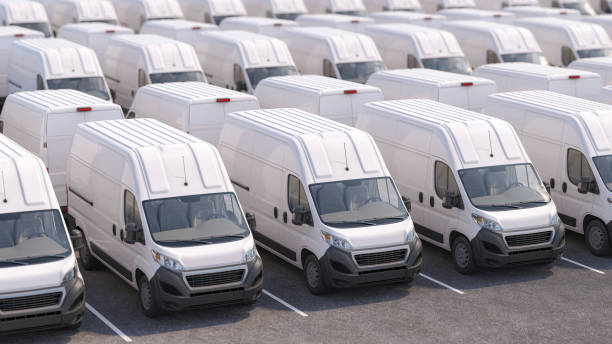
Van leasing and management services refer to a combined logistics and asset model where vans are leased to businesses or drivers while a professional company manages the vehicles’ operations, maintenance, compliance, and financial performance. This model allows vehicle owners to earn income from their vans without handling day-to-day operations, while lessees gain access to ready-to-use commercial vehicles.
It is widely used in logistics, courier services, e-commerce delivery, corporate transport, and fleet investment structures.
What van leasing and management services mean
This model combines two functions:
- Leasing: Vans are rented out to operators, businesses, or drivers for a fixed period or usage-based contract
- Management: A specialized company oversees all operational, technical, and financial aspects of the vans
The management company typically handles:
- Vehicle allocation and leasing agreements
- Driver onboarding and supervision (if included)
- Maintenance and servicing coordination
- Route and usage monitoring
- Fuel and cost control systems
- Compliance and insurance management
- Revenue tracking and reporting
In simple terms, vans are leased out for income, and professionals manage them for performance and reliability.
Why van leasing and management services are important
Van ownership alone does not guarantee profitability. Without structured leasing and management, owners may face:
- Idle vehicles with no income
- High maintenance and repair costs
- Poor vehicle utilization
- Driver misuse or inefficiency
- Weak return on investment (ROI)
This model solves these problems by ensuring consistent usage and professional oversight.
Core components of van leasing and management services
1. Vehicle leasing operations
This is the income-generating foundation of the model.
It includes:
- Short-term and long-term leasing contracts
- Daily, weekly, or monthly rental agreements
- Corporate fleet leasing arrangements
- Usage-based leasing models
- Contract negotiation and management
2. Fleet deployment and utilization management
Ensures vans are actively generating revenue.
This includes:
- Assigning vans to logistics operators
- Matching vehicles with demand sectors (delivery, retail, etc.)
- Reducing idle time
- Ensuring continuous deployment cycles
- Balancing usage across fleet assets
3. Maintenance and asset care
Proper maintenance protects asset value and reduces downtime.
Services include:
- Preventive maintenance scheduling
- Engine diagnostics and servicing
- Tire, brake, and oil monitoring
- Repair coordination with workshops
- Emergency breakdown response
4. Driver and operational management
Where applicable, driver operations are supervised.
This includes:
- Driver recruitment and onboarding
- Training and performance monitoring
- Shift scheduling and supervision
- Compliance with safety standards
- Behavioral tracking and accountability
5. Fuel and cost management
Operational efficiency improves profitability.
This includes:
- Fuel consumption tracking
- Identifying wastage or inefficiency
- Cost-per-kilometer analysis
- Budget control systems
- Fuel fraud prevention mechanisms
6. Compliance and risk management
Legal and operational safety is essential.
This includes:
- Vehicle registration and licensing
- Insurance coverage management
- Roadworthiness certification
- Lease contract enforcement
- Operational risk monitoring
7. Financial reporting and ROI tracking
Transparent reporting is key for investors.
Reports include:
- Lease revenue per vehicle
- Maintenance and operating costs
- Net profit per van
- Vehicle utilization rate
- ROI and payback period
- Asset depreciation tracking
Types of van leasing and management models
1. Operating lease model
Vans are leased for a fixed period with full management support.
2. Short-term rental model
Daily or weekly leasing for logistics flexibility.
3. Long-term contract leasing
Stable leasing agreements for businesses and delivery companies.
4. Lease-to-operate model
Operators lease vans and run delivery businesses using them.
5. Investor-backed leasing model
Investors own vans while companies manage leasing and operations.
Key performance indicators (KPIs)
Performance is measured using:
- Vehicle utilization rate
- Lease occupancy rate
- Cost per kilometer
- Maintenance downtime
- Revenue per van
- Lease renewal rate
- Driver performance (if applicable)
- Return on investment (ROI)
Benefits of van leasing and management services
Predictable income
Leasing generates stable and recurring revenue.
Reduced operational burden
Management companies handle all day-to-day operations.
Higher vehicle utilization
Vans remain consistently active.
Improved asset longevity
Maintenance is professionally managed.
Scalable investment model
Fleet size can grow without operational complexity.
Challenges in van leasing and management
Despite benefits, challenges include:
- Tenant or operator misuse of vehicles
- Maintenance cost fluctuations
- Demand variability in logistics markets
- Contract enforcement issues
- Depreciation of vehicle value over time
Risks of unmanaged leasing models
Without professional oversight, owners may experience:
- Idle or underutilized vehicles
- Late or missed lease payments
- Poor vehicle condition
- High repair costs
- Weak return on investment
Technology used in van leasing management
Modern systems include:
- GPS tracking and telematics
- Lease management software
- Fleet utilization dashboards
- Fuel monitoring systems
- Maintenance scheduling platforms
- Financial reporting tools
These tools improve transparency and control.
Where logistics coordination fits into van leasing
Van leasing and management systems operate within larger logistics networks such as:
- E-commerce delivery systems
- Courier and express logistics
- Retail distribution networks
- Supply chain transport systems
- Regional freight and delivery hubs
Efficient logistics coordination improves fleet utilization and lease profitability.
How Travo.ng supports logistics coordination
While van leasing and management services focus on asset utilization and leasing revenue, logistics coordination ensures smooth movement of goods across transport systems.
Travo.ng supports logistics operations through:
- Cargo consolidation and freight coordination
- Intercity and interstate delivery services
- Port-to-destination logistics support
- Supply chain coordination across Nigeria
- End-to-end logistics execution for cargo movement
This helps improve fleet utilization and ensures leased vans remain productive.
Final thoughts
Van leasing and management services offer a structured and scalable approach to generating income from commercial vehicles. By combining leasing contracts with professional fleet management, this model ensures consistent utilization, reduced operational stress, and improved return on investment.
In modern logistics and transport investment, success depends not only on owning vans but on how effectively they are leased, managed, and integrated into active delivery networks.
