


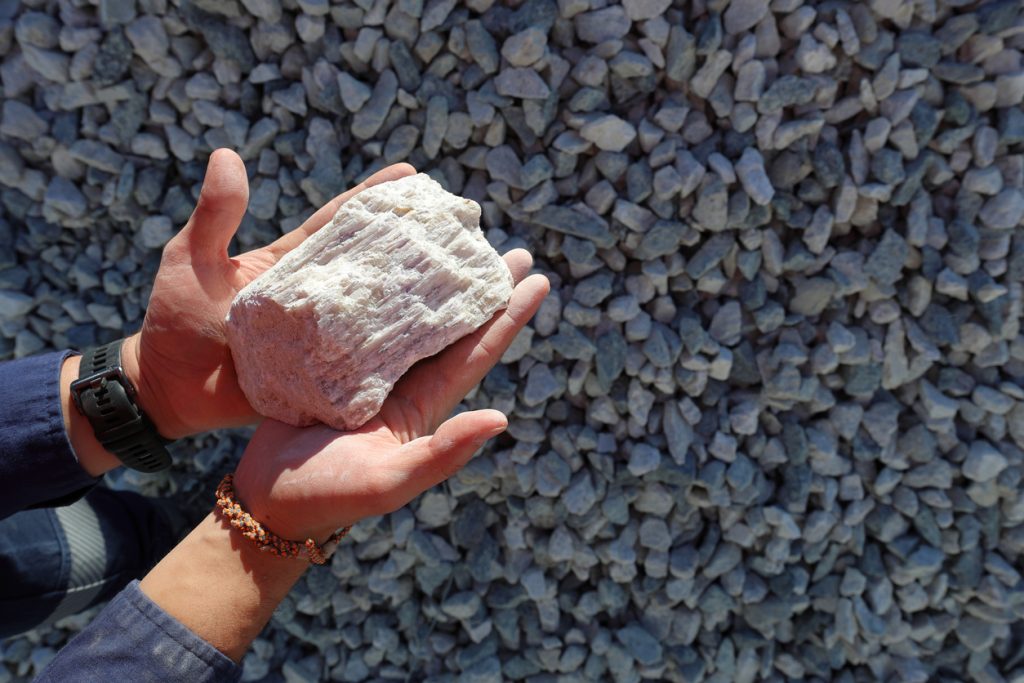
When people search for stockpile inspection and weighing services, they are usually involved in mineral trading, agricultural bulk goods, or industrial raw materials and need one thing done properly — confirming the exact quantity and condition of materials before sale, shipment, or export.
In Nigeria, especially in solid minerals like lithium, lead ore, zinc, tin, and manganese, stockpile accuracy is not just operational detail. It is the difference between a smooth export transaction and a serious commercial dispute.
If the weight is wrong, everything else in the chain becomes questionable — pricing, payment, customs declaration, and buyer trust.
What stockpile inspection and weighing services actually mean
Stockpile inspection and weighing is the process of physically verifying and measuring bulk materials stored at a site before they are moved, sold, or exported.
It typically involves:
- Visual inspection of stored materials
- Measurement of stockpile dimensions
- Density and volume estimation
- Physical weighing using certified scales or weighbridges
- Quantity reconciliation against records
- Documentation of verified results
The goal is to confirm that what is declared is exactly what exists on ground.
Why stockpile verification is critical in Nigeria
In many export and bulk commodity transactions, goods are stored in open yards, warehouses, or mining sites before shipment.
Without proper verification, exporters may face:
- Disputes over actual quantity supplied
- Underpayment or overpayment issues
- Buyer rejection at destination ports
- Contract disagreements
- Loss of trust in repeat transactions
In commodity trading, even small discrepancies can lead to major financial loss.
How stockpile inspection is carried out
The process is structured to ensure accuracy and transparency.
1. Site assessment
Inspectors evaluate the storage environment and material conditions.
2. Visual inspection
The stockpile is examined for:
- Material type consistency
- Contamination or mixing
- Moisture exposure
- Handling conditions
3. Measurement and estimation
Stockpiles are measured using:
- Length
- Width
- Height
- Angle of repose adjustments
This helps estimate total volume.
4. Weighing process
Where facilities allow, materials are weighed using:
- Certified weighbridges
- Truck scale systems
- Load-out weighing during dispatch
5. Reconciliation and reporting
Final figures are compared with declared quantities and recorded for documentation.
Why weighing accuracy matters in mineral exports
For mineral exporters, weight directly affects:
- Export value and pricing
- Customs declarations
- Freight planning and container loading
- Buyer payment calculations
Incorrect weight records can lead to serious disputes after shipment.
Common problems with stockpile management
Many exporters face challenges such as:
- Unmonitored stock accumulation
- Mixing of different mineral grades
- Inaccurate manual estimation
- Lack of certified weighing equipment
- Poor documentation of stock movement
- Discrepancies between storage and export records
These issues often become visible only during inspection or export processing.
When stockpile inspection should be carried out
To avoid disputes and delays, inspection is typically done at key stages:
- After stockpile formation
- Before sale agreement confirmation
- Prior to loading into trucks
- Before export documentation submission
- During final dispatch to port
Early inspection helps prevent last-minute disagreements.
The link between stockpile verification and export success
Stockpile accuracy affects the entire export chain:
- Buyers rely on verified quantities for payment
- Customs documentation depends on declared weight
- Freight planning requires accurate load estimation
- Certification and testing depend on correct sample representation
If stockpile data is wrong, downstream processes become unreliable.
Why disputes happen without proper inspection
Most export disputes involving bulk materials come from:
- Estimated rather than measured quantities
- Lack of independent verification
- Inconsistent record keeping
- Poor coordination between miners, traders, and buyers
- Absence of certified weighing reports
Once cargo leaves the site, it becomes difficult to correct errors.
Stockpile inspection at mineral sites in Nigeria
In mineral-rich regions across Nigeria, stockpiles are often located at:
- Mining sites
- Aggregation yards
- Export processing facilities
- Temporary storage locations near ports
Each location requires proper control to maintain material integrity before export.
How stockpile weighing supports logistics planning
Accurate weight data helps logistics teams:
- Plan truck requirements correctly
- Avoid overloading or underutilization
- Optimize container loading
- Reduce transportation costs
- Prevent delays at port entry points
Without accurate weighing, logistics becomes unpredictable.
How Travo.ng supports stockpile inspection and export logistics
For businesses involved in mineral and bulk commodity exports, Travo.ng helps coordinate the logistics side of stockpile movement and export preparation.
Support may include:
- Coordination of stockpile movement from site to storage or port
- Logistics planning for bulk cargo transportation
- Support for export documentation processes
- Coordination of inspection and weighing activities
- Port handling and shipment preparation
- End-to-end export logistics management for bulk materials
By linking stockpile verification with transport and export coordination, Travo.ng helps businesses reduce disputes, improve accuracy, and move cargo more efficiently.
