


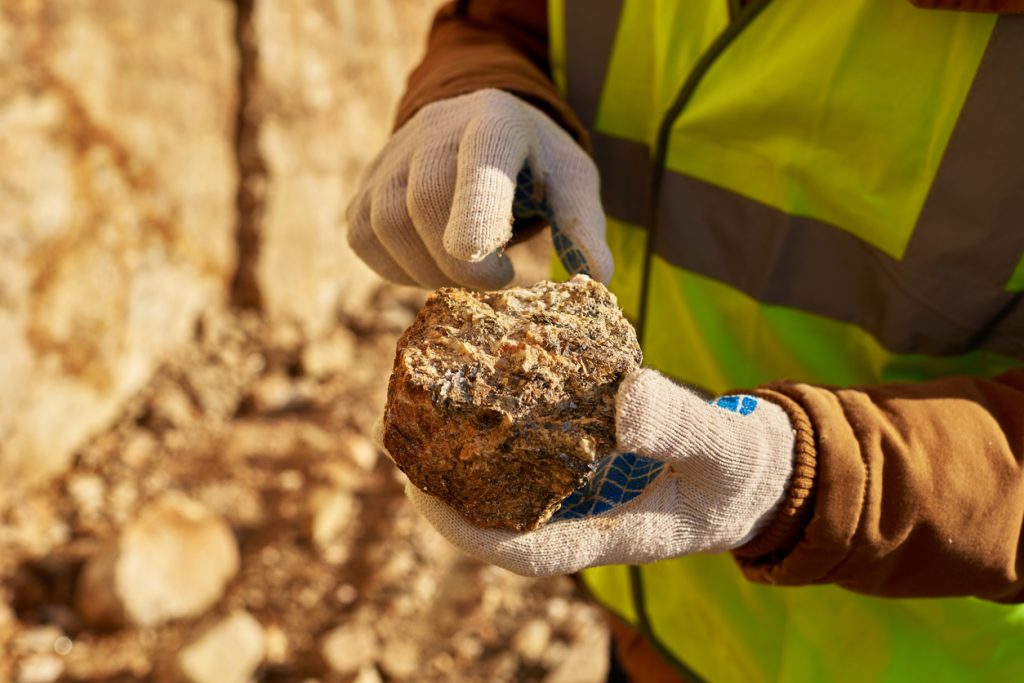
Pilot-scale testing services for minerals processing are the bridge between laboratory experiments and full industrial production. At this stage, mining companies are no longer guessing how an ore behaves—they are testing it in near-real operating conditions to confirm whether a processing method will actually deliver commercial recovery at scale.
For mining projects moving through development and export planning routes in Lagos, pilot-scale testing is often the final technical validation step before building a processing plant or committing to long-term production contracts.
Why pilot-scale testing is necessary in mineral processing
Laboratory tests can confirm ore composition and basic behavior, but they cannot fully replicate real-world processing conditions such as continuous flow, equipment wear, or operational variability.
Pilot-scale testing helps to:
- Validate processing methods at semi-industrial scale
- Confirm metal recovery rates under real operating conditions
- Test equipment performance and plant design assumptions
- Identify operational bottlenecks before full investment
- Reduce financial risk in plant construction and commissioning
Without this step, many mining projects face costly redesigns after startup.
How pilot-scale testing differs from laboratory testing
Laboratory testing is controlled, small-scale, and ideal for understanding ore properties. Pilot testing introduces complexity and scale.
Laboratory testing focuses on:
- Chemical composition
- Mineral identification
- Basic recovery potential
Pilot-scale testing focuses on:
- Continuous processing performance
- Equipment behavior under load
- Energy and water consumption
- Recovery efficiency over time
- Material handling and throughput stability
It is essentially a rehearsal of full production.
What happens during a pilot-scale mineral processing test
Pilot plants simulate real mining operations using scaled-down industrial equipment.
A typical process includes:
- Bulk sample collection from ore deposits
- Preparation and homogenization of feed material
- Feeding material into pilot processing circuits
- Running beneficiation methods such as crushing, grinding, flotation, or leaching
- Monitoring recovery rates and operational stability
- Collecting concentrate and tailings for analysis
- Evaluating performance data for scale-up decisions
This process can run for days or weeks depending on project size.
Common mineral processing methods tested at pilot scale
Pilot plants are used to evaluate different beneficiation techniques depending on ore type.
Common methods include:
- Gravity separation for heavy minerals
- Flotation for sulphide ores
- Magnetic separation for iron-bearing minerals
- Hydrometallurgical leaching for gold and base metals
- Crushing and grinding circuit optimization
- Dewatering and filtration systems
Each method is tested to determine which produces the best economic recovery.
Why pilot testing is critical before building a processing plant
Building a mineral processing plant without pilot data is one of the biggest risks in mining investment.
Pilot testing helps to:
- Prevent overestimation of recovery rates
- Avoid incorrect equipment selection
- Reduce plant redesign costs
- Improve investor confidence
- Support financing and feasibility studies
- Optimize capital expenditure (CAPEX)
In many cases, pilot results determine whether a project is viable at all.
Common problems identified during pilot-scale testing
Pilot operations often reveal issues that were not visible in laboratory analysis.
These include:
- Lower-than-expected recovery rates
- Excessive reagent consumption in flotation or leaching
- Equipment inefficiencies under continuous operation
- Unexpected mineral interactions affecting separation
- High energy or water usage costs
- Variability in ore feed affecting stability
These findings help engineers refine plant design before full deployment.
How ore variability affects pilot plant outcomes
Real ore deposits are not uniform. Different zones may contain different grades, textures, and mineral associations.
Pilot testing helps to:
- Evaluate performance across ore variability
- Identify blending strategies for consistent feed
- Adjust processing parameters dynamically
- Reduce operational surprises after commissioning
This is especially important for large or complex deposits.
The role of pilot testing in feasibility studies
Pilot-scale data is a key input in bankable feasibility studies used by investors and lenders.
It supports:
- Accurate production forecasting
- Reliable cost modeling
- Risk assessment for financing decisions
- Engineering design validation
- Environmental and operational planning
Without pilot data, feasibility studies are considered incomplete for major investments.
Why mining clients rely on pilot-scale testing services
Mining clients use pilot testing to reduce uncertainty before committing millions of dollars to infrastructure.
It provides:
- Real-world proof of process performance
- Confidence in plant scalability
- Validation of recovery assumptions
- Stronger negotiation position with buyers and investors
- Reduced operational risk after commissioning
It is essentially the final technical checkpoint before industrial production begins.
How pilot-scale testing links to export readiness
Once processing methods are validated, the output quality becomes more predictable and suitable for export specification.
Pilot testing supports:
- Consistent concentrate quality
- Predictable grade and recovery output
- Compliance with buyer requirements
- Reduced rejection risk in international markets
- Better pricing negotiations based on verified performance
For exporters, this translates directly into market confidence.
How Travo.ng supports pilot testing and mineral logistics workflows
Pilot-scale testing depends heavily on logistics because bulk samples, equipment, and personnel must move between mining sites, test facilities, and processing locations.
Travo.ng supports mining and processing teams by coordinating:
- Transport of bulk ore samples for pilot plant testing
- Movement of equipment and materials between sites
- Scheduling logistics aligned with testing timelines
- Coordination between mining sites and processing facilities
Efficient logistics ensure pilot tests run continuously without delays that could distort results.
When pilot-scale testing becomes the turning point in mining projects
Pilot-scale testing is often the stage where mining projects either move forward confidently or are restructured based on real performance data. It replaces assumptions with measurable results and provides the clarity needed for investment, engineering design, and long-term production planning.
Mining companies that invest in proper pilot-scale testing reduce risk, improve efficiency, and significantly increase their chances of successful commercial operations.
