


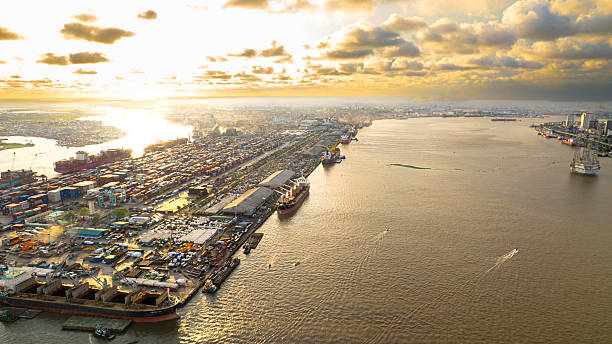
Apapa port congestion today is still active and fluctuating, with recurring gridlock around the port access roads and intermittent delays in cargo evacuation, despite ongoing digital systems and traffic management efforts.
In simple terms, Apapa is not “fully blocked,” but it is still operating under pressure cycles where movement slows, clears briefly, then builds up again.
Recent reports show that truck traffic has returned in pockets along the Apapa corridor, with operators still experiencing delays in accessing terminals and evacuating containers.
What congestion looks like at Apapa right now
1. Truck queues still form around port access roads
Even with call-up systems in place, trucks still experience:
- waiting periods before entry
- congestion around Mile 2–Apapa axis
- delays caused by scheduling overlaps
In many cases, the bottleneck is not inside the port—but outside the gates.
2. Intermittent gridlock rather than constant blockage
Unlike total shutdown scenarios, current congestion behaves like:
- morning slowdowns from truck inflow
- midday clearance windows
- evening re-accumulation of traffic
So movement happens, but not smoothly or predictably.
3. Cargo evacuation delays still affect turnaround time
Even when vessels discharge successfully:
- container pickup can be delayed
- trucks wait for clearance or allocation slots
- terminal exit speed becomes the limiting factor
This creates a backlog effect inside the logistics chain.
Why Apapa congestion is still happening
1. High import volume concentration
Apapa still handles a large share of Nigeria’s container traffic, meaning:
- constant vessel arrivals
- high container throughput pressure
- limited “rest periods” for the system
2. Road network limitations
The port depends heavily on a few major access routes:
- Apapa-Oshodi express corridor
- surrounding feeder roads
When truck density increases, the system slows quickly.
3. Truck scheduling and compliance issues
Even with electronic call-up systems:
- timing conflicts still occur
- system enforcement gaps create overlap
- unauthorized entry attempts can slow flow
4. Port ecosystem pressure (not just Apapa alone)
Lagos ports generally face structural congestion due to:
- Apapa + Tin Can combined pressure
- overlapping logistics demand
- inland distribution delays
What importers are experiencing today
1. Unpredictable clearance timelines
A shipment may clear faster or slower depending on:
- inspection requirement
- terminal workload
- truck availability
2. Higher logistics costs
Congestion increases:
- demurrage charges
- truck detention fees
- warehouse holding costs
3. Planning uncertainty
Businesses now operate with:
- buffer delivery timelines
- flexible pricing adjustments
- higher contingency logistics budgets
Is Apapa congestion improving or worsening?
The situation is best described as:
- not fully resolved
- periodically managed
- still structurally sensitive to traffic and cargo volume
Recent policy and modernization efforts have improved systems, but physical and operational constraints still create recurring congestion cycles.
What is being done to reduce it
Across Lagos ports, ongoing efforts include:
- digital cargo tracking and clearance systems
- truck call-up enforcement improvements
- port modernization and expansion projects
- gradual shift toward deeper sea ports like Lekki
At a national level, port inefficiency is still being actively addressed as part of broader maritime reforms.
Where Travo.ng fits in real operational flow
Port congestion doesn’t stop at cargo—it affects movement around the system
Apapa congestion today doesn’t only delay goods—it also disrupts:
- movement of clearing agents and logistics teams
- airport pickup for import managers and foreign suppliers
- hotel coordination for business visitors
- urgent transport between port, warehouse, and offices
- time-sensitive logistics planning around cargo release
How Travo.ng supports import operations
Travo.ng helps businesses operate within Apapa congestion realities by coordinating:
- airport pickup and executive transport services
- logistics movement between port, warehouse, and business locations
- hotel booking for international partners and shipping agents
- structured transport scheduling for import operations
- time-sensitive mobility support during clearance windows
While congestion affects cargo flow, Travo.ng focuses on keeping people, coordination, and operational movement efficient even when the port is slow.
