


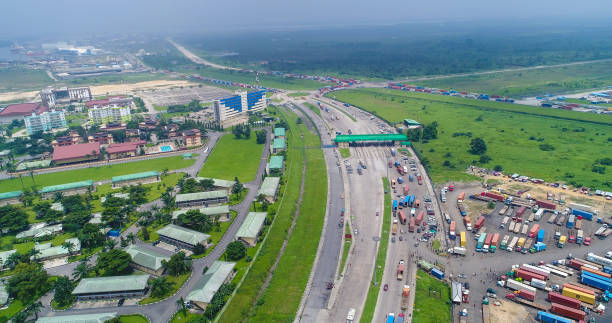
The China–Nigeria trade route is one of the most important global supply chains linking Asia’s manufacturing hub (China) with West Africa’s largest import market (Nigeria). China is Nigeria’s largest trading partner, supplying electronics, machinery, textiles, building materials, and consumer goods.
In simple terms:
The trade route explains how goods physically move from Chinese factories to Nigerian ports, and then into local markets through customs clearance and logistics networks.
🚢 1. Main sea freight route (China → Nigeria)
Most cargo moves by ocean shipping, which handles the bulk of imports due to cost efficiency.
🇨🇳 Common origin ports in China:
- Shanghai
- Shenzhen (Yantian)
- Ningbo-Zhoushan
- Guangzhou / Qingdao
🇳🇬 Main destination ports in Nigeria:
- Apapa Port (Lagos)
- Tin Can Island Port (Lagos)
- Lekki Deep Sea Port
- Onne Port (Port Harcourt)
🌊 2. Shipping path (how vessels actually move)
Typical sea route:
China Ports → South China Sea → Indian Ocean → Around the Cape of Good Hope → Atlantic Ocean → West Africa → Nigeria
👉 This long route exists because it avoids congestion and geopolitical chokepoints like the Suez Canal for many large vessels.
⏱️ 3. Transit time from China to Nigeria
Average shipping duration:
- Sea freight (FCL/LCL): 35–50 days
- Air freight: 5–10 days
- Express courier: 3–7 days
Sea freight remains dominant because over 80% of imports from China to Nigeria move by ocean.
⚙️ 4. How cargo flows in the trade route
The full supply chain looks like this:
Step 1: Sourcing in China
- factories or suppliers produce goods
- goods are packed and exported
Step 2: Export clearance in China
- Chinese customs documentation
- export declaration and inspection
Step 3: Ocean freight
- cargo loaded into containers (FCL or LCL)
- shipped via international shipping lines
Step 4: Arrival in Nigeria ports
- Apapa, Tin Can, Lekki, or Onne
Step 5: Nigerian customs clearance
- HS code classification
- duty & VAT payment
- inspection (if required)
Step 6: Inland logistics
- trucks distribute goods to Lagos markets or other regions
📦 5. Main shipping methods on the China–Nigeria route
🚢 Sea freight (dominant method)
- cheapest per unit
- best for bulk goods
- slower but cost-effective
✈️ Air freight
- used for electronics, urgent goods
- faster but expensive
📦 DDP / Door-to-door shipping
- includes shipping + customs + delivery
- popular for SMEs
- simplifies import process
⚠️ 6. Key challenges on the route
🚧 Nigerian side:
- port congestion (especially Lagos)
- demurrage and storage fees
- customs valuation adjustments
- documentation delays
🚢 International side:
- long transit times
- shipping cost fluctuations
- container shortages during peak demand
📉 7. Why this route is so important
The China–Nigeria corridor is critical because:
- China supplies a large share of Nigeria’s imports
- Nigeria has high consumer demand
- goods include essentials for retail, construction, and industry
- it supports SMEs and large-scale importers
🧠 Simple summary
The China–Nigeria trade route involves:
- sourcing goods from Chinese factories
- shipping via sea or air
- moving through global maritime lanes
- clearing Nigerian ports under customs regulations
- distributing into local markets
👉 It is a long but highly structured global supply chain driven by cost efficiency and scale.
🚚 Where Travo.ng fits into the China–Nigeria trade ecosystem
Trade routes move cargo—but logistics moves people
Even when shipments are in motion, import operations still require:
- airport pickup for sourcing trips to China/Nigeria
- movement between ports, warehouses, and customs offices
- inspection coordination visits
- supplier meetings and logistics coordination
- urgent travel during clearance delays
🚖 How Travo.ng supports importers on this route
Travo.ng supports trade and logistics professionals by providing:
- Airport pickup for import/export teams
- Executive transport across Lagos ports (Apapa, Tin Can, Lekki corridors)
- Hotel booking for foreign suppliers and business partners
- Corporate travel coordination
- Time-sensitive mobility during clearance operations
When trade routes are global, fast movement of people locally is what keeps the supply chain working smoothly.
