


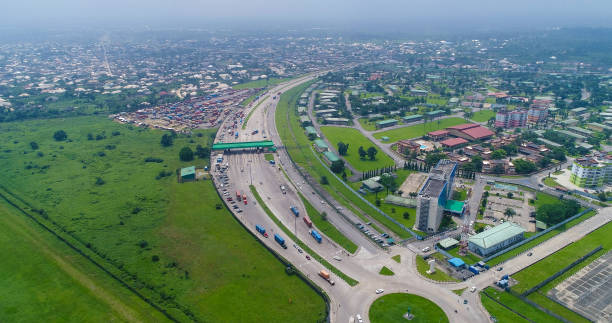
The China–Ghana trade route is a major international supply chain connecting China (global manufacturing hub) with Ghana (one of West Africa’s key import markets). China supplies a large share of Ghana’s imports, including electronics, machinery, textiles, construction materials, and consumer goods.
In simple terms:
The China–Ghana trade route explains how goods move from Chinese factories to Ghanaian ports, then through customs clearance into the local market.
🚢 1. Main sea freight route (China → Ghana)
Most goods move via ocean shipping, which is the most cost-effective method for bulk imports.
🇨🇳 Major origin ports in China:
- Shanghai
- Shenzhen (Yantian / Shekou)
- Ningbo-Zhoushan
- Guangzhou
- Qingdao
🇬🇭 Main destination ports in Ghana:
- Tema Port (main gateway)
- Takoradi Port (secondary industrial route)
- Kotoka International Airport (air cargo route)
🌊 2. Shipping path (how vessels travel)
Typical sea route:
China Ports → South China Sea → Indian Ocean → Atlantic Ocean (via Cape of Good Hope) → West Africa → Ghana
👉 Most vessels avoid unnecessary transshipment to reduce delays and cost.
⏱️ 3. Transit time from China to Ghana
Average shipping times:
- 🚢 Sea freight (FCL/LCL): 30–45 days
- ✈️ Air freight: 5–9 days
- 📦 Express courier: 3–7 days
Sea freight dominates due to cost efficiency for large shipments.
⚙️ 4. How cargo moves along the China–Ghana trade route
Step 1: Supplier sourcing in China
- manufacturing or wholesale sourcing
- packaging and export preparation
Step 2: Export clearance in China
- Chinese customs documentation
- export inspection and declaration
Step 3: Ocean freight shipping
- container loading (FCL or LCL)
- international shipping through global carriers
Step 4: Arrival in Ghana
- cargo arrives at Tema or Takoradi ports
- customs entry into ICUMS system
Step 5: Ghana customs clearance
- HS code classification
- duty and tax calculation
- inspection (green/yellow/red channel system)
Step 6: Inland distribution
- trucking from ports to Accra, Kumasi, and other markets
📦 5. Common shipping methods on this route
🚢 Sea freight (dominant)
- cheapest per unit cost
- ideal for bulk imports
- longer transit time
✈️ Air freight
- used for urgent goods, electronics, samples
- faster but expensive
📦 Door-to-door shipping (DDP)
- includes shipping + customs + delivery
- popular among SMEs and e-commerce importers
⚠️ 6. Key challenges on the China–Ghana route
🚧 Ghana-side challenges:
- port congestion at Tema
- customs valuation adjustments under ICUMS
- documentation inconsistencies
- high combined import taxes (duty + VAT + levies)
🚢 global shipping challenges:
- container availability fluctuations
- freight rate volatility
- long transit times
- seasonal demand spikes
📉 7. Why this trade route is important
The China–Ghana corridor is essential because:
- China is a top supplier of Ghana’s imports
- supports retail, construction, and industrial sectors
- enables SME import businesses
- supplies infrastructure development materials
👉 It is a backbone of Ghana’s import-driven economy.
🧠 Simple summary
The China–Ghana trade route involves:
- sourcing goods from China
- exporting via Chinese ports
- shipping via ocean freight
- clearing goods through Tema or Takoradi ports
- paying duties under Ghana’s ICUMS system
- distributing goods locally
🚚 Where Travo.ng fits into the China–Ghana trade ecosystem
Trade routes move cargo—but logistics moves people
Even when goods are in transit, real operations still require:
- airport pickup for sourcing trips and business travel
- movement between ports, warehouses, and customs offices
- inspection coordination visits
- supplier meetings and negotiations
- urgent travel during clearance delays
🚖 How Travo.ng supports importers in Ghana
Travo.ng supports importers and logistics teams by providing:
- Airport pickup for business and procurement teams
- Executive transport across Tema, Accra, and Takoradi corridors
- Hotel booking for international suppliers and partners
- Corporate travel coordination
- Time-sensitive mobility during customs clearance operations
When trade routes are global, local movement efficiency becomes a key part of supply chain success.
