


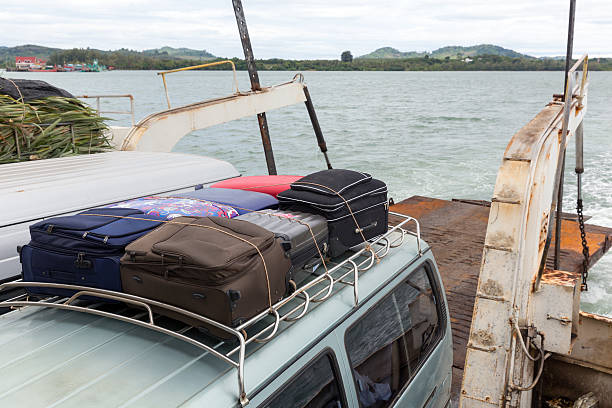
A ferry luggage policy helps passengers understand what they can bring onboard, how to protect their belongings and what items may not be permitted during a water journey. In Lagos, luggage requirements can vary by ferry operator and vessel, so passengers should confirm specific rules before travelling.
LAGFERRY operates passenger ferry services across Lagos waterways, while the Lagos State Waterways Authority (LASWA) regulates water transportation and safety standards for operators.
How Much Luggage Can You Take on a Lagos Ferry?
Passengers should travel with luggage that can be safely accommodated without obstructing other passengers or creating a safety problem.
LASWA strictly prohibits overloading vessels with passengers or cargo. This means operators may restrict luggage if the amount or size of baggage could contribute to an unsafe load.
For regular ferry journeys, it is best to keep luggage compact and easy to handle.
Recommended Luggage for Ferry Travel
Passengers can generally travel with everyday personal belongings such as:
- Small backpacks
- Handbags
- Laptop bags
- Small suitcases
- Clothing bags
- Work equipment
- Personal items
Larger or unusually heavy luggage should be confirmed with the ferry operator before travelling.
Keep Your Luggage Secure
Passengers are responsible for keeping their personal belongings secure during a ferry journey.
Keep important items such as:
- Phones
- Wallets
- Passports
- Identification documents
- Cash
- Laptops
- Jewellery
in a secure bag that remains within your control.
For items that could be affected by water, a waterproof bag or protective pouch is recommended.
Protect Luggage From Water
Water conditions can sometimes cause splashing, particularly on open boats or during rougher conditions.
Passengers carrying electronics, documents or clothing should consider using waterproof covers or sealed bags.
Avoid placing important belongings directly on the floor of the vessel where they could become wet.
Oversized Luggage
Large suitcases, bulky equipment and unusually heavy items may not always be suitable for passenger ferry transportation.
If your luggage is large enough to occupy significant passenger space, contact the operator before travelling to determine whether it can be accepted.
The main consideration is safety: vessels must not be overloaded with passengers or cargo.
Prohibited or Unsafe Items
Passengers should not bring items that could endanger other passengers, crew or the vessel.
This can include dangerous, hazardous or otherwise prohibited materials.
If you are unsure about a particular item, ask the ferry operator before arriving at the terminal rather than attempting to board with it.
Luggage and Ferry Safety
Luggage should never interfere with emergency equipment, passenger movement or access to exits.
Passengers should:
- Keep bags in designated areas where instructed
- Avoid blocking walkways
- Keep valuables close
- Follow crew instructions
- Avoid placing luggage where it could fall into the water
- Avoid carrying excessively bulky items
- Never interfere with safety equipment
LAGFERRY requires passengers to wear life jackets and follow instructions from captains and deckhands throughout their journeys.
Travelling With Children and Luggage
Parents travelling with children should keep children’s bags and personal belongings organised.
A small backpack containing essential items can be easier to manage than several separate bags. Children should also remain close to their parent or guardian during boarding, the journey and disembarkation.
Luggage on Public Ferries
Public ferries are primarily designed for passenger transportation, so luggage should be reasonable for the available passenger space.
If you are travelling with several suitcases, business equipment or commercial goods, a cargo or private transportation service may be more appropriate than a standard passenger ferry.
LAGFERRY lists cargo operations among its services in addition to passenger ferry transportation and ferry rental.
Luggage on Private Ferries
Private boat transportation may provide greater flexibility for groups travelling with luggage, but luggage capacity still depends on the vessel.
When arranging a private boat, provide the operator with:
- Number of passengers
- Number of bags
- Approximate luggage size
- Type of luggage
- Pickup location
- Destination
This allows the operator to determine whether the selected vessel is suitable.
Travelling With Valuable Items
Avoid placing valuable belongings in luggage that will be separated from you.
Keep important documents, cash, phones and electronics in a personal bag that remains with you.
If you are carrying valuable business equipment, inform the operator in advance and follow any specific luggage requirements.
What to Do If Luggage Is Lost
If you discover that an item is missing after your ferry journey, report it to the ferry operator or terminal staff as soon as possible.
Provide useful details such as:
- Description of the item
- Colour and size
- Ferry route
- Date and approximate travel time
- Departure terminal
- Arrival terminal
- Contact information
The faster the operator receives the information, the easier it may be to identify where the item was left.
Luggage and Ferry Terminals in Lagos
LAGFERRY operates terminals including Ipakodo in Ikorodu, Five Cowries Terminal in Falomo, Marina Terminal in CMS, Badore Terminal and Mile 2 Ferry Terminal.
Passengers should arrive at the correct terminal and follow staff instructions regarding luggage during boarding and disembarkation.
Tips for Travelling With Luggage by Ferry
For a smoother ferry journey:
- Pack only what you need.
- Use a secure and manageable bag.
- Protect electronics and documents from water.
- Keep valuables with you.
- Do not block walkways or safety equipment.
- Avoid excessively heavy or bulky luggage.
- Confirm special luggage requirements before travelling.
- Follow the crew’s instructions.
How Travo.ng Can Help
Travo.ng can help coordinate ferry transportation in Lagos, including passenger journeys, luggage considerations and connections between road and water transportation where available.
Customers can provide their:
- Pickup location
- Destination
- Travel date
- Preferred departure time
- Number of passengers
- Number and approximate size of luggage
- One-way or return requirement
This information can help determine a suitable transportation arrangement.
Why Choose Travo.ng?
Travo.ng can simplify travel planning by helping customers organise transportation around their passenger and luggage requirements.
Whether you are travelling for work, school, business, tourism or a group trip, Travo.ng can help coordinate the journey according to your needs.
Plan Your Ferry Journey With the Right Luggage
Understanding the ferry luggage policy before travelling can make your journey more comfortable and safer. Keep luggage manageable, protect belongings from water, avoid unsafe or prohibited items and always follow the instructions of the ferry operator.
Because specific luggage restrictions can differ between operators and vessels, passengers with unusually large, heavy or special items should confirm acceptance before travelling.
Travo.ng can help coordinate ferry travel in Lagos according to your route, schedule, passenger numbers and luggage requirements.
