


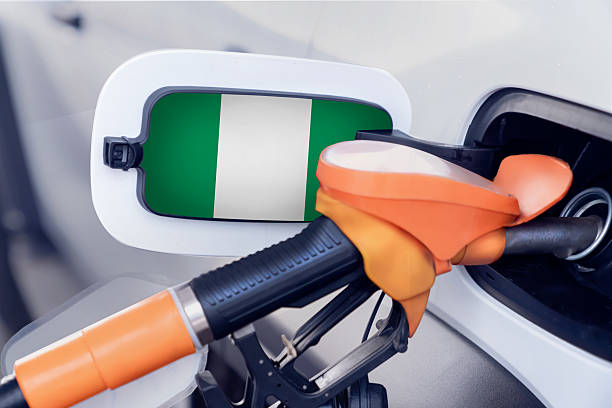
If you are planning a road trip, sending a parcel from Lagos to Abuja, moving goods between states or running a delivery business, the petrol price in Nigeria can quickly change what you pay.
Fuel is not just a cost for motorists. It affects delivery charges, transport fares, vehicle hire, relocation costs and the price businesses pay to move products from one location to another.
The challenge is that there is no single pump price that applies everywhere in Nigeria. Prices can differ by state, city, petrol station and supply conditions. For example, the National Bureau of Statistics (NBS) reported a national average retail petrol price of ₦1,596.25 per litre for May 2026, up from ₦1,532.93 in April. Lagos averaged ₦1,561.22, while Abuja recorded ₦1,602.64 during the same period.
For anyone budgeting a journey or logistics job, this difference matters.
What Is the Petrol Price in Nigeria?
Petrol, officially called Premium Motor Spirit (PMS), is sold at different prices across the country.
The latest NBS figures available for May 2026 put the national average at ₦1,596.25 per litre. However, state-level prices varied considerably. Edo recorded an average of ₦1,722.91 per litre, while Adamawa recorded ₦1,469.83. Lagos stood at ₦1,561.22.
This means using one national figure to calculate the cost of a particular delivery or journey can be misleading.
For practical planning, it is better to consider:
- The departure and destination cities
- The expected route
- Current pump prices along the route
- Vehicle fuel consumption
- Traffic and likely delays
- Whether the vehicle will make a return journey
- Additional stops or loading points
A vehicle travelling from Lekki to Ikeja, for example, has a very different fuel requirement from a truck travelling from Lagos to Abuja.
Why Petrol Prices Affect More Than the Cost of Filling Your Tank
The obvious effect of a fuel price increase is that motorists spend more at filling stations. The less obvious effect is what happens afterwards.
A logistics company has to account for fuel when pricing a delivery. A transport operator considers it when setting fares. A business moving stock from a warehouse to several retail locations has to include fuel in its distribution budget.
This creates a chain reaction.
When the cost of moving goods increases, businesses may adjust delivery charges or incorporate the additional expense into product prices. Customers arranging interstate deliveries can therefore feel the effect even when they are not buying petrol themselves.
For businesses, this is why transport and logistics budgeting should not be based only on the distance between two locations.
How to Calculate Fuel Cost for a Nigerian Road Trip
You do not need complicated software to make a basic fuel estimate.
Use this simple calculation:
Estimated fuel cost = Distance ÷ Vehicle fuel efficiency × Petrol price per litre
For example, suppose a vehicle travels 400 km and averages 10 km per litre.
The estimated fuel required would be:
400 ÷ 10 = 40 litres
If petrol costs ₦1,600 per litre:
40 × ₦1,600 = ₦64,000
So the estimated fuel cost for that 400 km journey would be about ₦64,000.
However, this is only an estimate. Nigerian road conditions can significantly affect actual consumption. Stop-and-go traffic, idling, bad roads, air-conditioning use, vehicle load and driving speed can all change the amount of fuel used.
This is particularly important when estimating costs for long-distance deliveries.
Why Lagos Traffic Can Change Your Fuel Budget
Distance alone does not tell you how much fuel a journey will consume.
A 30-kilometre trip through Lagos during heavy traffic can take considerably longer than the same distance on a relatively clear road. A vehicle may spend a significant amount of time moving slowly or sitting in traffic while the engine remains on.
For delivery operations, this matters because the vehicle is consuming resources without necessarily covering much distance.
Traffic around areas such as:
- Lekki
- Victoria Island
- Ikorodu
- Oshodi
- Apapa
- Ikeja
- Lagos Island
can affect delivery schedules and operating costs depending on the time and route.
This is one reason experienced logistics operators look at time, route conditions and traffic patterns, not just kilometres.
Petrol Price in Nigeria and Interstate Delivery Costs
Interstate deliveries are especially sensitive to fuel prices.
Consider a business sending products from Lagos to Abuja. The delivery cost may include:
- Fuel
- Driver expenses
- Vehicle maintenance
- Tolls and road-related expenses where applicable
- Loading and unloading
- Packaging or handling
- Insurance or risk-related costs
- Return-trip considerations
- Administrative and logistics coordination
A fuel price increase therefore does not necessarily mean a delivery charge should increase by exactly the same percentage.
The actual impact depends on how much fuel represents the total operating cost of the trip.
For a large haulage vehicle carrying several consignments, the fuel expense is spread across multiple customers. For a small dedicated delivery vehicle carrying one customer’s goods, the calculation can be very different.
Petrol Prices Are Not the Same Across Nigerian States
One of the biggest mistakes people make when budgeting Nigerian road transport is assuming petrol costs the same everywhere.
Recent NBS data demonstrates the difference. In May 2026, average prices ranged from below ₦1,500 per litre in some states to more than ₦1,700 in others.
The reasons can include:
- Distance from supply points
- Availability of products
- Local competition between marketers
- Transportation costs
- Depot and distribution infrastructure
- Road conditions
- Regional supply patterns
This is particularly relevant for businesses transporting goods to locations far from major commercial centres.
A delivery quote that looks reasonable in Lagos may require a different calculation when the destination is in a more remote part of the country.
Should You Fill Your Tank Before a Long-Distance Journey?
Usually, planning your fuel stops is more sensible than simply assuming you will find the same price everywhere.
Before leaving, consider:
- Your vehicle’s average fuel consumption
- The approximate distance
- Where you are likely to stop
- Whether your route passes through major towns
- Current fuel availability
- Your expected return route
For private travellers, keeping enough fuel for unexpected delays is sensible.
For commercial logistics operators, fuel planning should be part of the trip plan before the vehicle leaves the depot.
A truck carrying goods from Lagos to the North, for instance, cannot be managed in the same way as a short-distance courier delivery within Lagos.
How Fuel Costs Affect Businesses That Make Daily Deliveries
Businesses that make dozens of deliveries every week have a different problem from someone making one personal trip.
Imagine an online retailer making 20 deliveries across Lagos in a day. If the business treats every delivery as a separate journey without route planning, vehicles can cover unnecessary kilometres, spend longer in traffic and consume more fuel.
Better logistics planning can help by:
- Grouping deliveries by location
- Planning routes before dispatch
- Reducing unnecessary return trips
- Assigning the right vehicle to each delivery
- Tracking completed deliveries
- Coordinating multiple customer addresses efficiently
This is where professional courier services and delivery services can become useful for businesses that do not want to manage every movement themselves.
What About Airport Pickups and Vehicle Hire?
Fuel prices also influence airport transfers and vehicle hire.
If you are arranging an airport pickup from Murtala Muhammed International Airport to Victoria Island, Lekki or another part of Lagos, the quoted service cost may account for more than the kilometres driven.
The operator also has to consider:
- Waiting time
- Traffic
- Driver availability
- Parking or access requirements
- The possibility of delays
- Return or repositioning mileage
For travellers arriving late at night or travelling with several pieces of luggage, arranging an airport pickup in advance can be more convenient than trying to organise transport after landing.
The same applies to vehicle hire for corporate trips, events and interstate travel.
How to Budget for Travel When Petrol Prices Keep Changing
If you are planning a journey several weeks ahead, avoid treating today’s fuel price as a guaranteed future price.
Instead, build some flexibility into your transport budget.
For example, if your estimated fuel requirement is 50 litres and the current planning price is ₦1,600 per litre, your base fuel estimate is ₦80,000.
You can then allow a contingency for:
- Fuel price changes
- Traffic-related consumption
- Route changes
- Additional kilometres
- Unexpected stops
This is particularly useful for corporate travel, relocation projects and logistics contracts where the journey involves several vehicles or multiple days.
What Businesses Should Consider Before Accepting a Delivery Quote
If you run a business, the cheapest delivery quote is not always the best option.
Before choosing a logistics provider, ask:
- Is the price for one-way or return movement?
- Is fuel included?
- What type of vehicle will be used?
- How long is the expected delivery window?
- Is tracking available?
- What happens if the customer is unavailable?
- Are loading and unloading included?
- Does the provider cover interstate deliveries?
- How are fragile or high-value goods handled?
These questions can prevent an apparently cheap delivery from becoming more expensive later.
A reliable logistics arrangement should make the total cost and service expectations clear before the vehicle moves.
How Travo.ng Can Help You Plan Around Transport Costs
Fuel prices are only one part of moving people and goods around Nigeria. The bigger challenge is coordinating the entire journey efficiently.
Travo.ng provides services that can help customers arrange courier and delivery services, transport coordination, airport pickups, vehicle hire, relocation logistics and business logistics support.
For a customer sending goods interstate, the important question is not simply, “How much is petrol today?”
It is:
“What is the most practical way to move this person, parcel or cargo from here to there at the expected cost and time?”
That requires looking at the route, vehicle, timing, load, destination and delivery requirements together.
Petrol Prices Should Be Part of Your Logistics Planning
The petrol price in Nigeria can change, but the need for efficient transportation does not.
Whether you are travelling from Lagos to Abuja, delivering products around Lagos, relocating between states or arranging transport for a business event, fuel should form part of the initial cost calculation rather than being treated as an afterthought.
The most useful approach is to combine the current fuel price with the actual distance, vehicle consumption, traffic conditions and logistics requirements.
That gives you a much more realistic picture of what your journey or delivery will cost.
For travel, courier, transport and logistics arrangements, Travo.ng can help you organise the movement instead of leaving you to coordinate every part of the trip yourself.
Petrol prices referenced in this article are based on the latest publicly available NBS data identified for May 2026. Pump prices can change by location and over time, so customers should confirm the current local price when making a final transport or delivery budget.
