


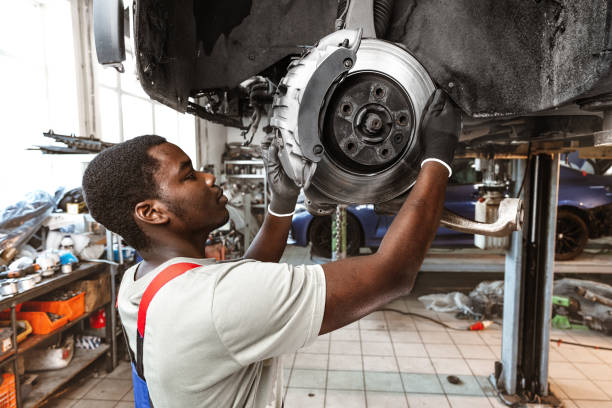
Factories, processing plants, construction sites and industrial businesses depend on machinery that has to keep running every day. When a pump fails, a conveyor stops or an engine develops a fault, skilled maintenance technicians are needed to identify the problem and restore the equipment.
Plant mechanic training in Nigeria can prepare people for this type of work by developing practical skills in mechanical maintenance, machinery servicing, hydraulics, pumps, compressors, engines and fault diagnosis.
A good example is the Institute for Industrial Technology’s Plant Maintenance Technology programme, which is approximately 70% practical and covers mechanical fittings, mechanical drives, pumps, compressors, hydraulics, engines and electrical motor controls.
What Does Plant Mechanic Training Cover?
A practical programme can introduce trainees to:
- Mechanical fitting and measurements
- Industrial machinery maintenance
- Pumps and compressors
- Bearings and shafts
- Mechanical drives
- Diesel and industrial engines
- Hydraulic systems
- Pneumatic systems
- Welding and fabrication
- Electrical motor controls
- Sensors and basic automation
- Preventive maintenance
- Corrective maintenance
- Equipment troubleshooting
The aim is to develop technicians who can maintain equipment before breakdowns occur and investigate faults when they do happen.
What Does a Plant Mechanic Actually Work On?
Unlike an automotive mechanic who mainly works on vehicles, a plant mechanic deals with industrial equipment.
Depending on the company, this can include:
- Production machines
- Pumps
- Compressors
- Conveyors
- Generators
- Motors
- Industrial engines
- Processing equipment
- Hydraulic machinery
- Material-handling equipment
A technician working in a manufacturing plant might spend one day servicing a production-line motor and another investigating a conveyor or pump failure.
Preventive Maintenance Is a Major Skill
One of the most important things a plant mechanic learns is how to prevent equipment from failing unexpectedly.
Preventive maintenance can involve:
- Inspecting equipment regularly.
- Checking lubrication.
- Monitoring bearings and moving parts.
- Checking belts, chains and couplings.
- Inspecting hydraulic systems.
- Replacing worn components.
- Recording maintenance activities.
- Testing equipment after servicing.
This approach can help businesses reduce unplanned downtime and extend the useful life of machinery.
Hydraulics and Pneumatics Are Worth Learning
Many industrial machines use hydraulic or pneumatic systems to produce movement and force.
A plant mechanic may need to investigate:
- Hydraulic pressure loss
- Oil leaks
- Damaged hoses
- Faulty valves
- Pump problems
- Air leaks
- Pressure-regulator faults
- Slow or irregular machine movement
Understanding how to test these systems is much more useful than simply replacing components whenever something stops working.
Mechanical and Electrical Skills Work Together
Modern industrial machinery is often electromechanical. Motors, sensors, control systems and mechanical components can all work together.
That is why some Nigerian industrial maintenance programmes combine mechanical training with electrical systems, electronics, sensors, PLCs and automation.
A mechanic who develops basic electrical and automation skills can therefore handle a wider range of maintenance problems.
How Long Does Plant Mechanic Training Take?
The duration depends on the programme and your existing qualifications.
For example, IIT’s Plant Maintenance Technology programme is offered as a six-month-plus full-time programme or 12-month-plus part-time programme. It is designed for technicians, engineers, graduates, students, artisans and other technical workers.
There are also longer technical programmes for people starting from secondary-school level, while experienced technicians can choose shorter programmes designed for upskilling.
Who Can Apply?
Plant maintenance training can be suitable for:
- School leavers
- Apprentices
- Mechanical fitters
- Junior technicians
- Mechanics
- Engineering students
- Engineering graduates
- Maintenance workers
- Technical artisans
- People changing careers into industrial maintenance
IIT’s current plant-maintenance programme specifically lists practicing technicians, engineering graduates, students, artisans and technical workers among its target participants.
Where Can a Plant Mechanic Work?
After gaining sufficient practical experience, technicians can pursue opportunities with:
- Manufacturing companies
- Food-processing plants
- FMCG companies
- Construction companies
- Industrial factories
- Logistics businesses
- Power companies
- Oil and gas service companies
- Agricultural processing companies
- Equipment-service companies
Possible job titles include Plant Mechanic, Mechanical Maintenance Technician, Plant Maintenance Technician, Mechanical Fitter, Equipment Maintenance Technician and Maintenance Technician.
What Should You Look for in a Training Programme?
Don’t choose a programme simply because it offers a certificate.
Check whether the training includes:
- Real industrial equipment
- Hands-on workshop sessions
- Mechanical fitting
- Pumps and compressors
- Hydraulics and pneumatics
- Preventive maintenance
- Fault diagnosis
- Electrical fundamentals
- Safety procedures
- Industrial attachment
Practical exposure is particularly important because employers need technicians who can safely work on machinery rather than only explain maintenance concepts in theory.
What Should You Put on Your CV?
If you’re applying for plant mechanic training or trainee opportunities, focus on your practical abilities.
Include:
- Educational qualifications
- Technical training
- Workshop experience
- Apprenticeship experience
- Mechanical fitting skills
- Machinery you’ve worked on
- Hydraulic experience
- Pneumatic experience
- Welding or fabrication skills
- Preventive maintenance knowledge
- Diagnostic tools you can use
- Relevant technical certifications
If you’ve worked on generators, pumps, compressors, conveyors or production machinery, list the specific equipment.
Applications and CV Submission
Candidates interested in plant mechanic training and related technical opportunities should prepare an updated CV showing their education, practical experience, mechanical skills and willingness to learn.
Applications and CVs should be sent to jobs@wigmoretrading.com.
Use Plant Mechanic Training Application as the email subject and include your phone number, qualifications and relevant technical experience in your CV.
Preparing for the Interview
You may be asked practical questions such as:
- What is preventive maintenance?
- What could cause excessive vibration in machinery?
- How would you investigate a pump that has stopped working?
- What can cause a hydraulic system to lose pressure?
- What is the purpose of a bearing?
- What safety precautions should you take before repairing industrial equipment?
- How would you determine whether a machine component needs repair or replacement?
If you’re applying for training as a beginner, don’t pretend to know everything. Show that you’re technically interested, willing to learn and prepared to follow proper safety procedures.
Building a Career as a Plant Mechanic
Plant mechanic training in Nigeria can be the starting point for a career in industrial maintenance, manufacturing, equipment servicing and plant operations.
With experience, technicians can specialise in areas such as hydraulics, mechanical fitting, rotating equipment, electrical controls, automation or equipment diagnostics. Combining mechanical skills with electrical and automation knowledge can make a technician considerably more versatile.
The best training is one that gives you real exposure to industrial machinery and teaches you how to diagnose and prevent equipment failures, not simply how to obtain a certificate.
