


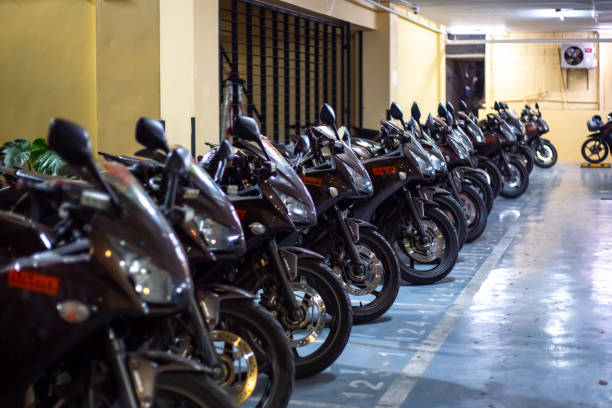
Motorcycle ownership investment management refers to a structured investment model where individuals or organizations own motorcycles as income-generating assets while a professional management company handles their daily operations, maintenance, deployment, and financial performance. The goal is to turn motorcycles into passive, scalable investment vehicles within delivery and logistics ecosystems.
This model is widely used in courier services, e-commerce delivery networks, food delivery platforms, and urban logistics operations.
What motorcycle ownership investment management means
This concept combines asset ownership with full-service fleet operations.
It involves:
- Investors purchasing motorcycles as business assets
- A management company operating the bikes in delivery networks
- Revenue generation through logistics and courier services
- Structured reporting of earnings and expenses
- Profit distribution between investor and operator
In simple terms, the owner provides the asset, while the operator runs the business.
Why motorcycle investment management is important
Motorcycles are high-utilization assets that can generate daily income, but they require proper structure to remain profitable.
Without management, owners may face:
- Poor utilization of vehicles
- High maintenance and repair costs
- Rider misuse or inefficiency
- Unstable income generation
- Weak return on investment (ROI)
Investment management ensures stability, efficiency, and predictable performance.
Core components of motorcycle ownership investment management
1. Asset acquisition and onboarding
Proper selection determines long-term profitability.
This includes:
- Choosing fuel-efficient and durable motorcycles
- Evaluating total cost of ownership
- Registering and insuring bikes
- Preparing bikes for logistics deployment
- Initial performance assessment
2. Fleet deployment into logistics operations
Motorcycles are integrated into revenue-generating systems.
This includes:
- Assigning bikes to courier or delivery networks
- Integrating with e-commerce platforms
- Deploying for food, pharmacy, or parcel delivery
- Matching bikes to high-demand zones
- Managing operational allocation
3. Rider and operational management
Riders directly impact asset performance.
This includes:
- Recruitment and onboarding
- Training for efficiency and safety
- Shift scheduling and supervision
- Performance monitoring
- Incentive and accountability systems
4. Maintenance and asset protection
Maintenance ensures long-term value retention.
This includes:
- Preventive servicing schedules
- Engine and mechanical diagnostics
- Tire, brake, and oil management
- Repair coordination with workshops
- Breakdown response systems
5. Fuel and cost optimization
Cost efficiency directly impacts profitability.
This includes:
- Fuel tracking per motorcycle
- Monitoring consumption patterns
- Reducing wastage and misuse
- Cost-per-kilometer analysis
- Operational budgeting systems
6. Revenue generation and utilization optimization
Maximizing usage increases income.
This includes:
- Increasing daily delivery cycles
- Reducing idle time
- Assigning bikes to high-demand routes
- Optimizing dispatch efficiency
- Expanding usage during peak periods
7. Financial reporting and ROI tracking
Transparency is critical in investment models.
This includes:
- Revenue per motorcycle tracking
- Cost breakdown analysis
- Net profit reporting
- Maintenance cost monitoring
- ROI and payback period calculation
Types of motorcycle ownership investment models
1. Fixed income model
Investor receives a stable monthly return regardless of performance.
2. Revenue-sharing model
Profits are split between investor and operator.
3. Hybrid income model
Combines fixed returns with performance-based incentives.
4. Full-service managed investment model
Operator manages everything from deployment to revenue generation.
Key performance indicators (KPIs)
Investment performance is measured using:
- Return on investment (ROI)
- Vehicle utilization rate
- Cost per delivery
- Revenue per motorcycle
- Maintenance cost ratio
- Fuel efficiency
- Asset lifespan performance
- Net profit per unit
Benefits of motorcycle ownership investment management
Passive income generation
Owners earn without managing operations.
High asset utilization
Motorcycles are used consistently for deliveries.
Reduced operational stress
All logistics and maintenance are handled by professionals.
Scalable investment model
Easy to expand fleet size over time.
Transparent reporting
Clear visibility into financial performance.
Challenges in motorcycle investment management
Despite its benefits, challenges include:
- Dependence on management company performance
- Market fluctuations in logistics demand
- Rider behavior and operational risks
- Maintenance variability
- Asset depreciation over time
Risks of unmanaged motorcycle investments
Without proper systems, investors may experience:
- Low utilization rates
- Poor or inconsistent income
- High maintenance expenses
- Asset misuse or damage
- Weak return on investment
Technology used in motorcycle investment management
Modern systems rely on:
- GPS tracking and telematics
- Fleet management dashboards
- Mobile rider applications
- Fuel monitoring systems
- Route optimization software
- Financial analytics platforms
- Predictive maintenance tools
These tools ensure transparency and operational control.
Where logistics coordination fits into investment management
Motorcycle investment systems operate within broader logistics ecosystems such as:
- E-commerce fulfillment networks
- Courier and express delivery systems
- Food and pharmacy delivery platforms
- Urban distribution hubs
- Supply chain logistics operations
Efficient coordination ensures motorcycles remain active and profitable.
How Travo.ng supports logistics coordination
While motorcycle ownership investment management focuses on asset profitability and passive income, logistics coordination ensures smooth execution of delivery operations across transport systems.
Travo.ng supports logistics operations through:
- Cargo consolidation and freight coordination
- Intercity and interstate delivery services
- Port-to-destination logistics support
- Supply chain coordination across Nigeria
- End-to-end logistics execution for cargo movement
This improves fleet utilization and strengthens overall investment returns.
Final thoughts
Motorcycle ownership investment management transforms two-wheelers into structured income-generating assets. By combining professional fleet operations, maintenance systems, rider management, and financial tracking, investors can achieve consistent returns with reduced operational involvement.
In modern logistics economies, success depends not just on owning motorcycles, but on how effectively they are managed, deployed, and optimized for continuous profitability.
