


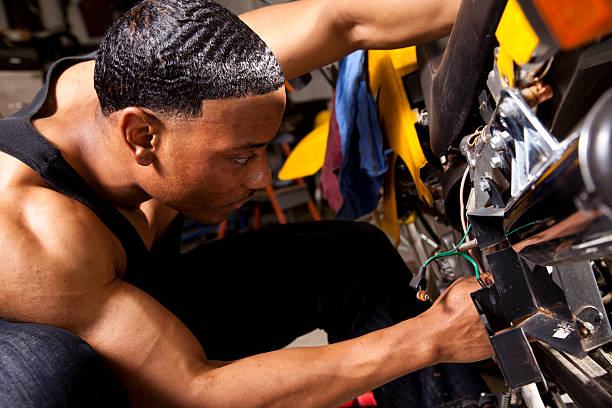
Motorcycles are widely used for transportation, delivery services, logistics and personal mobility across Nigeria. This creates steady demand for mechanics who can service, diagnose and repair motorcycles efficiently.
Motorcycle mechanic jobs in Nigeria are suitable for motorcycle technicians, auto mechanics, vocational trainees, apprentices and experienced technicians with practical knowledge of motorcycle engines and electrical systems.
What Does a Motorcycle Mechanic Do?
A motorcycle mechanic is responsible for inspecting, maintaining and repairing motorcycles.
Typical duties include:
- Diagnosing engine problems
- Servicing motorcycles
- Changing engine oil
- Repairing fuel systems
- Adjusting carburettors
- Troubleshooting electrical faults
- Repairing braking systems
- Maintaining transmissions
- Servicing suspension systems
- Replacing worn parts
- Repairing starting systems
- Testing motorcycles after repairs
Mechanics may work in motorcycle workshops, dealerships, logistics companies or as independent technicians.
Types of Motorcycles You May Work On
Depending on the employer, a mechanic may service:
- Standard commuter motorcycles
- Delivery motorcycles
- Commercial motorcycles
- Off-road motorcycles
- Scooters
- Sport motorcycles
- Utility motorcycles
- Fleet motorcycles
Experience with several motorcycle models can increase your employment opportunities.
Engine Repair Skills
A strong motorcycle mechanic should understand the basic operation of petrol engines.
Important skills include:
- Engine servicing
- Compression testing
- Valve adjustment
- Piston inspection
- Cylinder maintenance
- Spark-plug replacement
- Fuel-system diagnosis
- Carburettor servicing
- Fuel-injection troubleshooting
- Engine timing
Mechanics who can perform engine rebuilds and major repairs can qualify for more advanced positions.
Motorcycle Electrical Systems
Modern motorcycles increasingly rely on electrical and electronic systems.
Useful skills include:
- Battery testing
- Starter-motor diagnosis
- Alternator testing
- Wiring troubleshooting
- Fuse inspection
- Ignition-system diagnosis
- Sensor testing
- Multimeter use
- Charging-system repairs
Understanding electrical faults can help a mechanic diagnose motorcycles that crank slowly, fail to start or experience charging problems.
Transmission and Clutch Repairs
Motorcycle mechanics may also work on transmission and clutch systems.
Tasks can include:
- Clutch adjustment
- Clutch-plate replacement
- Gear-shifting diagnosis
- Chain and sprocket replacement
- Transmission inspection
- Gearbox repairs
- Drive-system maintenance
Correct adjustment and lubrication can significantly improve motorcycle performance and component life.
Brake and Suspension Maintenance
Safety-related systems require regular inspection.
A motorcycle mechanic may service:
- Brake pads
- Brake discs
- Brake shoes
- Brake cables
- Brake fluid
- Front forks
- Rear shocks
- Steering bearings
- Wheel bearings
A motorcycle should be properly tested after repairs to ensure it is safe for use.
Preventive Maintenance
Regular servicing helps prevent major motorcycle breakdowns.
Maintenance can include:
- Changing engine oil.
- Checking the air filter.
- Inspecting spark plugs.
- Checking tyre pressure.
- Adjusting the chain.
- Inspecting brakes.
- Testing the battery.
- Checking lights and indicators.
- Inspecting cables and controls.
- Checking for oil or fuel leaks.
Mechanics working with motorcycle fleets may also maintain detailed service schedules for each motorcycle.
Motorcycle Fleet Maintenance
Delivery companies, logistics businesses and other organisations may operate large motorcycle fleets.
Fleet motorcycle mechanics may be responsible for:
- Routine servicing
- Daily inspections
- Breakdown repairs
- Fleet diagnostics
- Parts replacement
- Maintenance scheduling
- Service documentation
- Roadworthiness checks
Fleet experience can be particularly valuable because it teaches mechanics how to minimise downtime across multiple motorcycles.
What Qualifications Do Motorcycle Mechanics Need?
Requirements vary depending on the employer.
Common routes into the profession include:
- Technical college training
- Automotive Technology
- Mechanical Engineering
- Motorcycle repair training
- Vocational training
- Trade Test certification
- Motorcycle mechanic apprenticeship
- Practical workshop experience
An apprenticeship remains an important way to develop hands-on motorcycle repair skills.
What Should You Put on Your CV?
Your CV should clearly demonstrate your practical experience.
Include:
- Years of experience
- Motorcycle brands and models handled
- Engine repair experience
- Electrical troubleshooting
- Transmission experience
- Brake and suspension repairs
- Preventive maintenance
- Fleet maintenance
- Diagnostic tools used
- Technical qualifications
- Apprenticeship experience
For example:
“Four years’ experience servicing and repairing motorcycles, with expertise in engine diagnostics, electrical troubleshooting, clutch and transmission repairs, brake systems and preventive maintenance.”
Related Job Titles to Search
Don’t search only for “motorcycle mechanic jobs Nigeria.”
Also search for:
- Motorcycle Technician
- Motorcycle Repair Technician
- Bike Mechanic
- Motorcycle Service Technician
- Motorcycle Maintenance Technician
- Motorbike Mechanic
- Motorcycle Workshop Technician
- Two-Wheeler Technician
- Motorcycle Fleet Technician
- Junior Motorcycle Mechanic
- Motorcycle Mechanic Apprentice
- Motorcycle Diagnostic Technician
Searching these related titles can help you find more opportunities.
Applications and CV Submission
Candidates interested in motorcycle mechanic opportunities and related technical positions should prepare an updated CV showing their practical experience, motorcycle knowledge and technical qualifications.
Applications and CVs should be sent to jobs@wigmoretrading.com.
Use Motorcycle Mechanic Application as the email subject and include your phone number, years of experience, qualifications, motorcycle brands handled and areas of specialisation.
How to Stand Out
Employers want motorcycle mechanics who can diagnose problems accurately and complete repairs efficiently.
Highlight your ability to:
- Diagnose engine faults
- Perform motorcycle servicing
- Repair fuel systems
- Troubleshoot electrical problems
- Repair clutches and transmissions
- Maintain braking systems
- Service suspension systems
- Perform fleet maintenance
- Respond to breakdowns
- Maintain service records
Good customer-service skills can also be useful when working directly with motorcycle owners.
Safety Is Important
Motorcycle mechanics work with fuel, electrical systems, hot engine components and moving machinery.
Important safety practices include:
- Using appropriate PPE
- Disconnecting batteries when necessary
- Handling fuel safely
- Using proper lifting equipment
- Securing motorcycles before repairs
- Keeping the workshop clean
- Using the correct tools
- Testing brakes and steering after repairs
- Conducting safe road tests
Never return a motorcycle to a customer or fleet operator without confirming that safety-critical repairs have been properly completed.
Preparing for the Interview
Expect practical questions such as:
- How would you diagnose a motorcycle that will not start?
- What can cause an engine to lose power?
- How would you diagnose a weak charging system?
- What can cause excessive smoke from a motorcycle?
- How would you diagnose clutch slipping?
- What checks should be performed during routine servicing?
- How would you troubleshoot an overheating engine?
- Which motorcycle models have you worked on?
Use practical examples from your workshop or apprenticeship experience.
Where Can Motorcycle Mechanics Work?
Potential employers include:
- Motorcycle dealerships
- Motorcycle repair workshops
- Delivery companies
- Logistics companies
- Courier companies
- Motorcycle fleet operators
- Motorcycle rental businesses
- Agricultural businesses
- Motorcycle parts companies
- Independent repair businesses
Experienced mechanics can also establish their own motorcycle repair workshops or provide mobile repair services.
Career Progression
A motorcycle mechanic can progress through:
Apprentice → Junior Mechanic → Motorcycle Technician → Senior Technician → Lead Mechanic → Workshop Supervisor
You can also specialise in:
- Motorcycle diagnostics
- Motorcycle electrical systems
- Engine rebuilding
- Fleet maintenance
- Motorcycle performance
- Specific motorcycle brands
- Mobile motorcycle repair
Additional training in diagnostics, fuel injection, electrical systems and modern motorcycle technology can improve your career prospects.
A strong motorcycle mechanic is ultimately someone who can diagnose faults accurately, carry out reliable repairs, keep motorcycles safe and minimise downtime for individual riders and commercial fleets.
