


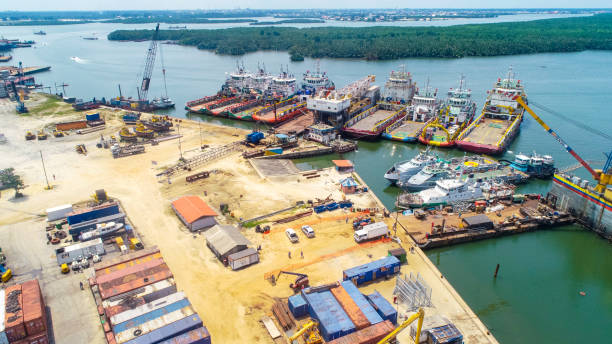
Investing in ships, trucks, aircraft, and logistics assets is one of the most tangible ways to participate in global trade and transportation. Unlike purely financial instruments, these assets are tied directly to real economic activity—the movement of goods, people, and services across cities, countries, and continents.
In Nigeria and across global emerging markets, logistics demand is growing faster than infrastructure expansion. This creates opportunities for investors who want exposure to transport assets that generate returns through usage, contracts, leasing, and operational deployment.
From road freight to air cargo and maritime shipping, logistics assets sit at the center of global commerce.
Why Logistics Assets Attract Serious Investors
Transportation is essential to every economy. No matter the sector—agriculture, manufacturing, retail, or energy—goods must move.
This constant demand is why logistics assets are considered resilient investments.
Key drivers include:
- Expansion of global trade routes
- Growth of e-commerce and retail distribution
- Increasing demand for faster delivery systems
- Industrial production and export activity
- Cross-border supply chain integration
Whether it is a truck delivering goods within Lagos or a cargo ship moving containers between continents, the underlying principle is the same: movement creates value.
The Four Major Logistics Asset Classes
Trucks and Road Freight Vehicles
Trucks remain the backbone of inland logistics, especially in countries like Nigeria where road transport dominates distribution.
They are used for:
- Interstate cargo movement (Lagos ↔ Abuja, Lagos ↔ Port Harcourt)
- FMCG distribution networks
- Construction material logistics
- Retail and wholesale supply chains
- E-commerce delivery operations
Trucks generate returns through trip-based revenue, contracts, or fleet leasing structures.
Ships and Maritime Assets
Maritime logistics supports international trade and bulk cargo movement.
Ships are commonly used for:
- Container shipping
- Oil and gas transport
- Bulk commodities (grain, cement, minerals)
- Import/export supply chains
- Port-to-port logistics operations
Shipping assets typically require larger capital but offer long-term contract-based income opportunities.
Aircraft and Air Cargo Logistics
Air transport is the fastest but most capital-intensive logistics segment.
Aircraft logistics is used for:
- High-value cargo transport
- Time-sensitive deliveries
- International freight movement
- Express logistics services
- Medical and emergency supply chains
Air cargo is often driven by speed, precision, and global trade demand.
Integrated Logistics Infrastructure
Beyond vehicles and vessels, logistics assets also include:
- Warehouses and distribution centers
- Cargo terminals
- Fleet depots
- Cold storage facilities
- Logistics software systems
These assets support the entire transportation ecosystem and improve efficiency.
How These Logistics Assets Generate Returns
Returns from logistics assets do not come from ownership alone—they come from utilization.
Contract-Based Revenue
Long-term agreements with businesses provide stable income streams, especially for:
- Freight transport companies
- Manufacturing firms
- Import/export businesses
- Retail distribution networks
Leasing and Chartering
Assets can be leased or chartered to operators:
- Truck leasing for logistics companies
- Ship charter agreements in maritime trade
- Aircraft leasing for cargo operators
Operational Deployment
Some investors participate in managed operations where assets are actively used in logistics networks, generating revenue per trip or per shipment.
Real-World Logistics Demand in Nigeria
Nigeria’s logistics sector is heavily dependent on physical transport assets due to:
- High import dependency through ports in Lagos and Port Harcourt
- Strong FMCG distribution across major cities
- Expanding e-commerce delivery networks
- Interstate trade between northern and southern regions
- Growing manufacturing and industrial activity
Key logistics corridors include:
- Lagos to Abuja (major commercial supply route)
- Lagos to Kano (northern distribution network)
- Port Harcourt to South-South industrial zones
- Onitsha and Aba trade and manufacturing hubs
These routes create constant demand for trucks and supporting logistics infrastructure.
Risks and Operational Realities
While logistics assets offer strong potential, they also come with real-world challenges:
- High maintenance and repair costs
- Fuel price volatility (especially for trucks)
- Regulatory and port delays for shipping
- Weather and operational disruptions in air logistics
- Asset downtime and inefficiencies
- Complex cross-border coordination
These challenges explain why many investors prefer managed or structured logistics models instead of direct operational involvement.
Why Management Matters More Than Ownership
In logistics, ownership without operational control often leads to underperformance.
Profitability depends on:
- Asset utilization rate
- Route efficiency
- Maintenance discipline
- Demand consistency
- Operational coordination
A well-managed asset can outperform multiple poorly managed ones, even with the same capital base.
How Travo.ng Supports Logistics Asset Coordination
Within Nigeria’s logistics ecosystem, Travo.ng supports practical movement and coordination of transport services across different asset types.
Travo.ng helps with:
- Cargo and delivery coordination
- Truck and vehicle deployment support
- Transport scheduling and logistics planning
- Interstate logistics arrangements
- Business delivery and mobility support
- Operational execution of transport services
This type of coordination is essential in markets where demand is high but logistics execution requires strong local structure.
The Future of Logistics Asset Investment
The logistics industry is evolving toward more structured, technology-driven, and professionally managed systems.
Future trends include:
- Increased institutional investment in logistics infrastructure
- Growth of managed fleet and asset platforms
- Expansion of global supply chain integration
- More leasing and contract-based logistics models
- Technology-driven logistics optimization systems
As global trade continues to expand, logistics assets will remain central to economic activity.
